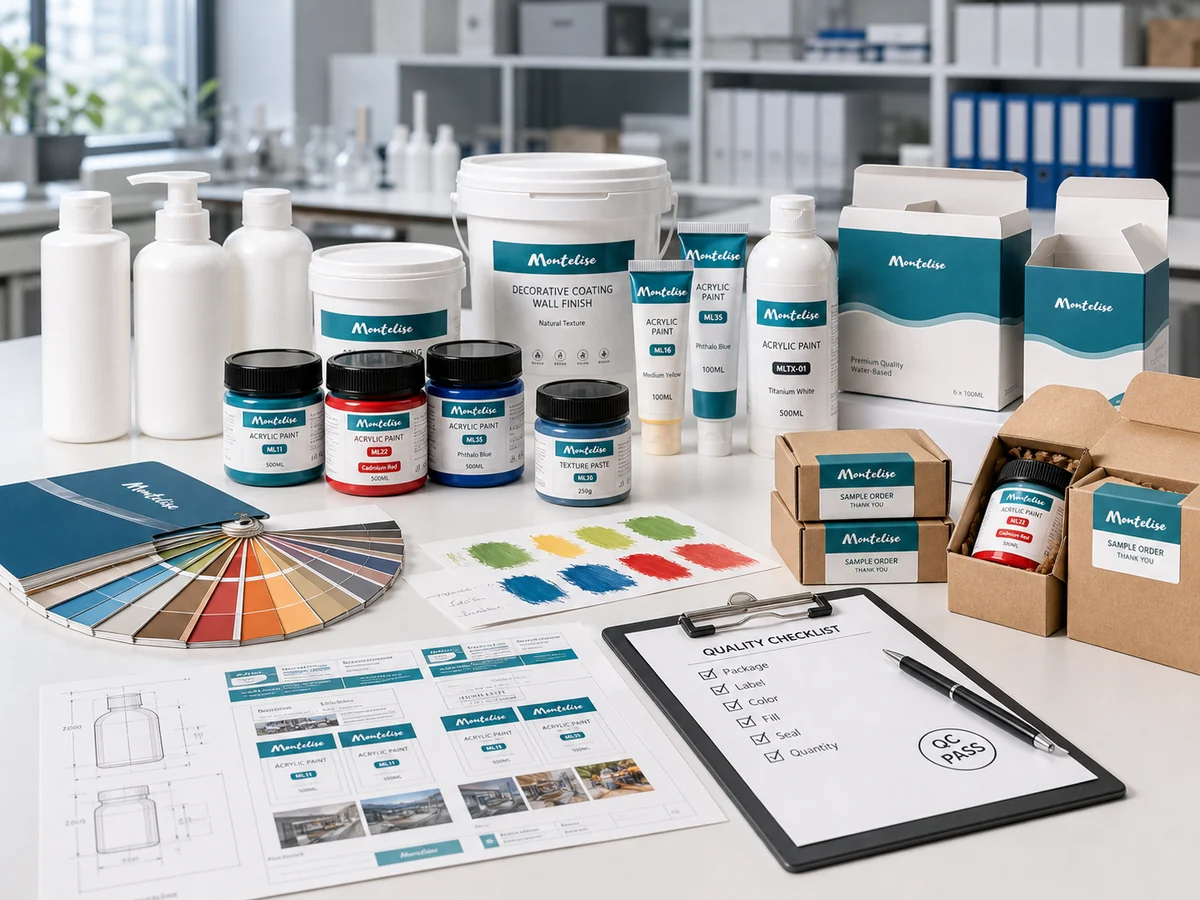
Buyers searching for private label modeling paste are usually past the stage of comparing generic texture mediums. They are trying to turn one workable paste into a sellable SKU with the right jar size, label route, carton logic, and reorder file. The real sourcing question is not only whether the paste can build peaks, but whether the supplier can move from sample jar to repeat shipment without changing body feel or pack structure.
That is why private label modeling paste decisions should be grouped early: 250 ml retail jars or 500 ml shelf jars, 1 kg refill tubs for workshops or not, one heavy-body version or two texture levels, blank-label samples first or buyer artwork first, AI or editable PDF artwork, export carton marks, and the retained sample used for repeat control. Buyers who define those points before sampling usually get a faster and cleaner quotation.
Buyer quick links
- View texture paste, mediums, and related product lines: Product Center
- Compare custom packaging, label setup, and OEM routes: OEM&ODM
- Send your jar-size target, artwork status, and market brief: Contact / Get Quote
- Review the wider cluster hub first: Texture Paste Supplier
Lock the Launch Pack Route Before Expanding the Sample List
Private label modeling paste gets slow when the buyer asks for every possible jar and body level in the first round. A cleaner launch usually starts with one commercial route.
| Launch route | Typical first setup | What should be locked early |
|---|---|---|
| Retail art line | 250 ml jars in 6 to 8 lead SKUs | Label panel size, cap style, and carton quantity |
| Shelf-ready single SKU | 500 ml jars for individual sale | Front-label artwork, barcode ownership, and shelf look |
| Workshop refill route | 1 kg to 3 kg tubs | Refill handling, pallet count, and tamper-seal need |
| Mixed distributor launch | one retail jar plus one refill size | Which size is the lead MOQ and which size waits for round two |
If the buyer tries to quote 250 ml, 500 ml, and 3 kg at the same time, the first discussion becomes three packaging projects instead of one launch plan. Buyers that still need to compare product positioning should also review Modeling Paste Manufacturer because the formula route and private-label route need to match.
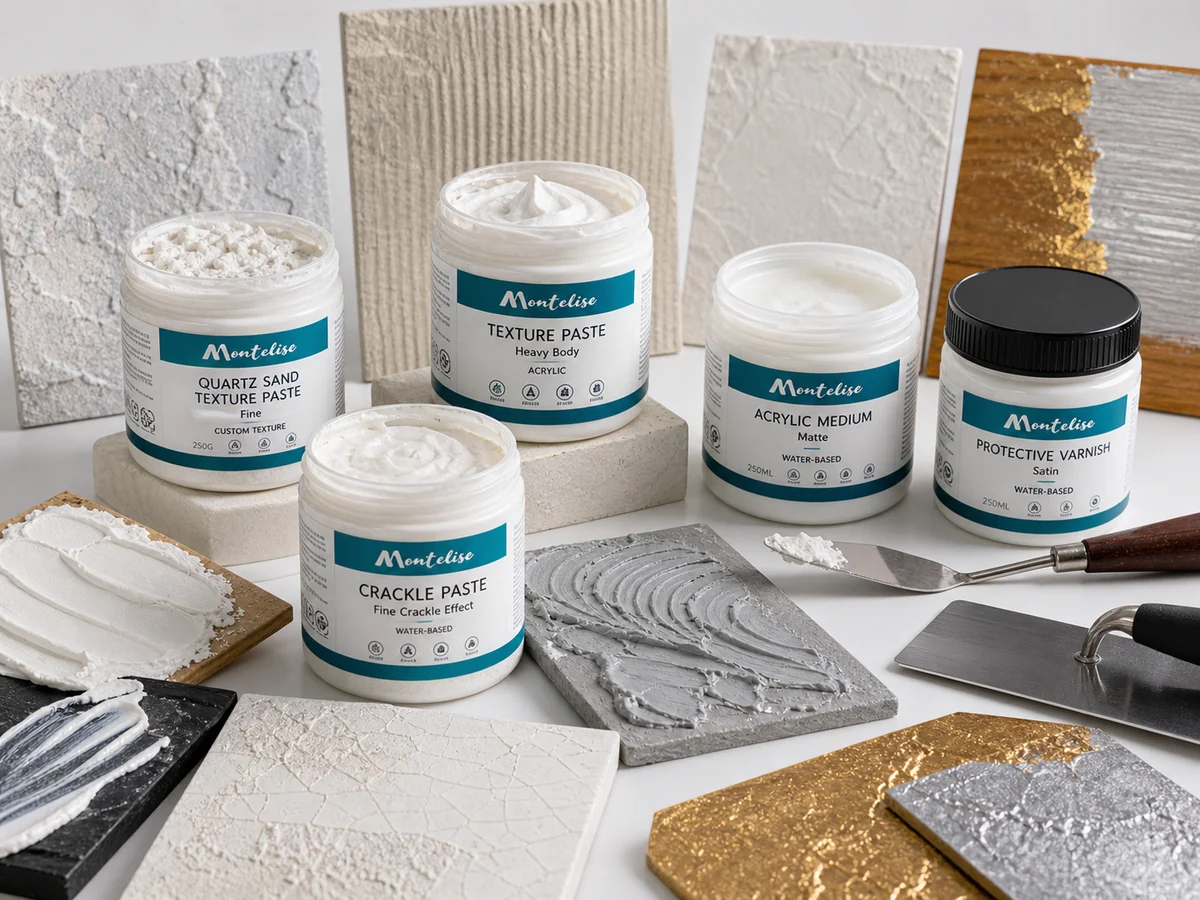
Build the First Sample Round Around Surface, Dry-Down, and Texture Notes
Competitor pages often describe OEM ability in general terms, but buyers need a sample round that exposes commercial risk. For private label modeling paste, a better sample brief usually includes:
- one target surface, such as primed canvas, MDF sample board, or mixed-media art panel
- one application method, usually knife build rather than a simple jar photo
- one or two body levels instead of a wide uncontrolled texture menu
- evaluation jars such as 250 ml sample jars before any full carton release
- dry-down review after 24 to 48 hours to check shrinkage, edge hold, and crack behavior
- one retained sample code tied to the final private-label file
That structure matters because a paste approved on a smooth primed board may not read the same on a rough decorative panel. Buyers that want the broader formula-selection view should continue with Modeling Paste Manufacturer after they define the private-label launch route.
Planning a private label modeling paste launch?
Share your target surface, preferred body level, first jar family, artwork status, and estimated quantity with Montelise. The team can suggest a narrower sample route before you commit to a bulk order.
Keep Jar, Label Artwork, and Carton Marks in One Approval File
Private label modeling paste projects often stall after the sample is approved because packaging decisions sit in separate conversations. Buyers reduce that risk when they approve these points together:
- final jar family, such as 250 ml, 500 ml, or 1 kg
- whether the first order uses stock jars with buyer stickers or full wrap labels
- artwork format, usually AI or editable PDF before mass printing
- barcode ownership for each SKU and whether inner packs need separate codes
- master-carton marks, PO labels, language versions, and destination-market notes
- whether the first order keeps a neutral export carton or uses buyer-specific outer labeling
This is one of the clearest SERP gaps. Many ranking pages say they can do OEM packaging, but they do not explain how label release, barcode setup, and carton marks affect the first shipment timeline.
For buyers that need deeper packaging context, Custom Packaging for Paint Products and Texture Paste Distributor Pack Sizes are the closest supporting pages. For a clearer explanation of how paste base, pack size, SKU mix, and print materials affect a first order, see Texture Paste MOQ.
Quote MOQ by Base Formula, Print Material, and SKU Mix
Private label modeling paste MOQ is rarely one simple number. Buyers get a more useful quotation when they ask the supplier to separate:
- base-formula MOQ for the chosen heavy-body or crackle-style paste
- SKU impact when the PO mixes several body levels in one order
- jar-family impact when the project wants both 250 ml and 500 ml packs
- print-material minimums once custom labels, inserts, or shelf boxes are added
- carton minimums when outer marks change by market or barcode version
- reorder MOQ after the lead SKU is approved and repeat demand becomes clearer
For example, one 500 ml shelf SKU with a standard export carton is a different MOQ conversation from a mixed launch with 8 retail shades, multilingual labels, and an inner display box. Buyers mainly trying to clean up the RFQ should also review Texture Paste Supplier to keep the texture-family decision and packaging decision in one chain.
Freeze the Reorder File Before the First Pallet Leaves
The strongest private label modeling paste supplier is the one that makes the second order routine. A practical reorder-control file should store:
- approved sample code and body-level note
- the exact test surface used for approval
- dry-down comments, including shrinkage or crack notes
- final jar size, lid style, and fill weight
- approved artwork version, barcode file, and carton mark
- destination-market variant if language or compliance wording changes
- the retained sample photo or physical reference used for repeat comparison
When those records are frozen before shipment, buyers avoid the common problem where the second PO is compared against a different board, a revised sticker file, or a new carton note that never made it into the original approval set.
What to Send for a Faster Quote
What to send for a faster quote
- Product route: retail jar, single-sku shelf line, workshop refill, or mixed distributor launch
- Target surface and texture note
- Preferred jar or tub size: 250 ml, 500 ml, 1 kg, or another planned format
- Sample need: evaluation jar, knife-applied board, or both
- Artwork status: stock label, buyer sticker, editable AI, or print-ready PDF
- Barcode owner, carton-mark requirements, and destination market
- Estimated quantity per SKU and target shipment month
FAQ
What should buyers decide first for private label modeling paste?
They should define the first launch pack route and the target texture body first. Those two points shape the sample plan, artwork route, and MOQ structure.
Should buyers prepare final label artwork before sample approval?
Usually no. Many B2B projects move faster when the buyer approves the paste body and jar family first, then releases AI or editable PDF artwork for production labels and cartons.
Why is MOQ more complex than one headline number in this category?
Because formula choice, jar sizes, label printing, and carton versions can each add a separate commercial threshold. A good quotation should show those layers instead of hiding them in one figure.
What makes repeat orders easier for private label modeling paste?
One retained control file that links the approved sample code, surface note, dry-down comments, jar family, artwork version, barcode file, and carton mark.
Final Thought
Private label modeling paste sourcing works best when buyers narrow the first launch route, review the paste on the right surface, connect packaging files to the approved sample, and separate base MOQ from print-material MOQ before the first PO is locked.
Ready to plan private label modeling paste for art retail, distributor supply, or workshop programs? contact Montelise with your target surface, jar sizes, artwork status, and quantity estimate to request samples or a practical bulk quote.