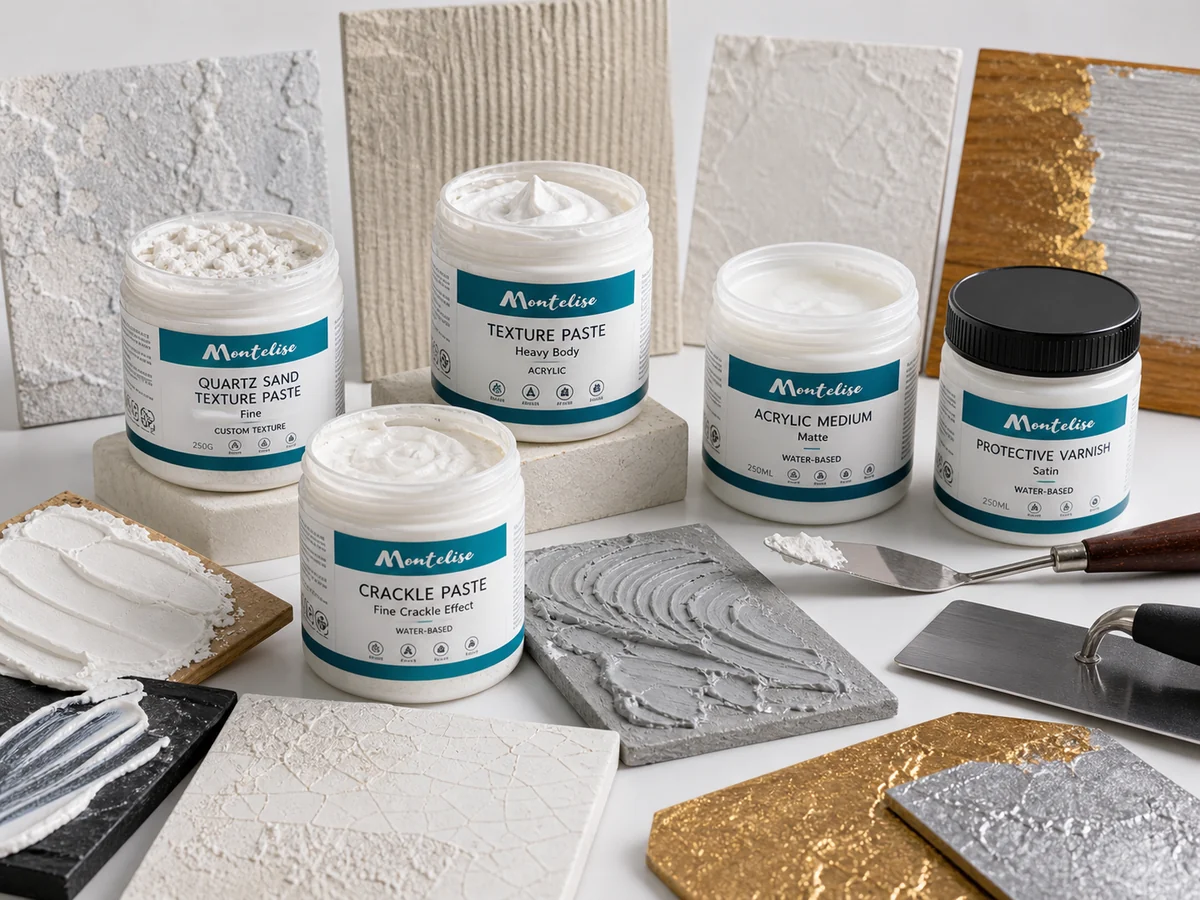
Buyers searching for a texture paste supplier are usually trying to compare more than one texture jar. They need to know which paste family fits the end use, how the finish behaves on different surfaces, what can be customized for private label, and how to keep the first order manageable.
That is why the most useful supplier conversation starts with the application route. A wall finish importer, an art material brand, and a decorative effect distributor may all ask for “texture paste,” but their sampling, packaging, and repeat-order priorities are not the same.
Buyer quick links
- View texture paste and coating product lines: Product Center
- Compare private label and custom supply options: OEM&ODM
- Send quantity, surface, and packaging details: Contact / Get Quote
Start With the End Use, Not the Texture Name
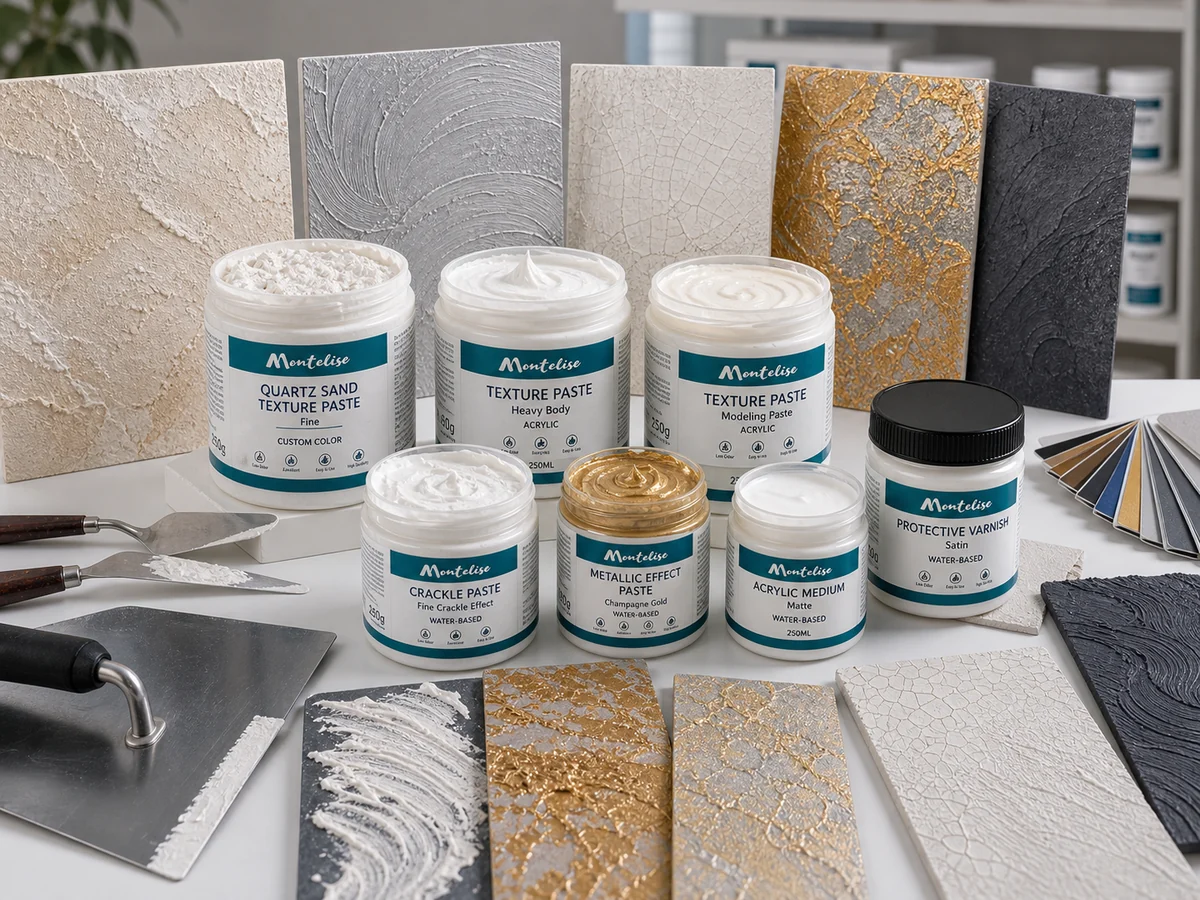
Texture paste can cover several product directions: quartz sand finishes, heavy body texture, crackle effects, modeling pastes, and supporting mediums or varnishes. Buyers save time when they first define where the product will be used.
In most RFQs, the first question should be:
- Is the line for art retail, decorative wall finish, or mixed use
- Does the buyer need smooth build, coarse grain, crackle, or metallic effect support
- Will the paste be sold as a standalone SKU or as part of a broader paint line
- Does the market expect small jars, medium tubs, or larger project packaging
For teams expanding beyond one SKU, Private Label Art Supplies Manufacturer: Building a Multi-Category Range is a useful reference because category expansion usually affects packaging and MOQ before it affects price.
Buyers that are already narrowing container strategy should also review Texture Paste Distributor Pack Sizes, because first-order pack structure often changes MOQ and reorder planning faster than the formula discussion.
If the project is already moving into buyer artwork, SKU setup, and repeat-order control, Private Label Modeling Paste is the more direct follow-up because it breaks down jar-family approval, label release, carton marks, and reorder records.
Teams that specifically need a sculptural medium with stronger body should also review Modeling Paste Manufacturer, because that supply route usually needs a separate sample-board review, pack-size plan, and reorder file.
Compare Paste Families by Application Risk
Not every texture paste supplier is equally prepared for both art-channel products and decorative finish supply. Buyers should compare the product family by the application they need to support in the market.
| Buyer Need | Lower-Risk Product Direction | What to Confirm |
|---|---|---|
| Art and mixed media retail | Modeling paste or heavy body texture paste | Drying feel, spreadability, jar size |
| Decorative wall finish samples | Quartz sand or special effect texture systems | Grain consistency, panel performance |
| Aged or distressed effect range | Crackle paste plus compatible top finish | Crackle look stability and sample method |
| Expanded product line | Texture paste with medium or varnish support | Cross-category packaging and label planning |
Planning a texture paste range or RFQ?
Share your target surface, texture direction, packaging idea, and quantity with Montelise. The team can suggest suitable paste families, sample priorities, and OEM options before you commit to a bulk order.
Ask How Customization Works Across Formula, Package, and Label
Customization in this category is usually practical rather than dramatic. Buyers often need a specific texture level, jar size, label format, or product grouping that fits an existing art or decorative finish line.
A useful texture paste supplier should explain:
- Which paste bases are closest to the requested effect
- Whether the order needs standard labels or private label packaging
- How many SKUs can be combined without making MOQ difficult
- Whether mediums, varnish, or effect pastes should be grouped into the same first order
That is also where buyers should decide whether they are building a narrow hero SKU or a broader shelf-ready range. If the project leans toward decorative effect development, Texture Paste and Special Effect Materials Case for Decorative Finish Buyers shows how a representative case can be structured before a full launch.
Keep the First Order Focused So Sampling Stays Useful
MOQ becomes harder when buyers combine too many texture types, too many package sizes, and too many label variations at once. A first order usually moves faster when it is built around one clear application group.
A practical first-order structure often looks like this:
- 2 to 4 core texture SKUs instead of a full effect catalog
- Standard packaging first, then selective private label changes
- One sample round focused on finish behavior, not every possible color story
- Reorder planning for the textures most likely to stay in the line
For decorative buyers, it also helps to request sample panels that reflect the real substrate or finish expectation instead of reviewing jars only.
Quality Control Questions Buyers Should Ask Early
Texture products are judged visually and physically, so the supplier should be ready to discuss both. Buyers should ask how the product is checked for batch consistency and how sample approval is handled before bulk production.
Useful questions include:
- How is grain or texture consistency reviewed across batches
- What sample panel or application reference will be used for approval
- Whether matching medium or varnish support is available
- How packaging checks are handled for multi-SKU orders
For buyers comparing wider material categories, Hydro Dipping Materials Supplier Checklist for Surface Decoration Buyers is another useful example of how Montelise structures a category brief around application fit, packaging, and repeat supply rather than only unit cost.
What to Send for a Faster Quote
What to send for a faster quote
- Product type: quartz sand paste, heavy body texture paste, crackle paste, modeling paste, medium, or varnish
- Surface or end use: art canvas, wall sample panel, mixed media kit, or decorative finish
- Packaging size and label requirements
- Estimated quantity per SKU
- Destination market
- Preferred timeline for samples and bulk order
Final Thought
The right texture paste supplier helps buyers narrow the product family, reduce first-order risk, and build a texture line that can actually be sampled and repeated. When end use, packaging, MOQ, and QC are aligned early, the RFQ becomes easier to compare and the launch path becomes cleaner.
Montelise supports texture paste, mediums, varnish, and special effect material buyers with product-line planning, packaging discussion, and sample coordination. If you want to request samples or a bulk quote, contact Montelise with your target application, package size, quantity plan, and market details.
FAQ
What should a buyer confirm first with a texture paste supplier?
The buyer should confirm the intended application, because art retail, wall finish, and special effect projects often need different paste families and packaging plans.
Is it better to launch a full texture range in the first order?
Usually no. Many buyers get a cleaner result by starting with a smaller SKU group, validating the texture behavior, and expanding the line after the first reorder cycle.
Can one supplier support both texture paste and related mediums?
In many cases, yes. Buyers should ask whether the supplier can group paste, medium, varnish, or effect support into one practical order structure.
What makes a texture paste quote more useful?
A useful quote explains product family fit, package options, MOQ logic, sample method, and which items can be standardized in the first order.