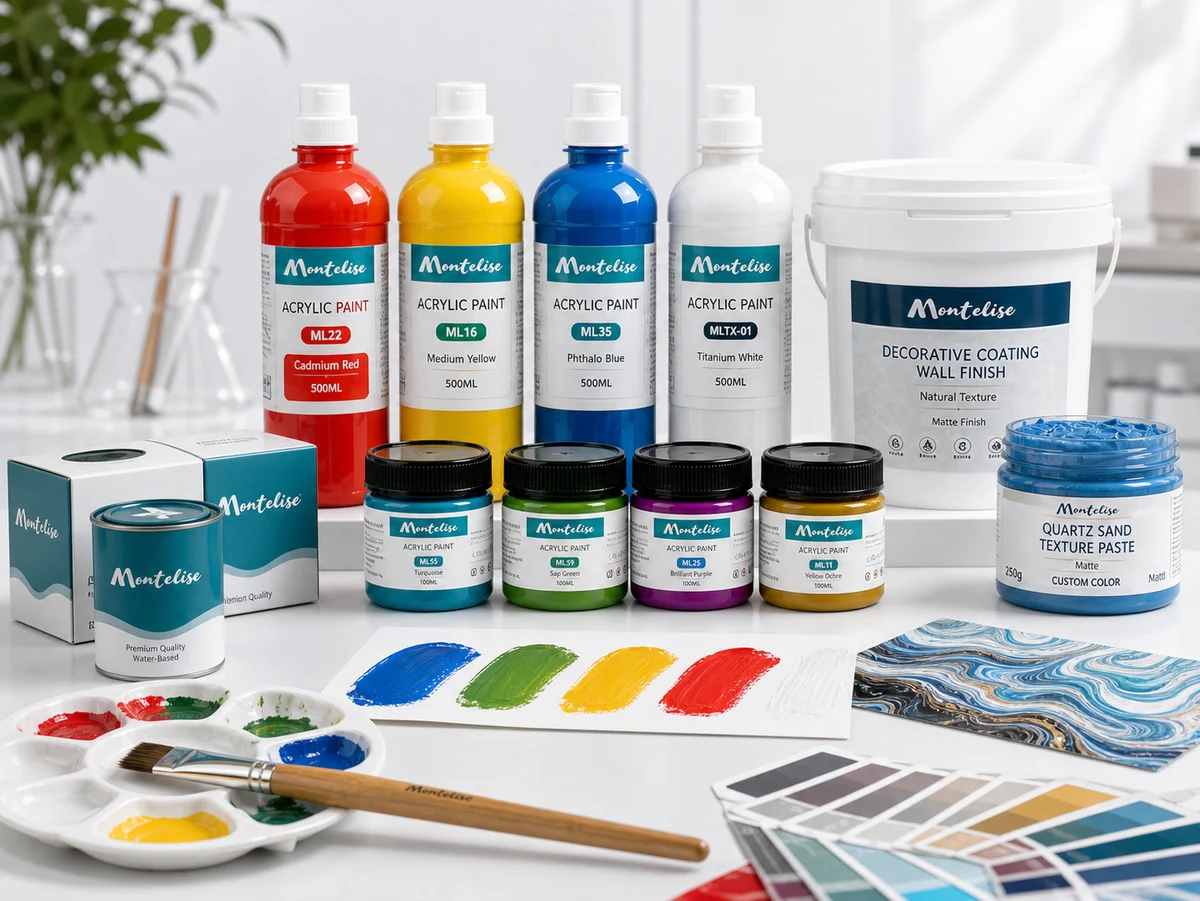
This representative custom packaging for paint products case reflects a familiar B2B situation: the buyer already has a product direction, but the packaging brief is still too broad to move straight into a clean first order.
In practice, packaging projects move better when the buyer narrows which pack sizes, label variants, and carton changes belong in the first round. That is especially true when one supplier may be supporting more than one product family at the same time.
Buyer quick links
- View paint, coating, and color product lines: Product Center
- Compare private label packaging options: OEM&ODM
- Send your packaging scope and order plan: Contact / Get Quote
Buyer Situation
In a typical custom packaging for paint products project, the buyer may want several retail sizes, multilingual labels, or branded cartons before the formula approval path is fully stable. That creates pressure on the first sample round because packaging, product fit, and MOQ can start competing with each other.
The cleaner route is to split the project into stages:
- Confirm the product categories in scope
- Decide which pack sizes are essential for launch
- Limit the number of label versions in the first order
- Leave lower-priority carton refinements for the second stage if needed
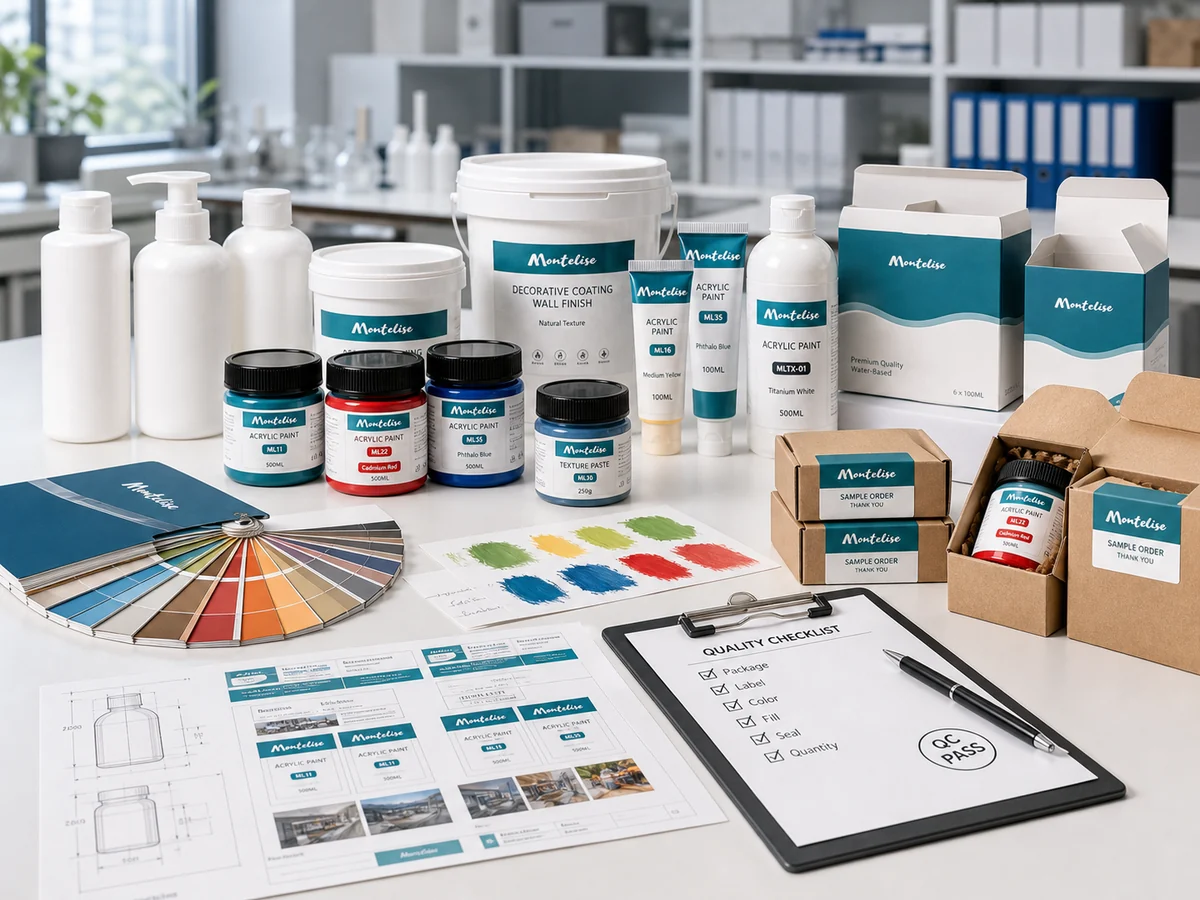
Product and Pack Scope
A packaging case becomes manageable when the buyer decides what must be visible on day one and what can wait until repeat orders. The question is not whether customization is possible. The question is which parts of customization create the most value in the first order.
| Packaging Decision | Better First-Step Approach | Common Delay Risk |
|---|---|---|
| Pack sizes | Start with 1 to 2 core sizes | Launching too many sizes at once |
| Labels | Prioritize one approved design family | Too many language or market variants |
| Cartons | Approve shipping-safe structure first | Overdesign before demand is proven |
| Product mix | Group close categories together | Mixing unrelated launch timelines |
Buyers who need a broader sourcing view should also read OEM Color Material Supplier Checklist for Import Buyers because packaging decisions often make more sense after the wider supply scope is clear.
Development Direction in a Representative Case
In a realistic case, the buyer starts with one core paint line and one support line, not the whole future assortment. That allows the supplier to prepare packaging samples around the products most likely to launch first.
A practical development direction usually includes:
- One approved bottle, jar, or bucket family for the first order
- One primary label direction with limited variants
- A shipping-carton plan based on real quantity targets
- A note on which SKUs can share packaging materials
Planning a custom packaging project for paint products?
Share your product categories, target pack sizes, label direction, quantity range, and launch market with Montelise. The team can help separate first-order essentials from later packaging upgrades.
Sampling and Adjustment
Packaging samples are most useful when they answer approval questions in order. First, the buyer confirms whether the package suits the product family. Second, the buyer checks brand fit. Third, the buyer decides which version should be used for MOQ and lead-time planning.
That means the review should cover:
- Container suitability for the selected product
- Label space and layout priorities
- Carton strength and shipment practicality
- Whether every requested variation is necessary for the first bulk run
For buyers already comparing paint-pack formats, Acrylic Paint Packaging Options for Retail and Wholesale Buyers is the closest related guide.
Packaging, MOQ, and Delivery Considerations
Custom packaging for paint products usually changes the commercial discussion in three ways. It can raise MOQ, extend lead time, and increase the number of approval points before production begins.
Buyers should ask:
- Which pack and label choices use standard supply most efficiently
- When custom cartons materially change MOQ
- Whether mixed-SKU production can reduce packaging waste
- Which packaging elements can stay standard in the first run
- How repeat packaging will be stored and referenced for reorder consistency
What the Buyer Should Prepare
The fastest packaging case starts with a short, decision-ready brief. Buyers should send:
- Product type and planned SKU list
- Target pack sizes
- Label and carton requirements
- Destination market and language needs
- Estimated quantity per SKU
- Required sample and launch timing
What to Send for a Faster Quote
What to send for a faster quote
- Product type: paint, coating, textile color, texture material, or mixed product line
- Preferred bottle, jar, bucket, or kit format
- Label scope and carton requirements
- Estimated quantity per SKU
- Destination market
- Sample deadline and target shipment window
Final Thought
Custom packaging for paint products works best when the buyer treats first-order packaging as a launch tool, not a full-range design exercise. Clear priorities on pack size, label scope, and carton needs help the supplier quote accurately and keep the first order realistic.
If part of the launch depends on a mixed-category sample box, OEM Sample Kit Packaging Case shows how to keep the first sample-kit structure practical before packaging costs expand.
Montelise supports packaging planning, sample coordination, label discussion, and OEM supply across multiple color-material product lines. If you want to send a similar requirement, contact Montelise with your product list, pack direction, quantity plan, and market details.
FAQ
What should buyers narrow first in a custom packaging project?
They should narrow the first-launch pack sizes and label variants before expanding into a larger packaging matrix.
Does custom packaging always increase MOQ?
Not always, but custom labels, cartons, and too many pack variations can push the practical MOQ higher than a standard-pack order.
Should carton design be finalized before product approval?
Usually no. Buyers often move faster by confirming product and pack suitability first, then locking the final carton refinements.
Why is a staged packaging rollout useful?
It lets the buyer launch the core range faster while holding lower-priority variations for the reorder phase.