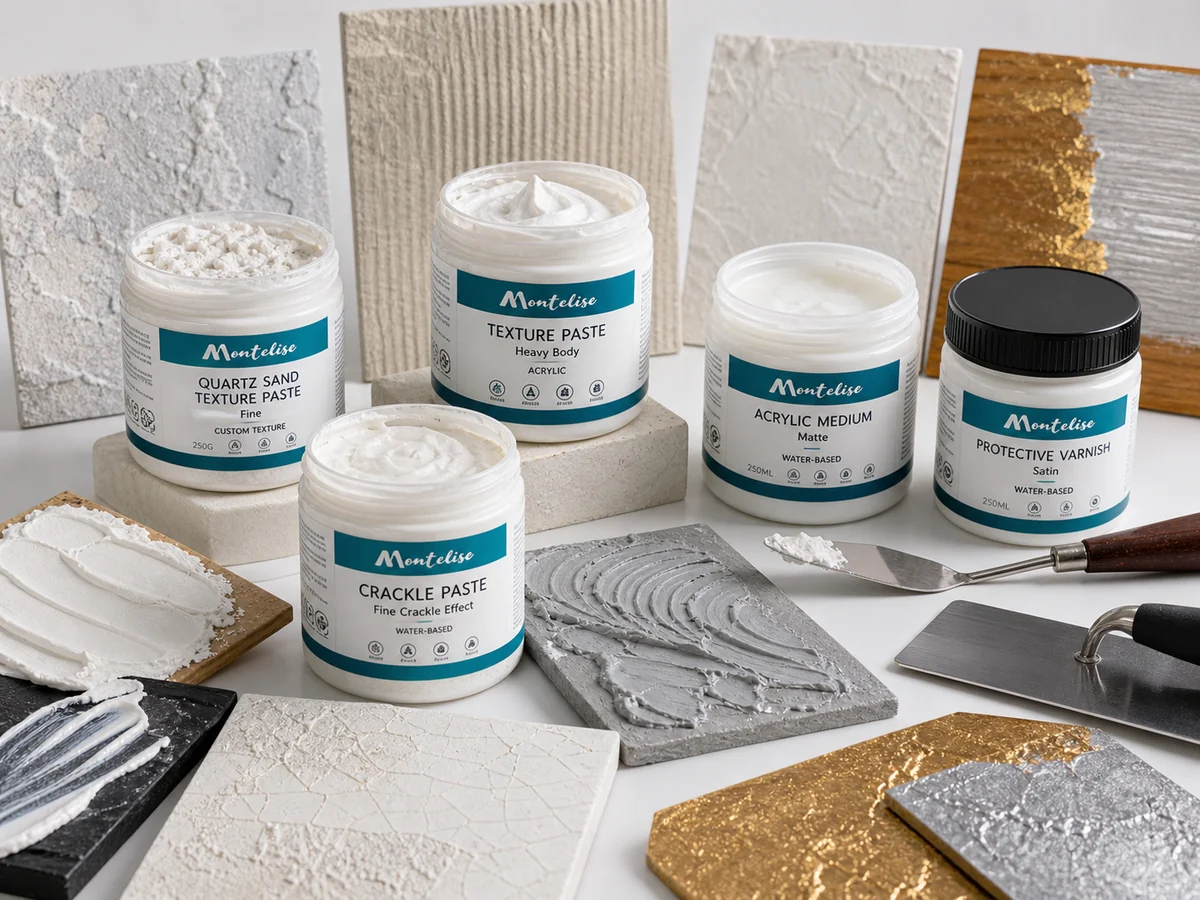
Buyers searching for a modeling paste manufacturer are rarely looking for a retail art tutorial. They are trying to source a paste with the right body, drying behavior, and package route for a branded line, a distributor range, or a mixed-media product group. The supplier question is not only “does the paste build texture,” but “can this factory keep the same feel from sample jar to repeat order.”
That is why the first RFQ should define the selling channel, the target body level, the sample-review method, and the first pack structure together. Without those details, a supplier can describe texture in general terms but still miss the commercial setup the buyer actually needs.
Buyer quick links
- View texture paste, mediums, and related product lines: Product Center
- Compare private label, custom packing, and OEM routes: OEM&ODM
- Send your quantity, pack-size, and market brief: Contact / Get Quote
- Start from the wider cluster hub: Texture Paste Supplier
Start With the Selling Channel Before You Ask for Samples
A modeling paste manufacturer can support several supply routes, but the lowest-risk version depends on where the product will be sold. A small art retail line, a school-material importer, and a distributor building a broader texture range do not need the same body level or pack structure.
Buyers usually get a better first quotation when they state:
- whether the line is for art retail, workshop use, distributor stock, or a mixed private label range
- whether the target product should feel soft for spreading, extra heavy for knife build, or balanced for general mixed-media use
- whether the first launch needs one hero SKU or a two- to three-SKU texture family
- whether the opening order should stay in standard labels or move directly into buyer artwork
If the buyer still needs to position modeling paste against nearby categories, Texture Paste vs Modeling Paste is the better companion page because naming differences often hide an application mismatch.
Ask for a Sample Set That Shows Knife Feel, Build, and Crack Risk
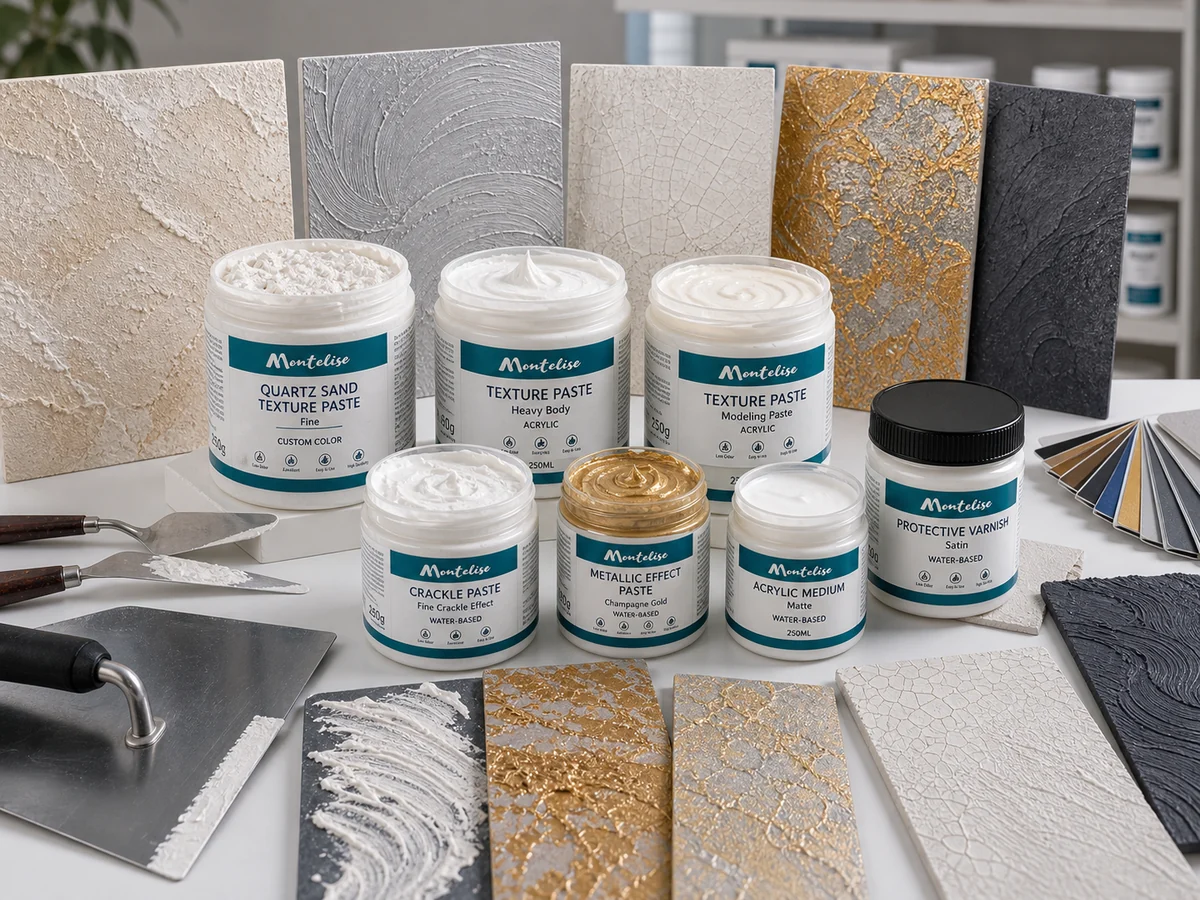
Many competitor pages describe modeling paste in retail language, but buyers need a sample workflow that exposes commercial risk. A practical modeling paste manufacturer should be ready to send a sample that can be reviewed on the same surface and with the same application method the end market expects.
Useful sample details to define up front:
- one or two body levels instead of a wide uncontrolled sample set
- sample jars sized for real testing, such as 250 ml evaluation jars before any 500 ml or larger pack discussion
- knife application on primed board or canvas, not only a label photo
- dry-down review after 24 to 48 hours to check shrinkage, edge hold, and crack behavior
- a retained sample code or board photo that can be tied to the reorder file
That structure is missing from most ranking pages, which usually explain what modeling paste is but not how an importer should approve it for OEM supply.
Planning a modeling paste launch or RFQ?
Share your target channel, body preference, sample surface, package idea, and estimated quantity with Montelise. The team can suggest a narrower sample route before you commit to a bulk order.
Quote Pack Sizes and Label Setup as One Decision
For modeling paste, the package route often changes the commercial feasibility faster than the formula itself. Buyers should ask the manufacturer to quote package sizes, label treatment, and carton logic in one file instead of discussing them later as separate tasks.
Common points buyers should settle early:
- whether the first order uses 250 ml jars for retail review, 500 ml tubs for distributor testing, or 1 kg to 5 kg pails for workshop and project use
- whether the line needs tamper seals, blank lids, buyer SKU stickers, or full private label wraps
- whether carton marks should stay neutral for the first order or carry the buyer SKU and destination-market note
- whether artwork must be supplied as AI or editable PDF before mass-label printing starts
- whether the launch should keep one shared jar and carton format across several texture SKUs
Buyers narrowing the container decision can also review Texture Paste Distributor Pack Sizes because pack structure and MOQ usually move together.
If the buyer already plans to launch under its own brand, Private Label Modeling Paste is the next step because it separates sample approval from artwork release, carton marks, and repeat-order control.
Separate Base-Formula MOQ From Artwork MOQ
MOQ discussions for modeling paste become confusing when buyers ask for one headline number. In practice, the manufacturer often needs to separate formula MOQ, package MOQ, and print-material MOQ so the buyer can understand where the real threshold sits.
A more useful MOQ conversation breaks down:
- minimum quantity for the chosen standard modeling-paste base
- extra complexity if the buyer mixes different body levels in one PO
- pack-size impact if the buyer requests both retail jars and larger tubs
- label and carton minimums once custom artwork is introduced
- reorder MOQ after the first approved SKU becomes the lead seller
This is one of the main gaps in the current SERP. Retail pages describe features, and industrial resin pages describe performance, but neither explains how MOQ changes when a B2B buyer mixes formula, pack size, and label versions.
Freeze the Reorder File Before the First Bulk Shipment
The best modeling paste manufacturer is the one that makes the second order easier than the first. Buyers should build a reorder file before the opening shipment leaves, not after the first complaints or sample mismatches appear.
A practical reorder file should keep:
- approved sample code and body-level note
- the exact sample surface used for approval, such as primed board, canvas, or mixed-media panel
- the accepted drying review notes, including any shrinkage or crack comments
- final pack size, label version, and carton mark
- destination-market version if the same formula uses different barcode or language files
- the retained sample or photo reference used for repeat production
For a wider texture-and-medium program, Texture Paste Supplier helps buyers connect modeling paste to adjacent mediums, varnishes, and special-effect materials instead of treating it as an isolated SKU.
What to Send for a Faster Quote
What to send for a faster quote
- Product route: standard modeling paste, private label modeling paste, or mixed texture range
- Target body level and application surface
- Sample requirement: jar size, drawdown board, or knife-applied sample panel
- Preferred pack sizes and label requirements
- Estimated quantity per SKU and destination market
- Sample deadline and expected bulk-order window
FAQ
What should buyers confirm first with a modeling paste manufacturer?
They should confirm the selling channel and target body level first. Those two points shape the right sample route, pack size, and MOQ structure.
Why is a sample board more useful than a jar photo?
Because a board or canvas review shows how the paste spreads, holds peaks, dries, and risks shrinkage or cracking under practical use conditions.
Should private label artwork be prepared before sample approval?
Usually no. Many buyers move faster when they approve the formula and core pack structure first, then provide AI or editable PDF artwork for labels and cartons.
What makes a repeat order easier in this category?
The repeat order gets easier when the buyer and manufacturer keep one approval file with the sample code, body note, sample surface, pack size, label version, and retained reference image.