
Repeat acrylic paint orders often become difficult for a simple reason: the buyer approved the first shipment, but the approval record was never organized well enough to support the second one. A distributor may remember that the titanium white looked right and the 250 ml bottle sold well, yet the retained sample, drawdown card, batch-code record, and label version are scattered across several emails.
This page is for private label brands, distributors, school-supply buyers, and importers that need tighter acrylic paint batch consistency before placing a repeat order. It supports the main Acrylic Paint Manufacturer page and focuses on the details that reduce repeat-order disputes: retained sample control, pack-size lock, viscosity checks, label-version tracking, carton continuity, and reorder comments that can actually be used in production.
Buyer quick links
- View acrylic paint and color material product lines: Product Center
- Compare private label, custom color, and packaging options: OEM&ODM
- Review the main acrylic sourcing page: Acrylic Paint Manufacturer
- Send repeat-order quantity, approved sample notes, and packaging updates: Contact / Get Quote
Build One Approval Record Before the First Repeat PO
Most acrylic paint batch problems do not start in the tank. They start in the file history. The buyer says “repeat last order,” but the supplier still needs to know which version should be repeated.
Before the second PO is confirmed, keep one approval set that includes:
- retained sample or sealed reference from the approved lot
- drawdown card or brush-out card marked with the approval date
- final pack size per SKU, such as 120 ml, 250 ml, 500 ml, or 1 L
- label version number and barcode list
- carton quantity per SKU and any pallet notes
- comments on gloss, opacity, flow, or brush feel that were accepted in the first order
| Approval item | What it controls | Typical problem if missing |
|---|---|---|
| Retained sample | Shared physical color and finish reference | Buyer and supplier compare against memory only |
| Drawdown card | Visual check under normal light | Shade arguments become subjective |
| Pack-size record | Fill route and label fit | 250 ml and 500 ml SKUs get mixed in repeat planning |
| Label version | Artwork and batch-code area | Old barcode or old copy comes back into use |
| Carton record | Packing count and warehouse receiving | Repeat shipment arrives in a different carton structure |
If your team is still cleaning up the first artwork route, the Private Label Acrylic Paint Label Checklist helps lock the label and barcode side before repeat production starts.
Trying to control an acrylic paint repeat order before bulk production starts?
Share your previous PO reference, approved shade records, pack sizes, label version, and destination market with Montelise. The team can review which items should be reconfirmed before the next batch is filled.
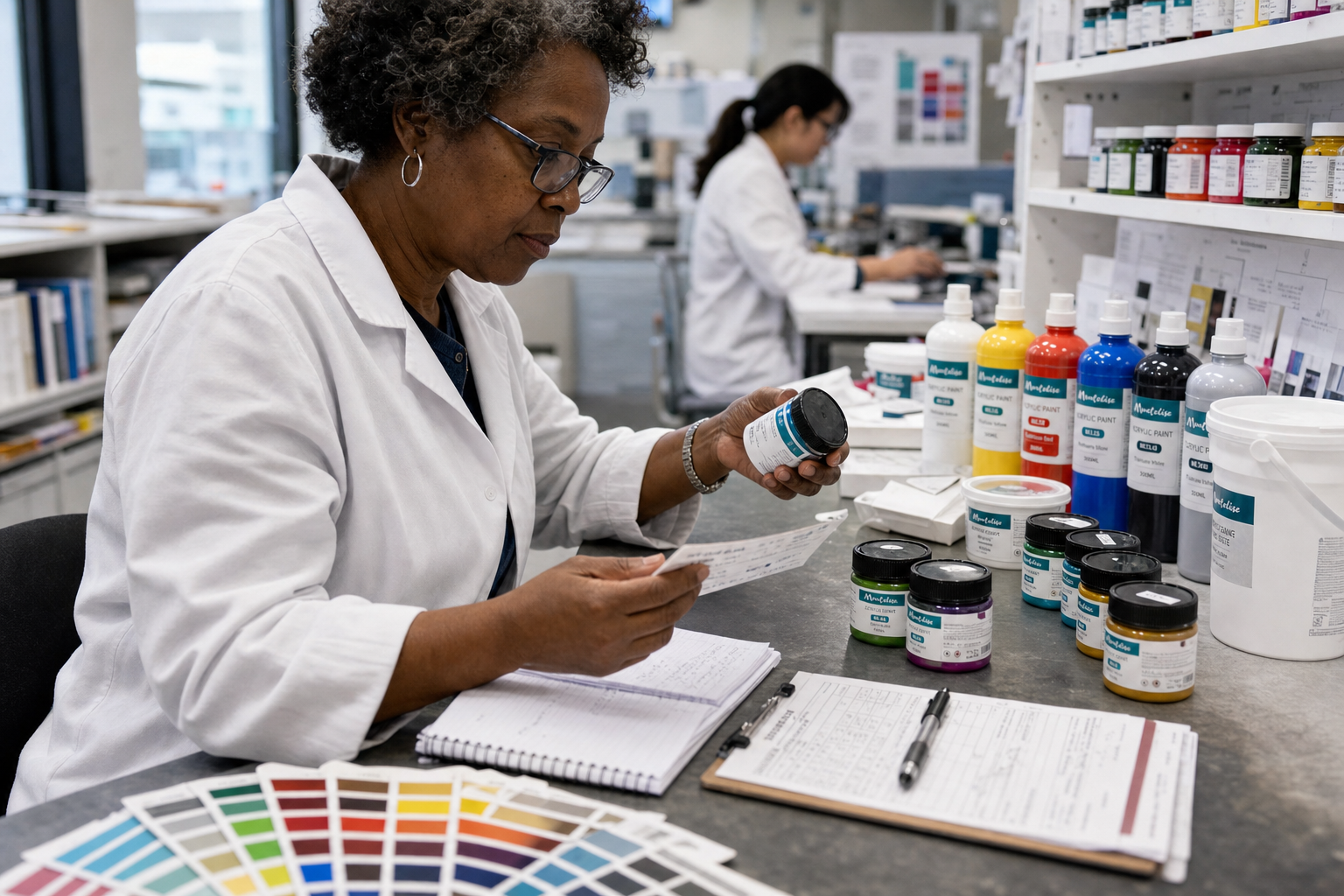
Check Color, Viscosity, and Surface Result as Separate Points
Acrylic paint batch consistency is not only a color question. A repeat order can pass a quick shade review and still disappoint the buyer because the viscosity changed, the dry film feels stiffer, or the opacity looks different on the actual selling surface.
For repeat-order review, separate these checks:
- color match against the retained sample or approved drawdown
- viscosity or flow feel for brush, squeeze, or pouring use
- opacity on white card, black card, canvas, wood, or classroom paper
- dry finish, such as matte, satin, gloss, metallic, or pearl
- fill appearance inside the actual pack, such as 120 ml bottle, 250 ml bottle, or 500 ml jar
This matters when one project mixes standard basics with metallic or fluorescent shades. The label family may stay the same, but the repeat control points should still be checked by shade group rather than treated as one generic pass/fail result.
Buyers already refining the color-reference stage should also review Custom Acrylic Paint Color Matching because a weak swatch or drawdown approval usually creates repeat-order confusion later.
Keep Packaging Changes Out of the Core Consistency Check
One of the most common repeat-order mistakes is changing too many variables at once. A buyer may reorder the same 12 colors, but also switch from 250 ml bottles to 500 ml bottles, revise the front label, reduce carton count, and add a second language panel. That is not a simple repeat order anymore.
The safer route is to split the discussion into:
- true repeat SKUs that should match the approved batch
- packaging changes that need a separate approval track
- new colors or finishes that should be sampled like new items
- carton or pallet changes driven by warehouse rules rather than formula changes
For example, if the repeat order keeps the same 12 acrylic colors in 250 ml bottles, the batch consistency review should stay tied to those approved packs first. A new 500 ml studio bottle can be quoted in parallel, but it should not replace the original reference route until the buyer confirms it separately.
That distinction is also useful for distributors comparing bulk-supply options. The older Bulk Acrylic Paint Supplier Checklist explains how MOQ, pack sizes, and export packing can be simplified before repeat programs become too fragmented.
Use a Simple Reorder Sheet the Factory Can Actually Follow
Many buyers keep good notes, but the reorder brief is still too loose for production. A practical acrylic paint reorder sheet should be short and specific.
Include these fields:
- previous PO number or shipment month
- SKU list with color names plus internal shade codes
- approved pack size per SKU
- retained sample date or drawdown approval date
- label version number and barcode confirmation
- carton count and any destination-carton marks
- whether the repeat order keeps the same formula, same pack, and same market
- which points need fresh confirmation, such as metallic shade review or cap-color change
This kind of record becomes more important when the first launch used 12 to 24 shades and the repeat order keeps only the best sellers. Without a clean SKU-level sheet, the buyer may think the order is narrower while the factory still reads it as a mixed continuation of the original project.
What Usually Changes Lead Time on Repeat Acrylic Orders
Repeat orders are usually faster than first orders, but only when the project really stays repeatable. Lead time often stretches again when the buyer changes one of the control points that looked fixed in the first shipment.
Lead time commonly moves when the buyer adds:
- a new bottle family, such as moving from 250 ml to 500 ml
- a revised label file or new barcode series
- extra colors outside the approved reorder list
- printed retail cartons instead of plain export cartons
- new destination language or warehouse marking
- a late request to compare retained sample against a different surface
That is why buyers should state which parts are strict repeats and which parts are updates. If the project also needs document review, pair this step with the Acrylic Paint Export Documents Checklist so label names, carton marks, invoice wording, and packing-list details stay aligned.
What to Send Before Montelise Prices the Repeat Order
The fastest repeat-order quotation does not start with “same as last time.” It starts with a workable consistency brief.
Send these details first:
- previous order reference and which SKUs are exact repeats
- retained sample, drawdown card, or approved color-reference details
- pack size per SKU, such as 120 ml, 250 ml, 500 ml, or 1 L
- any formula comments, such as stronger opacity, same viscosity, or no finish change
- label version status and whether barcodes remain unchanged
- carton count, pallet notes, and destination market
- target sample confirmation date, if one shade or one packaging update still needs review
- target bulk shipment month
Buyers that are still standardizing the first launch should also review Private Label Acrylic Paint Packaging Options before turning a packaging revision into a repeat-order problem.
If the team needs a cleaner supplier-pricing brief before the reorder is finalized, Bulk Acrylic Paint Quote shows how to separate pack-size, label, carton, and timing inputs so the quote reflects the real project scope.
What to Send for a Faster Quote
What to send for a faster quote
- Previous order reference and repeat SKU list
- Retained sample or drawdown approval reference
- Pack size per SKU
- Label version and barcode status
- Carton count and destination market
- Any approved or pending changes
- Target timing for the next shipment
FAQ
What is the most useful control for acrylic paint batch consistency?
A retained sample or approved drawdown card is usually the strongest control because both buyer and supplier can compare the next batch against the same physical reference.
Should buyers change bottle size during a repeat acrylic paint order?
Only if the new pack is treated as a separate approval track. Moving from 250 ml to 500 ml changes fill route, label fit, carton count, and sometimes MOQ logic.
Why can a repeat acrylic paint order still need a sample check?
Because metallic shades, fluorescent colors, new surfaces, revised labels, or a changed bottle family can introduce new variables even when the project is mostly a repeat.
What reorder details are often forgotten?
Buyers often forget the label version number, barcode list, carton count, approved drawdown date, and the exact pack size tied to each shade family.
Final Thought
Acrylic paint batch consistency is easier to protect when buyers keep one usable approval record, separate formula checks from packaging changes, and brief the repeat PO at SKU level instead of relying on memory. That turns a repeat order into a controlled supply step instead of a second first order.
Ready to review acrylic paint repeat orders, retained samples, or private label replenishment planning? contact Montelise with your previous order reference, SKU list, pack sizes, quantity plan, and target market to request samples or a practical bulk quote.