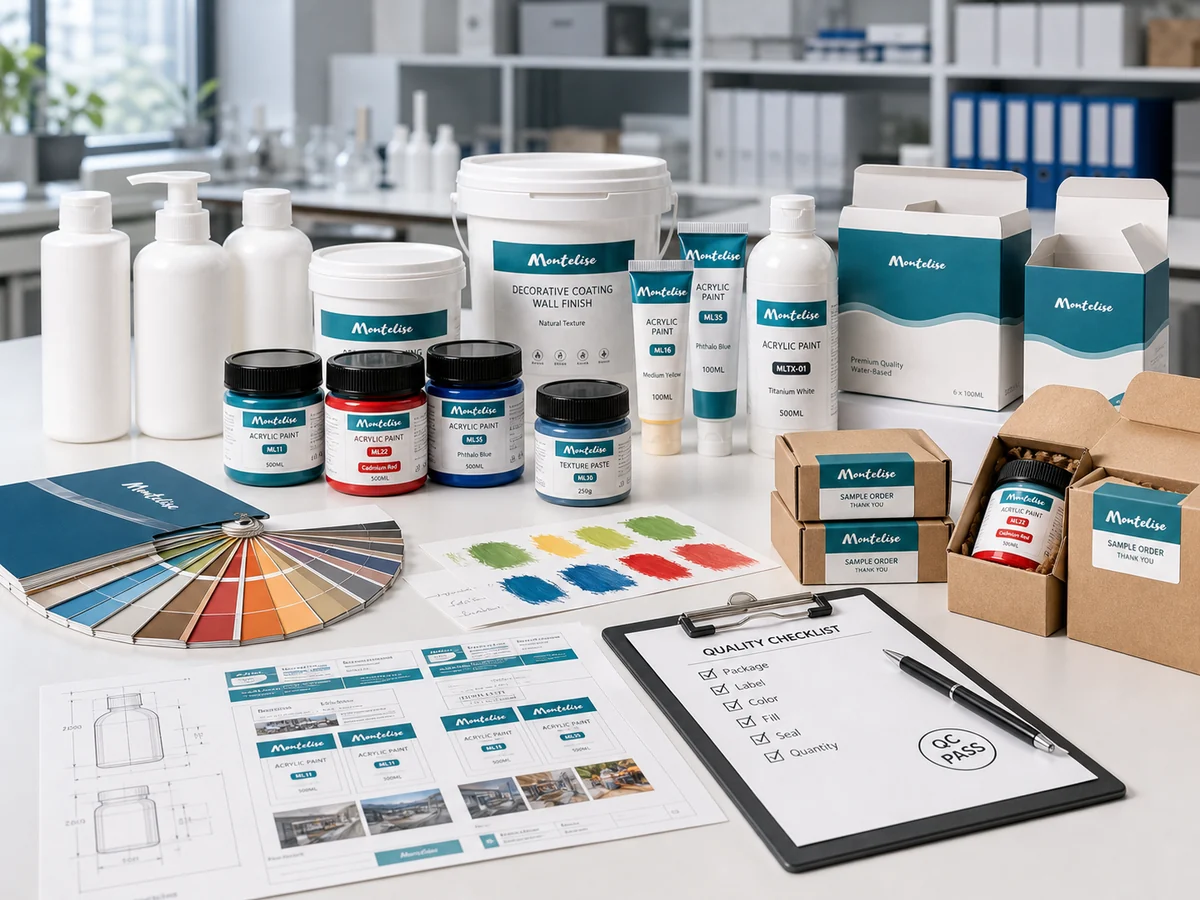
Private label acrylic paint packaging is usually decided too late. Buyers may already approve the color sample, but the order still slows down when the 120 ml bottle needs a different label panel, the 24-color set no longer fits the planned carton, or the export carton weight becomes too high for the warehouse route.
This page is for art brands, importers, school-supply buyers, craft retailers, and distributors that need a workable private label acrylic paint packaging plan before OEM production starts. It supports the main Acrylic Paint Manufacturer page and focuses on the packaging decisions that affect sampling speed, MOQ, shelf presentation, carton structure, and repeat-order control.
Buyer quick links
- View acrylic paint and color material product lines: Product Center
- Compare private label, custom color, and packaging support: OEM&ODM
- Review the main acrylic sourcing page: Acrylic Paint Manufacturer
- Send SKU count, pack sizes, and market details: Contact / Get Quote
Choose the Selling Format Before You Price the Project
The first packaging decision is not label design. It is the selling format. A private label acrylic paint line may launch as 60 ml starter bottles, 100 ml jars, 120 ml squeeze bottles, 250 ml retail bottles, 500 ml studio bottles, or 1 L refill packs. Each route changes label size, carton quantity, and the way MOQ is built.
Use the sales channel to narrow the pack first:
| Selling route | Common pack structure | Packaging point to confirm first | Typical risk if delayed |
|---|---|---|---|
| Craft retail shelf | 60 ml to 120 ml single SKUs or set trays | Front-panel size and barcode position | Label copy becomes crowded after the bottle shape is finalized |
| School or workshop supply | 250 ml to 500 ml bottles | Carton count and cap type | Outer carton weight or leak prevention is not checked early |
| Distributor mixed order | 250 ml, 500 ml, and 1 L combination | SKU coding and pallet mix | Too many pack sizes make the first PO difficult to replenish |
| Gift or starter kit | 6, 12, or 24 color box set | Insert tray, set box size, and color count | The planned box does not fit the approved bottle family |
For first orders, buyers usually move faster when they lock one bottle family and one selling channel first. A brand testing ecommerce may start with a 12-color 120 ml set, while a distributor may need 500 ml singles in plain export cartons. Those are different packaging projects even if the paint formula is similar.
Planning a private label acrylic paint order with packaging questions?
Share your target pack size, color count, set structure, estimated quantity, and destination market with Montelise. The team can suggest workable bottle families, carton options, and sample steps before you lock the first production run.
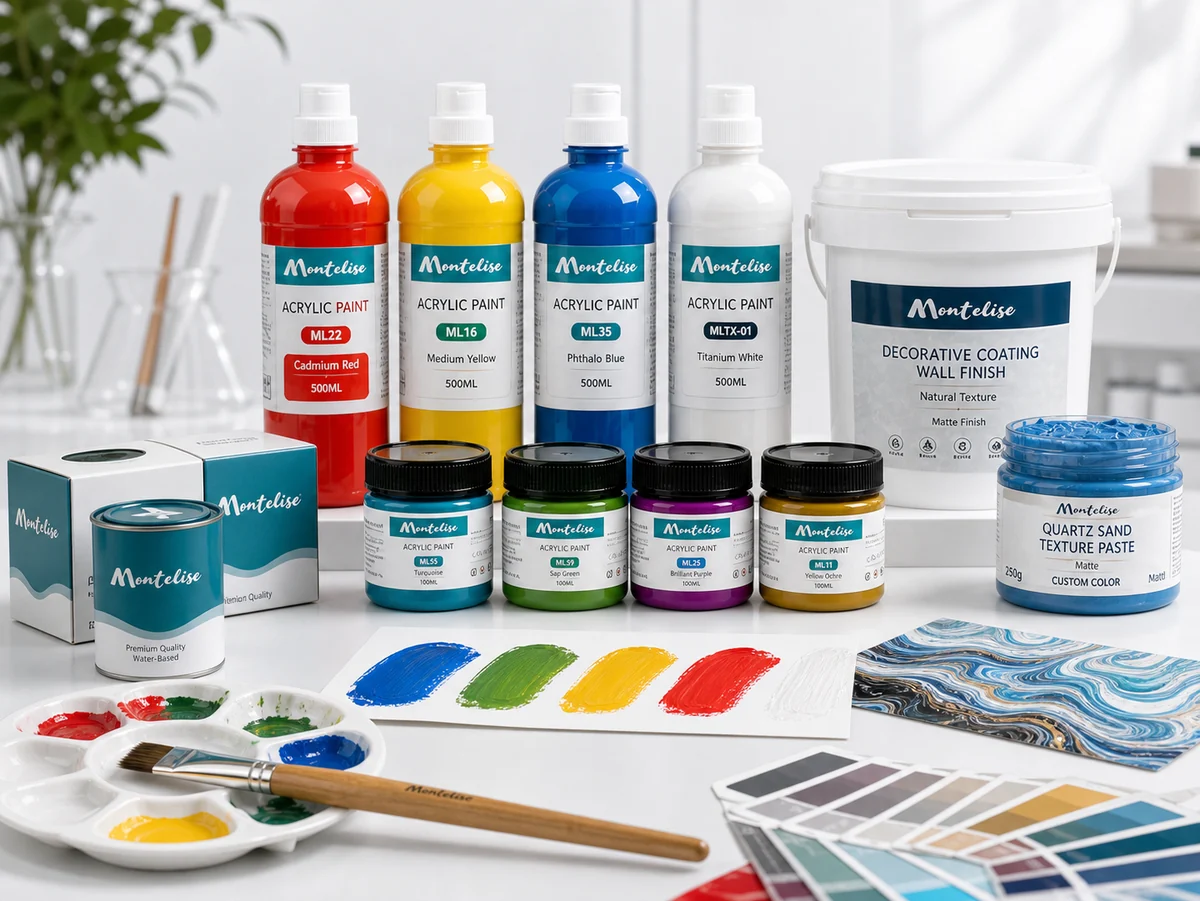
Compare Single SKU, Set Box, and Refill Pack Routes
Private label acrylic paint packaging normally falls into three practical routes, and each one changes how the supplier quotes the order.
Single SKU bottles or jars
This route works well for distributors, classroom supply, and open-stock retail lines. Buyers should confirm:
- whether the chosen bottle is 120 ml, 250 ml, 500 ml, or 1 L
- how many units go into each inner box and master carton
- whether labels stay consistent across all colors
- whether the cap style is better for shelf retail or workshop use
Boxed color sets
This route is common for online retail, art-store launches, and seasonal promotions. Buyers should confirm:
- 6-color, 12-color, or 24-color count before box layout starts
- whether the set uses bottles, jars, or tubes in one family
- insert tray material and whether the tray is stock or custom
- whether the box needs a window, hang tab, or barcode sticker area
Refill or bulk packs
This route is better for studios, mural teams, and distributors that replenish the same colors regularly. Buyers should confirm:
- whether 500 ml, 1 L, or 2 L packs are easier for the target market
- whether the handle, cap, and seal are suitable for repeated opening
- whether pallet stacking and carton weight are within warehouse limits
- whether the same color code will be reused for later repeat orders
The right route depends on how the product is sold, not on which photo looks best in a sample deck.
Check How Packaging Choices Move MOQ
MOQ for private label acrylic paint is rarely a single number. Packaging often changes the real starting quantity more than buyers expect.
MOQ usually moves when the order adds:
- two or three bottle sizes in one first launch
- separate set boxes for different markets
- custom printed cartons instead of plain export cartons
- many low-volume shades across one packaging family
- special lids, pumps, or accessories
- late box-size changes after label artwork has already started
An order for 12 colors in one 120 ml bottle with a simple color box may be easier to build than an order for 24 colors split across 120 ml singles, 250 ml bottles, and 500 ml refill packs. Buyers should ask for MOQ by packaging component, not only by formula:
- MOQ per bottle or jar size
- MOQ per label version
- MOQ per printed set box
- MOQ per printed master carton
- MOQ per custom accessory or insert tray
That breakdown makes it easier to decide whether the first order should stay simple or whether the market can already support a broader SKU mix.
Treat Label Space, Carton Count, and Export Packing as One Review
Packaging problems often start when buyers approve the product bottle but not the full shipping structure. The packaging review should tie together the label, the inner packing, and the export carton.
Before bulk packaging starts, confirm these points in one file:
- the bottle or jar dimensions that the label dieline is built on
- the net content wording, such as 120 ml, 250 ml, or 500 ml
- barcode type and final number list for each SKU or set
- units per inner box and per master carton
- carton marks required by the destination warehouse or importer
- whether the outer carton stays under the target gross-weight limit
- whether SDS, packing list wording, and carton product names match the label family
If the order ships to different countries, the buyer should also decide whether each market needs its own label version or whether one export version can serve the whole batch. That choice changes both carton planning and label MOQ.
If the project is already moving toward bulk shipment, pair this step with the Acrylic Paint Export Documents Checklist so carton names, shipping marks, and document wording stay aligned.
Use Packaging Samples to Catch Problems Before Bulk Printing
Color approval alone is not enough. Buyers should review at least one packaging sample or mockup before final carton and label printing begin.
Useful sample checks include:
- whether the 120 ml or 250 ml bottle is comfortable to hold and display
- whether the label panel leaves enough clear area for batch coding
- whether the set tray holds the bottles tightly during carton movement
- whether the cap and neck seal stay clean after transport testing
- whether printed cartons remain readable after stacking in the warehouse
- whether the retail box still fits after multilingual copy is added
For first orders, a practical sequence is:
- Approve product sample and core bottle family.
- Approve label layout and barcode location.
- Review carton count and export packing method.
- Confirm final set box or single-SKU packing version for bulk production.
This reduces the chance that the buyer approves a good paint sample but still has to reopen the project because the box footprint or carton strength was never checked.
If the buyer is still trying to build a reliable launch calendar after packaging is narrowed, Private Label Acrylic Paint Lead Time explains how sample rounds, artwork approval, carton printing, and shipment timing should be sequenced.
Build Reorder Control Into the Packaging File
Private label packaging should not be treated as a one-time design job. It should be recorded in a way that makes reorders easier.
Buyers should ask the supplier to keep a stable record for:
- color name plus internal SKU or shade code
- bottle size tied to that color family
- label version number and print date
- units per carton and carton dimensions
- approved set configuration, such as 6-color or 12-color layout
- first shipment PO or bulk order reference
This matters when the brand later needs to reorder only best sellers or add a second packaging format. Without a clear packaging record, the team may rely on old mockups instead of the approved production version.
For buyers still fixing the artwork side, the Private Label Acrylic Paint Label Checklist explains how pack-size lock, AI/PDF files, and barcode planning connect to the packaging route.
What to Send Before Montelise Quotes the Packaging Route
The fastest packaging quote does not start with “please quote private label acrylic paint.” It starts with a clear SKU and pack brief.
Send these details first:
- product type and intended use, such as art retail, school supply, studio, mural, or craft
- pack structure: single SKU, set box, refill bottle, or mixed distributor order
- target bottle or jar size, such as 120 ml, 250 ml, 500 ml, or 1 L
- color count and whether the order includes metallic, fluorescent, or custom matched shades
- label status: ready file, draft file, or factory assistance needed
- carton preference: plain export carton, printed carton, display box, or gift set box
- estimated quantity per SKU or per set
- destination market and target shipment month
Buyers still comparing supplier routes should also review private label acrylic paint manufacturer and bulk acrylic paint supplier to compare packaging choices against sourcing structure and replenishment logic.
What to Send for a Faster Quote
What to send for a faster quote
- Product type and intended sales channel
- Pack format: single SKU, set box, or refill pack
- Bottle or jar size per SKU
- Color count and shade reference method
- Label status and barcode status
- Carton or display-box requirement
- Estimated quantity per SKU or per set
- Destination market and target launch timeline
FAQ
What is the easiest private label acrylic paint packaging route for a first order?
For many buyers, one standard bottle family with custom labels is the most workable starting point. It keeps packaging recognizable while limiting bottle, carton, and MOQ complexity in the first run.
Does a 24-color acrylic paint set always need a higher MOQ than single SKUs?
Usually yes, because the set adds box layout, insert trays, color grouping, and more packing control points. The final MOQ depends on bottle size, color count, and whether the box is stock or custom printed.
Should buyers approve packaging samples before final label printing?
Yes. A packaging sample helps confirm label fit, barcode space, carton count, and set arrangement before the supplier commits to bulk printed materials.
What packaging details matter most for reorders?
Keep the bottle size, internal SKU code, label version, carton count, and approved set layout recorded together. That record is more useful than relying only on a product photo or marketing mockup.
Final Thought
Private label acrylic paint packaging works best when buyers fix the selling format early, compare set and single-SKU routes honestly, and review cartons and labels as one export-ready system. That makes the first order easier to approve and the second order easier to repeat.
Ready to review private label acrylic paint packaging, set-box structure, or OEM bulk supply planning? contact Montelise with your SKU list, pack sizes, quantity plan, and destination market to request samples or a practical bulk quote.