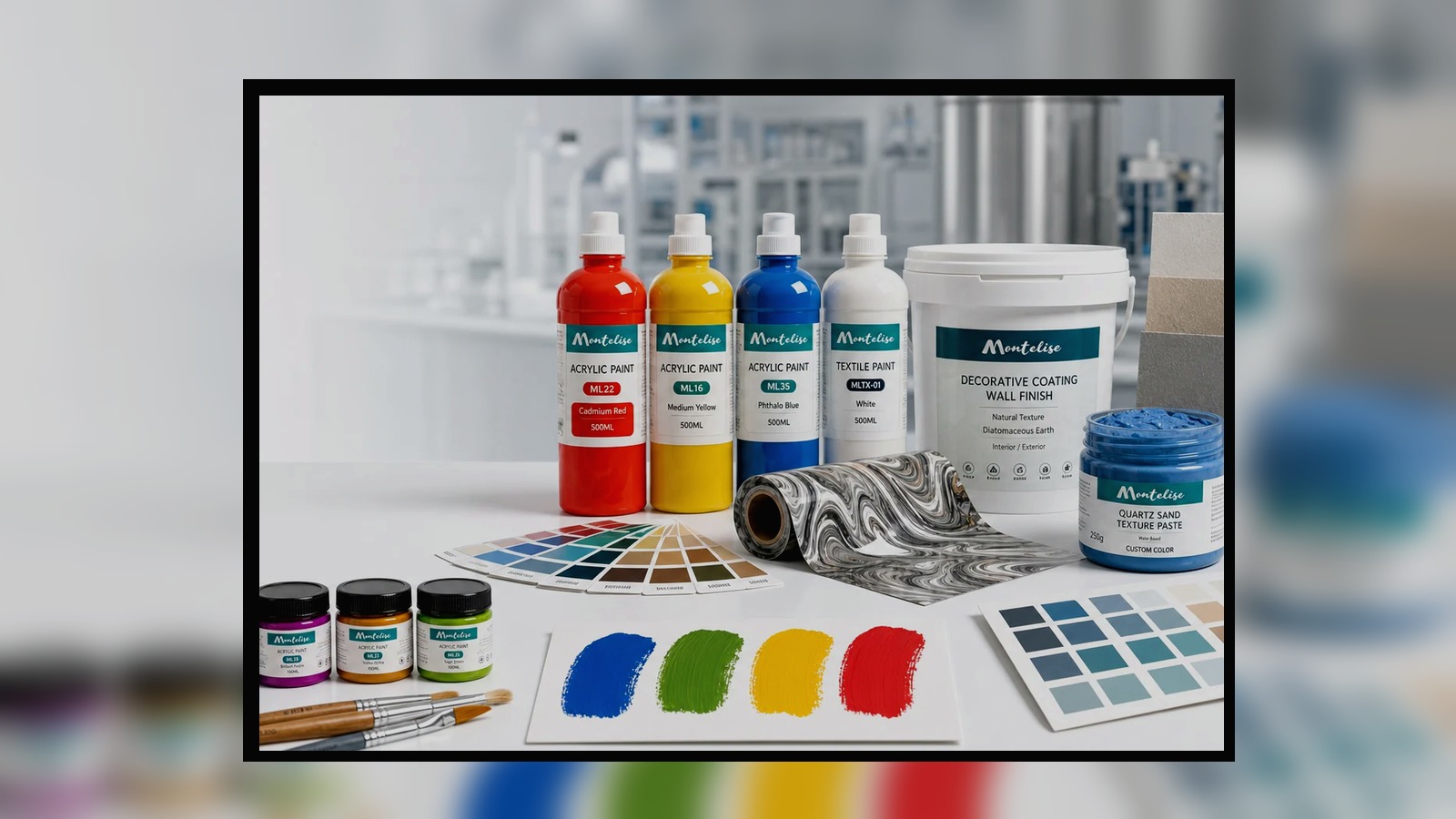
Buyers comparing texture paste vs modeling paste are usually deciding how broad a product line should be, not just which label sounds better. They need to know whether the market needs a heavier sculptural medium, a more decorative texture direction, or both, and how that choice affects packaging, MOQ, and first-order complexity.
That is why this comparison matters for B2B sourcing. A distributor building an art-material shelf, a decorative-finish buyer, and a private label OEM brand may all ask about both categories, but the commercial logic behind the decision is different in each case.
Buyer quick links
- View texture paste and related product lines: Product Center
- Compare private label and custom supply options: OEM&ODM
- Send your product plan and quantity target: Contact / Get Quote
The Short Difference Buyers Should Start With
In practical sourcing terms, modeling paste is usually selected for build, body, and sculptural shaping, while texture paste can cover a wider decorative range that may include sand, crackle, coarse effects, or layered surface finishes.
That does not mean the two categories never overlap. It means the buyer should first define what the finished product must do in the market:
- Add body and raised form for art applications
- Create decorative grain or special effects
- Sit inside a broader mixed-media or wall-finish range
- Launch as one hero SKU or a grouped set
Buyers still comparing broader product families should use Texture Paste Supplier Guide for Art, Wall, and Special Effect Buyers before turning the comparison into an RFQ.
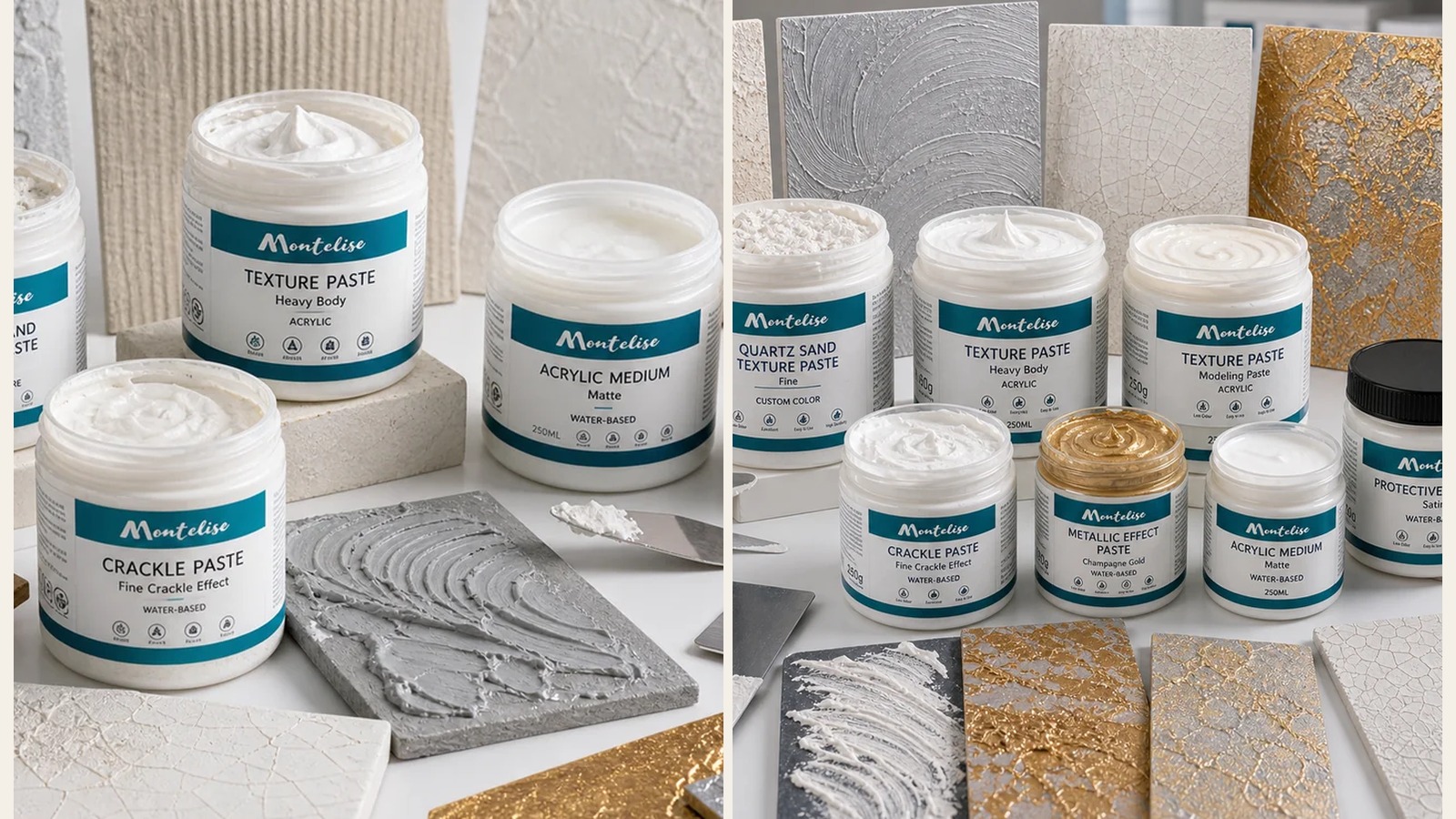
Compare by End Use, Not Only by Name
The safer sourcing route is to compare texture paste and modeling paste by the intended application. That helps buyers avoid approving the wrong base just because category labels vary from one supplier to another.
| Buyer Need | Lower-Risk Direction | What to Confirm |
|---|---|---|
| Sculptural art build | Modeling paste | Body, drying feel, and jar size |
| Decorative grain or wall finish | Texture paste | Grain level and panel behavior |
| Mixed-media retail expansion | Both in a narrow starter range | Which SKU should lead the launch |
| OEM range planning | Chosen by target user, not by label | Packaging and MOQ logic |
Planning a texture product line?
Share your target application, package size, quantity, and market details with Montelise. The team can suggest whether texture paste, modeling paste, or a smaller combined range is the better starting point for samples and OEM planning.
When Buyers Should Start With Modeling Paste
Modeling paste is usually the better first choice when the market expects heavier body, dimensional application, and a more sculptural product feel. Buyers often start here when the product will be sold into art and craft channels where the user wants strong build and shape retention.
Questions to ask include:
- How dense should the product feel during application
- What pack size matches the target retail price or professional use
- Whether the first range needs only one body level or several
- If the buyer wants standard packaging or private label from the start
When Texture Paste Is the Better Starting Point
Texture paste is often the cleaner route when the project focuses on decorative surface character, grain variation, layered finishes, or crossover use between art and decorative categories. This is especially true when the buyer wants quartz, coarse, crackle, or effect-driven surfaces rather than sculptural volume alone.
Buyers building a wider private label range should also review Private Label Art Supplies Manufacturer: Building a Multi-Category Range, because category expansion often makes packaging and MOQ more complex than the formula choice itself.
When the project is already clearly centered on sculptural body rather than category comparison, Modeling Paste Manufacturer is the more direct buying page because it explains sample-board checks, pack-size quoting, and repeat-order control for OEM supply.
Keep the First Order Narrow Enough to Learn
The biggest mistake in this comparison is trying to launch too many adjacent products at once. A better first order usually tests one clear modeling direction, one clear texture direction, or a very small paired range.
A practical first-order structure often looks like this:
- One lead modeling paste SKU or one lead texture paste SKU
- One supporting secondary SKU only if the buyer has a clear use case
- Standard packaging first, then selective private label updates
- One approval route for sample review and reorder notes
That approach gives the buyer real market feedback before the range expands into too many overlapping products.
RFQ Checklist for Better Supplier Comparison
What to send for a faster quote
- Product type: modeling paste, texture paste, or a two-SKU starter range
- End use: sculptural art, decorative finish, mixed media, or private label retail
- Preferred texture or body feel
- Packaging size and label requirements
- Estimated quantity per SKU
- Destination market and sample timeline
Final Thought
Texture paste vs modeling paste is really a product-planning decision. The right answer depends on whether the buyer needs body, decorative surface character, or a tightly controlled starter range that can be sampled and reordered without confusion.
Montelise supports texture and modeling product planning, packaging discussion, and sample coordination for B2B buyers. contact Montelise with your target application, package plan, quantity, and market details to request samples or a bulk quote.
FAQ
Is modeling paste always different from texture paste?
Not always by naming alone, but in practical sourcing, modeling paste is usually chosen for body and sculptural build, while texture paste often covers a wider decorative-effect range.
Should buyers launch both categories in the first order?
Usually only if there is a clear market need. Many buyers move faster by starting with one lead direction and adding adjacent SKUs later.
What is the best way to compare suppliers on these categories?
Compare them by end use, sample behavior, packaging options, MOQ logic, and how clearly they can narrow the first commercial range.
What makes a useful RFQ for texture or modeling products?
A useful RFQ explains the intended application, preferred body or texture feel, package size, quantity range, destination market, and sample timing.