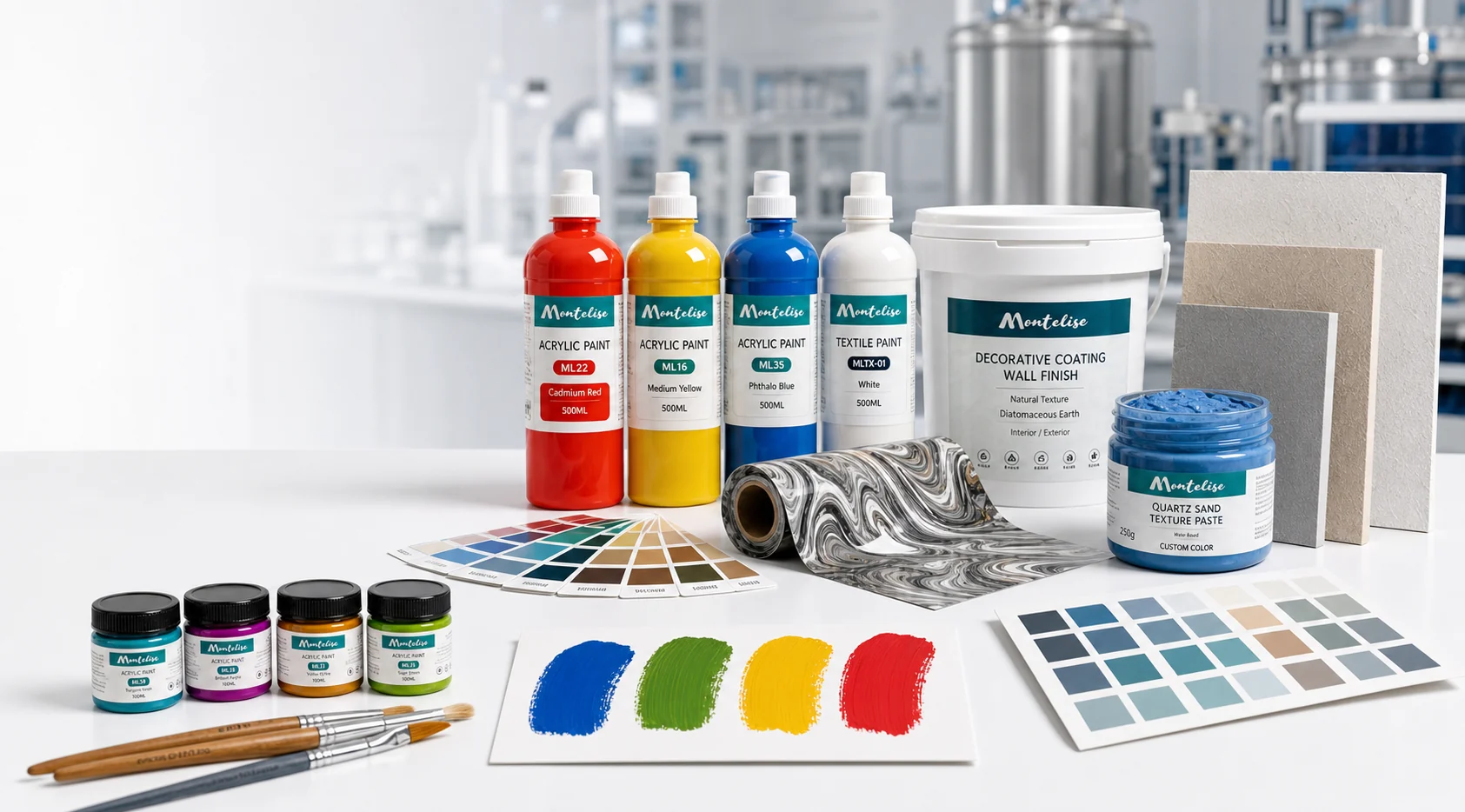
Buyers asking for a color material bulk quote are usually past the early catalog stage. They already know they need paint, coating, textile color, texture, or water transfer materials, but they still need a quote structure that matches the real order. If the request arrives with only a product name and a rough quantity, the price may come back quickly but still be hard to use.
A stronger bulk quote brief tells the supplier what must be priced now, what can stay flexible until sample approval, and which commercial details will affect the first production run. That is how buyers avoid back-and-forth on pack sizes, label versions, export files, and MOQ assumptions after the quote is already on the table.
Buyer quick links
- View Montelise product lines across paint, coating, textile color, transfer, and texture categories: Product Center
- Compare OEM, private label, and custom development routes: OEM&ODM
- Send product scope, quantity, and destination-market details: Contact / Get Quote
- Start from the wider commercial supply page: OEM Color Material Supplier
Define the Product Scope Before You Ask for Pricing
The first thing a supplier needs for a workable color material bulk quote is the real product scope. Many RFQs mix acrylic paint, fabric paint, wall coatings, hydro dipping items, and packaging ideas into one opening request. That creates a broad answer, but not a clean quote.
Buyers move faster when they separate the quote by:
- lead product family, such as acrylic paint, textile paint, decorative coating, hydro dipping material, or texture paste
- application or surface, such as canvas, garment, wall panel, plastic part, or mixed-media board
- launch format, such as standard product, OEM formula adjustment, or full private label line
- first-order purpose, such as distributor test, retail pilot, project sample, or ongoing bulk supply
That structure is often missing from competitor quote pages. The ranking pages usually collect contact details, but they do not explain how the supplier should group a multi-category quote so the buyer can compare it line by line.
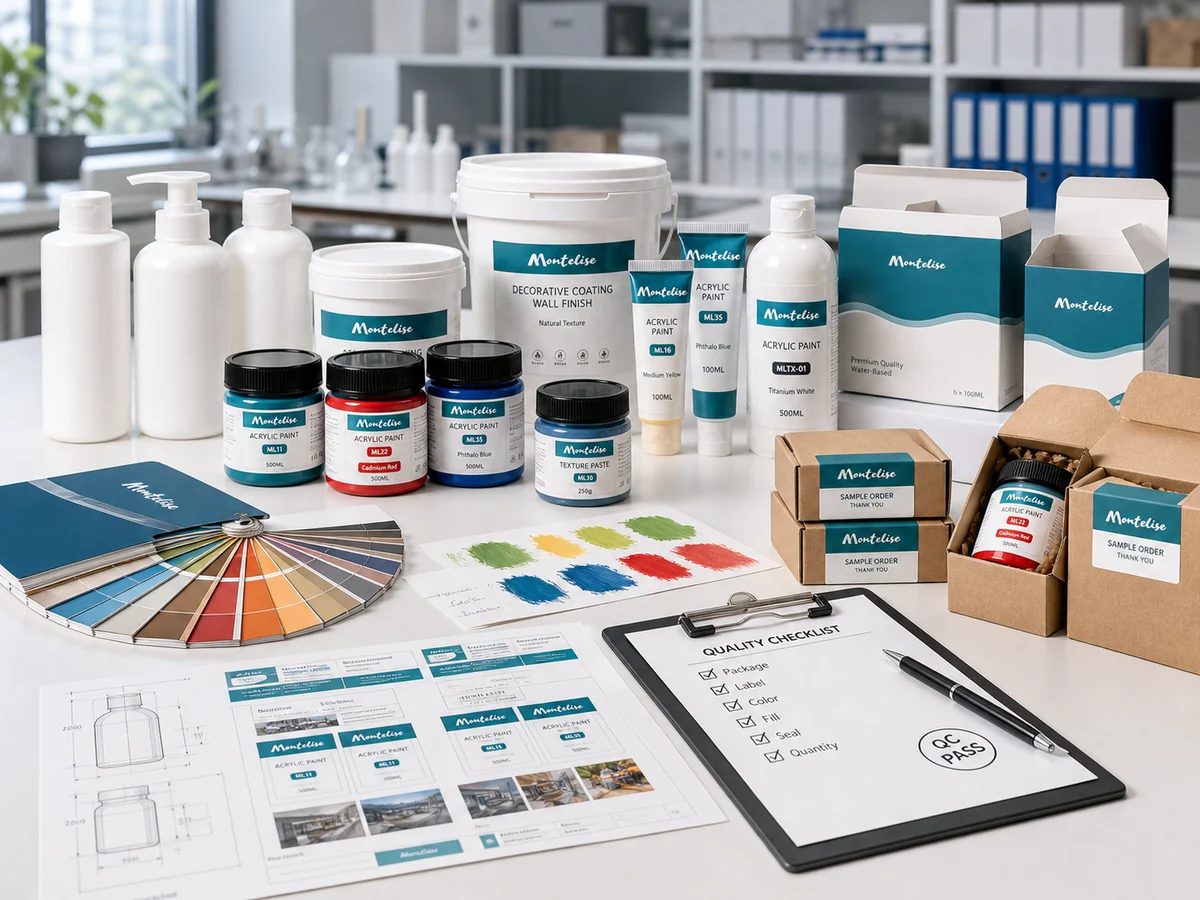
Send Pack Sizes, Sample Scope, and MOQ Logic Together
Most quote delays happen when the buyer asks for pricing first and pack details later. In color-material supply, the pack route often changes the practical price more than buyers expect.
Useful quote details to lock early include:
- sample quantity, such as one retained sample set plus 250 ml evaluation bottles or 1 kg pilot buckets
- intended selling pack, such as 60 ml, 120 ml, 250 ml, 500 ml, 1 L, 5 kg, or 20 kg
- whether the first order uses stock containers, custom labels, or full printed cartons
- whether MOQ should be quoted per formula, per SKU, or per artwork version
- whether the buyer plans one core SKU family first or a mixed launch across several finishes
For example, a buyer asking for eight private label acrylic colors in 250 ml bottles should not expect the same quote logic as a distributor buying one neutral wall-coating base in 20 kg pails. Pack size, label route, and sample quantity change the production setup immediately.
Planning a bulk quote for color materials?
Share your product family, sample route, packaging idea, estimated quantity, and target market with Montelise. The team can suggest which items should be fixed before pricing and which details can wait until after sample review.
Tell the Supplier How Colors or Finishes Will Be Approved
A color material bulk quote is more accurate when the supplier understands the approval method. Some buyers will work from Pantone references, some from physical swatches, and some from retained production samples. Those methods do not create the same quoting risk.
The approval route should state:
- whether color matching follows Pantone, a wet sample, a dried panel, fabric swatch, or buyer-supplied standard
- how many shades or finishes belong in the first sample round
- whether the buyer needs one sample revision or several comparison rounds
- which substrate should be used for approval, such as cotton fabric, primed board, wall panel, or molded plastic
- whether the approved sample code must be retained for repeat orders
This is a major gap in the live SERP. Competitor quote forms ask for product and quantity, but they rarely explain that color approval method and substrate can change both sample timing and the way the bulk quote should be built.
Add Artwork, Carton, and Export Files Before the Quote Is Final
Private label and export buyers should not leave commercial paperwork for the end. The better route is to tell the supplier early whether the quote must include label handling, export documents, and carton identification.
The most useful details are:
- label artwork format, usually AI or editable PDF for print-ready work
- barcode requirement, such as UPC, EAN, or internal SKU code
- carton marks, language version, and destination-market identification
- paperwork needed with shipment, such as commercial invoice, packing list, MSDS or SDS, certificate of analysis, or certificate of origin when applicable
- pallet route, such as neutral pallet, heat-treated pallet, or mixed-SKU pallet labels for export handling
If those details stay unclear, the first quote may look low but still miss real commercial costs. Buyers working on packaging-heavy projects should also review Custom Packaging for Paint Products before they finalize the first pricing round.
Ask for Lead Time by Dependency, Not by One Headline Number
One of the most common buyer mistakes is asking for a single lead time without separating the dependencies behind it. A useful bulk quote should explain which step controls the calendar.
Lead time normally depends on:
- whether the project uses a standard base or a custom color-development route
- how quickly the buyer confirms the first sample feedback
- whether stock packaging is acceptable for pilot supply
- whether labels and cartons need new artwork approval
- whether the order combines one product family or several categories in one shipment window
Buyers comparing multiple factories should ask each supplier to break lead time into sample preparation, artwork approval, packaging readiness, and bulk production. That makes the quote easier to compare than a vague promise of “fast delivery.”
Use One Quote File for Reorder Control
The first quote should already prepare the second order. Buyers get better long-term control when the supplier records the exact references that made the first quote valid.
A good reorder file should keep:
- approved sample code or batch note
- final color or finish reference method
- pack size and fill-weight decision
- label version and carton mark
- MOQ basis used in the first quote
- export-document list for the destination market
If the first quote is linked to a retained sample and one fixed pack structure, reorder discussions become shorter and pricing changes are easier to explain. Buyers still shaping the initial inquiry can use Custom Color Material RFQ first, then move into bulk pricing after the sample direction is narrow enough.
For buyers trying to keep several branded categories under one factory relationship, Private Label Color Material Supplier explains how pack families, artwork files, and category scope should be structured before the first quote is finalized.
What to Send for a Faster Quote
What to send for a faster quote
- Product family and intended application surface
- Color or finish references and preferred approval method
- Sample quantity and target pack sizes
- Label, carton, barcode, and artwork requirements
- Estimated quantity per SKU and total order plan
- Destination market, export-document needs, and target shipment timing
FAQ
What should buyers send first for a color material bulk quote?
They should send the lead product family, application, quantity estimate, pack sizes, and the color or finish approval method. Those points let the supplier build a practical quote instead of a generic range.
Why do pack sizes affect the quote so much?
Because 250 ml bottles, 1 L jars, 5 kg pails, and mixed export cartons do not use the same filling, labeling, or MOQ structure. Packaging changes the real production setup.
Should label artwork be ready before the first quote?
Not always, but buyers should at least confirm whether the first order uses stock labels, buyer stickers, or full printed artwork. That changes both pricing and lead time.
What is the best way to control repeat orders?
Keep one file with the approved sample code, substrate, pack size, artwork version, carton mark, and MOQ basis from the first quote. That gives the supplier and buyer the same commercial reference for the reorder.