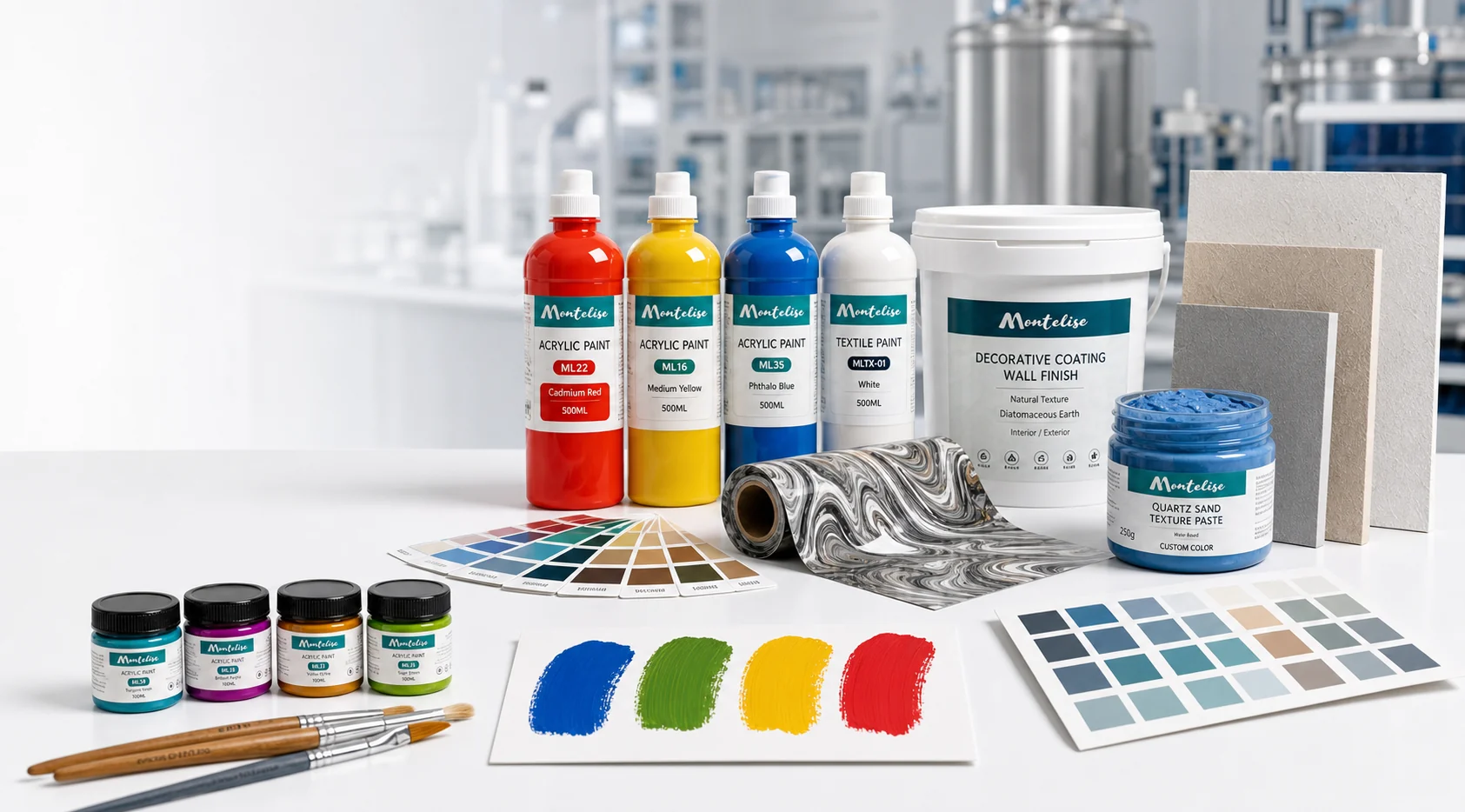
Buyers searching for color coating water transfer materials are often trying to solve a broader sourcing problem. They need to know which product line should lead the RFQ, which materials can stay in the same supplier discussion, and which samples should come first so the project does not become too wide before pricing.
Montelise covers color, coating, water transfer, textile, texture, and private label support under one B2B supply structure, but that does not mean every buyer should sample every category at once. The cleaner route is to compare the product lines by end use, packaging logic, and approval method before asking for a mixed quote.
Buyer quick links
- View color, coating, and water transfer product lines: Product Center
- Compare private label and custom supply options: OEM&ODM
- Send your lead product line, quantity, and market details: Contact / Get Quote
How to Compare Color Coating Water Transfer Materials
The best way to compare color coating water transfer materials is to start with the commercial decision behind the inquiry. A distributor building a broader catalog, a workshop brand adding hydro dipping items, and a private label buyer launching paint plus texture products may all contact the same supplier, but they should not all receive the same sample plan.
| Buyer Priority | Best Lead Product Line | Why It Should Lead |
|---|---|---|
| Retail or school paint program | Art & Acrylic Paint | Packaging and launch colors define the project early |
| Garment decoration or kit brand | Textile / Fabric Paint | Fabric use and sample review decide the product route |
| Decorative finish panels or project supply | Wall & Decorative Coatings | Applied finish approval matters more than container-only review |
| Surface decoration kits | Hydro Dipping / Water Transfer | Film, activator, and kit scope must be aligned together |
| Expanded effect range | Texture Paste & Mediums | Texture direction and finish family narrow the assortment |
| Multi-category launch | Private Label / OEM Solutions | Packaging, labels, and MOQ control the first commercial structure |
If the inquiry is mainly about hydro dipping materials and film support, Hydro Dipping Materials Supplier Checklist for B2B Buyers is the closest single-category guide. Buyers focused on decorative wall finishes should also compare Wall Coating Supplier Checklist for Importers and Projects.
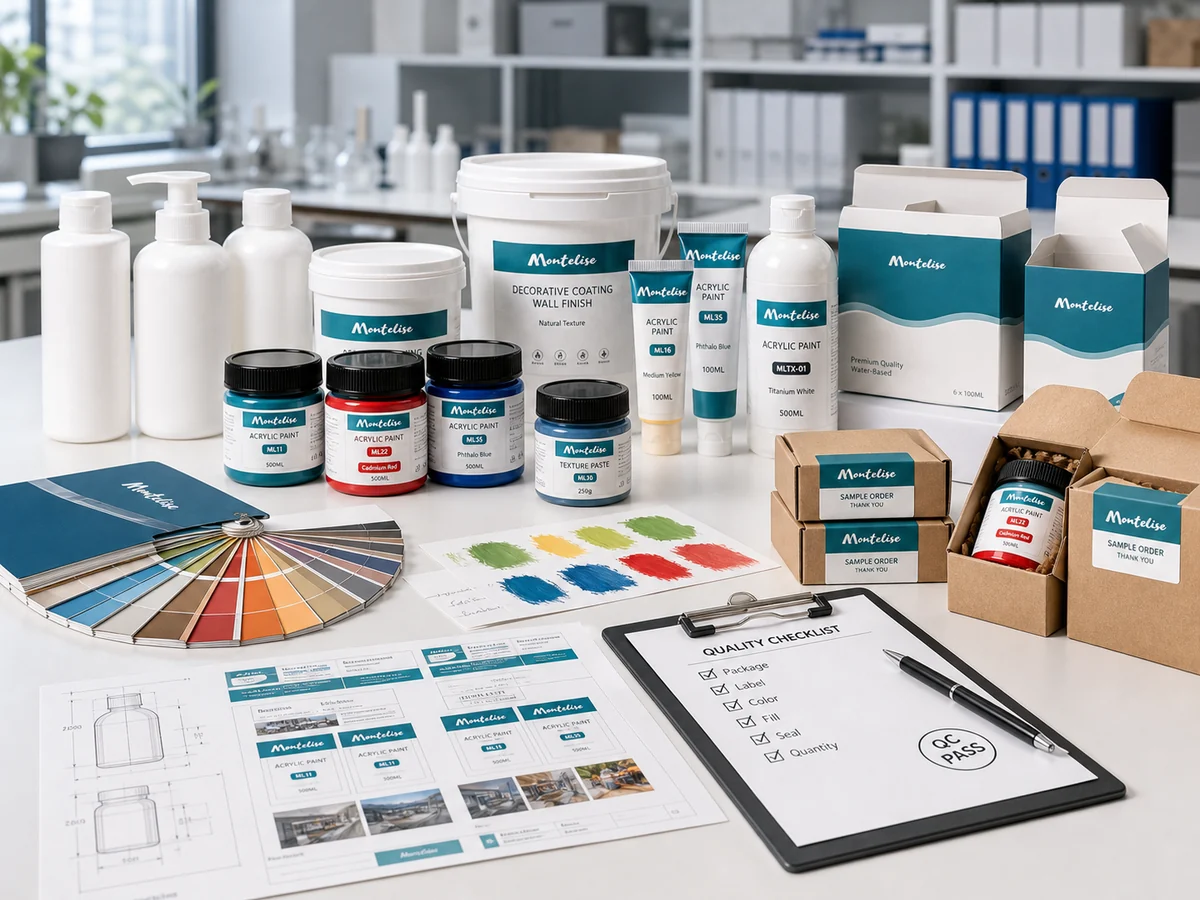
Compare Product Lines by Approval Method
Different material lines should be sampled and approved in different ways. That is why buyers should not treat all categories as interchangeable just because they sit under one supplier relationship.
- Acrylic and art paint lines are usually approved by shade family, pack size, and launch-SKU logic.
- Textile paint projects depend more on the target fabric, application method, and whether the buyer is building a retail kit or a workshop range.
- Wall and decorative coatings are judged by applied panels, finish notes, and repeatability across the approved look.
- Hydro dipping lines need the buyer to define pattern range, component mix, and kit structure before MOQ becomes meaningful.
- Texture paste and mediums should be grouped by finish family, particle feel, and whether the line is for art retail, decorative surfaces, or special effects.
Planning a multi-line sourcing brief?
Share your lead product category, sample priorities, packaging direction, and quantity plan with Montelise. The team can help you narrow the first RFQ so only the material lines that matter enter sampling.
Keep Packaging and MOQ Tied to the Main Category
Mixed product inquiries become difficult when packaging questions arrive before the buyer has defined the lead category. A buyer asking about acrylic bottles, texture tubs, textile starter kits, and hydro dipping cartons in one step often receives a quote that is technically broad but commercially hard to use.
The safer route is to decide which line will carry the first order, then let the supporting categories follow that structure. For example:
- A private label paint program may keep texture paste on standard packaging first
- A hydro dipping kit launch may delay custom cartons for refill items
- A coating program may approve finish panels first and postpone broader pack changes
- A textile project may start with one bottle format before expanding into boxed kits
That approach usually leads to a more realistic MOQ discussion because the first shipment is built around a defined SKU group instead of several unrelated sample wishes. Buyers exploring a wider effect range can also read Texture Paste Supplier Guide for Art, Wall, and Special Effect Products before expanding beyond the lead category.
When One Supplier Relationship Makes Sense
Not every buyer needs a multi-line supply plan. The structure works best when the materials support one commercial story, one sales channel, or one packaging logic.
A shared supplier relationship is usually more practical when:
- The buyer wants one contact for samples across closely related product lines
- Packaging and labeling should follow one brand system
- The project will likely reorder more than one category over time
- The buyer wants to shorten vendor coordination between paint, coating, and effect materials
It is less useful when the categories have unrelated users, unrelated approval teams, or very different launch timelines. In that case, the RFQ should still be staged so the first commercial category is approved before adjacent materials are expanded. Buyers developing a textile-led line should review Fabric Paint for Garment Decoration: What B2B Buyers Should Specify because fabric use often changes which supporting materials are relevant.
What to Send for a Faster Quote
What to send for a faster quote
- Lead product line: acrylic paint, textile paint, wall coating, hydro dipping materials, texture paste, or mixed OEM project
- Main end use and sales channel
- Reference colors, finishes, or pattern direction
- Packaging size and label requirements
- Estimated quantity per SKU or per launch group
- Destination market and preferred sample timeline
Final Thought
Comparing color coating water transfer materials is easiest when buyers treat the inquiry as a selection problem, not as a request for every possible sample at once. The lead product line should set the approval method, packaging route, and MOQ discussion, while supporting materials stay close to the same commercial goal.
Montelise supports buyers across art paint, textile paint, decorative coatings, hydro dipping, texture products, and private label OEM supply. contact Montelise with your lead category, sample goal, packaging scope, and market plan to request samples or a bulk quote.
FAQ
How should buyers compare several Montelise product lines in one RFQ?
They should define the lead category first, then add only the supporting materials that belong in the same launch or sourcing plan.
Is it a good idea to sample every category at once?
Usually no. Buyers get clearer quotes and faster approvals when the first round focuses on the line that carries the main commercial decision.
Why does the approval method matter when comparing product lines?
Because acrylic paints, textile paints, wall coatings, hydro dipping kits, and texture products are not judged in the same way, so the sample structure should match the material type.
When is a mixed product-line supplier relationship most useful?
It is most useful when the buyer wants one coordinated supplier discussion for related categories that share packaging logic, market channel, or reorder planning.