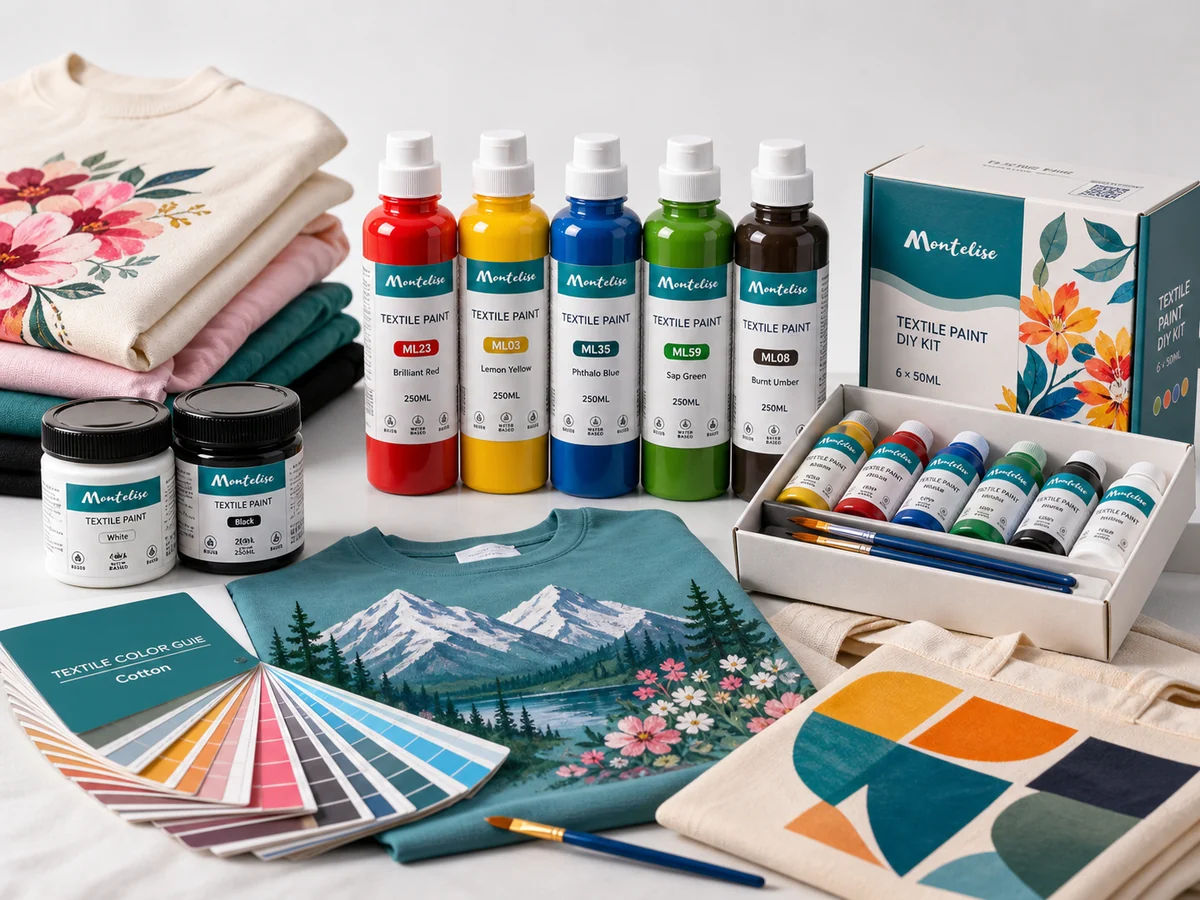
Buyers sourcing fabric paint for garment decoration usually have a simple starting question: which product route will hold up in real sales, sampling, and repeat orders without turning the first launch into too many small decisions at once?
The answer usually depends on how clearly the buyer defines the decoration method, fabric range, pack format, and approval path before asking for a broad quotation. Garment decoration projects move faster when the supplier can separate formula fit, color scope, and packaging complexity from the start.
Buyer quick links
- View textile paint and color product lines: Product Center
- Compare private label and custom options: OEM&ODM
- Send quantity, garment use, and packaging details: Contact / Get Quote
Start With the Garment Use Case
Fabric paint for garment decoration is not one single buying scenario. A small DIY retail kit, a branded tote-bag program, and a garment decoration workshop may all use textile paint, but they do not need the same pack size, viscosity feel, or color-launch plan.
| Garment Use Case | Early Priority | Why It Matters |
|---|---|---|
| DIY retail kit | Smaller pack sizes and balanced starter colors | Easier shelf planning |
| Workshop or class use | Practical refill packs and repeat shades | Supports frequent reorders |
| Brand merch decoration | Consistent color approval and label direction | Reduces revision loops |
| Craft distributor | Mixed-SKU packing and broader format options | Improves export handling |
If the buyer is still structuring a broader multi-category sourcing plan, OEM Color Material Supplier: From Requirement to Production-Ready Supply is the right companion page before the first sample brief goes out.
Clarify the Fabric and Application Method
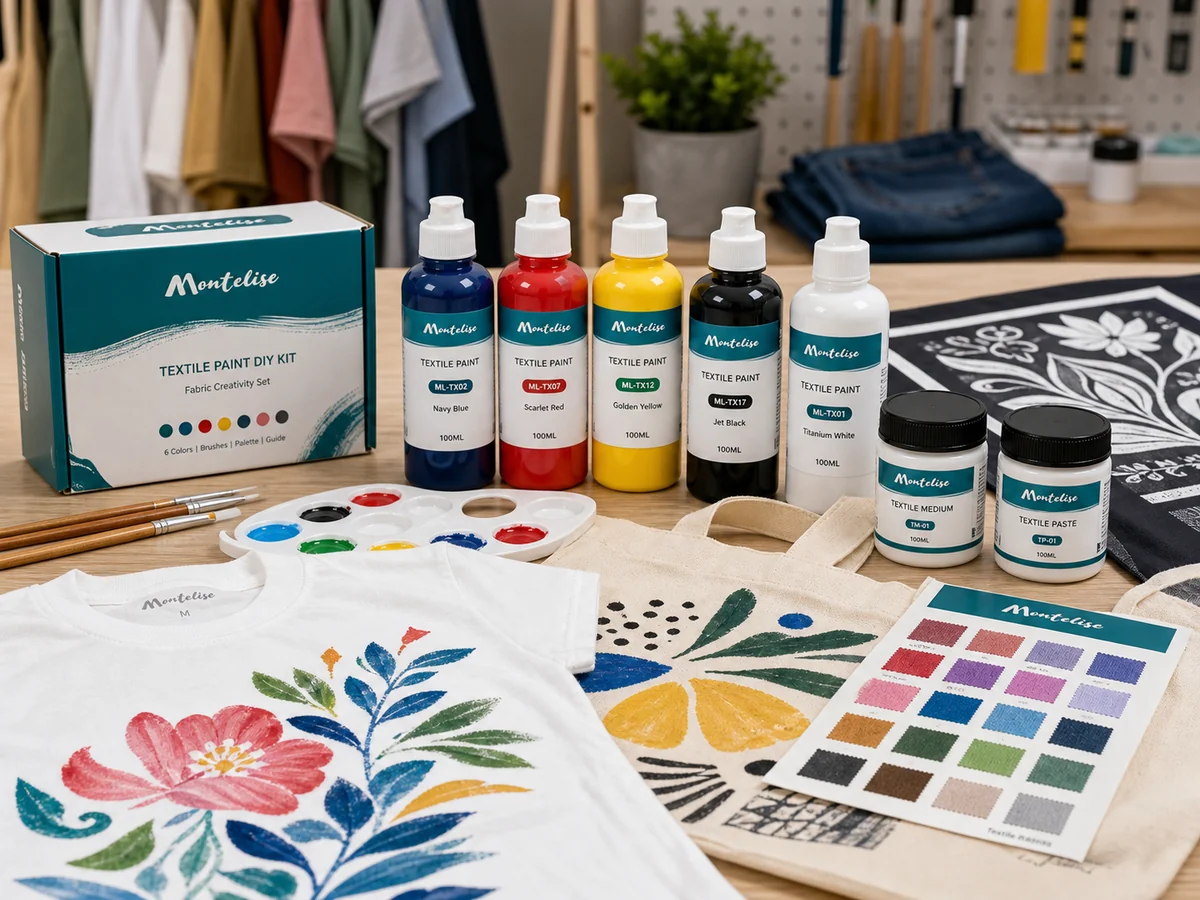
Before a supplier can recommend the right fabric paint route, the buyer should explain what the paint will be used on and how it will be applied. Cotton tees, canvas bags, denim items, and mixed-fabric craft products can all behave differently during sample review.
Useful points to confirm early:
- Which garment or textile base is the priority for the first sample round
- Whether the paint will be brushed, stamped, stenciled, or used in kit-style creative projects
- If the buyer needs individual colors, a starter assortment, or a custom palette
- Whether standard bottles, jars, or boxed sets fit the launch better
- How many SKUs belong in the first order versus a later expansion
Planning a garment decoration fabric paint program?
Share your textile base, application method, launch color count, pack format, and order volume with Montelise. The team can suggest a practical sample route and packaging plan before you commit to a wider assortment.
Keep the First Sample Round Narrow
Many garment decoration buyers lose time by sampling too many colors, too many formats, and too many packaging versions in the same round. A better approach is to approve in layers: first the product direction, then the core color range, then the packaging details.
A practical first sample plan usually includes:
- One main garment category or fabric target
- One core pack format for review
- A reduced launch palette instead of a full catalog
- One approval owner or one clear review path
- Notes on whether private label packaging is needed immediately or later
If packaging is part of the commercial decision, Custom Packaging Case for Paint, Coating, and Color Material Buyers is worth reading alongside this guide because carton count and label scope often affect MOQ more than buyers expect.
Ask About MOQ, Reorders, and Pack Stability Together
MOQ questions are more useful when they are tied to pack format and reorder discipline. A buyer may get one MOQ for standard bottles and a very different practical MOQ once multiple custom labels, cartons, or boxed kits are added.
Buyers should ask:
- Which stock bottle or jar formats are already stable for export orders
- Whether a boxed set changes the first-order MOQ materially
- How mixed colors are packed for safer shipping
- Which packaging references are saved for repeat orders
- How the supplier keeps approved colors and packaging versions aligned across reorders
RFQ Checklist for Garment Decoration Buyers
What to send for a faster quote
- Product type: fabric paint bottles, jars, textile paint kit, or refill packs
- Main fabric or garment use case
- Color count and any reference shades
- Packaging size, label scope, and carton needs
- Estimated quantity per SKU
- Destination market and target sample timing
Final Thought
The best fabric paint for garment decoration project is usually the one with the clearest first-step scope. When the buyer narrows the fabric target, application method, launch palette, and pack structure early, the supplier can make sampling and quoting much more useful.
Montelise supports textile paint sourcing for garment decoration, DIY kits, branded craft programs, and private label supply. contact Montelise with your garment use case, color plan, packaging direction, and quantity target to request samples or a bulk quote.
FAQ
What should buyers define first for fabric paint garment projects?
They should define the main garment or textile use case first, because that changes pack format, sample structure, and how wide the opening color range should be.
Should the first sample round include every planned color?
Usually no. Most buyers move faster when they start with the core launch colors and add a broader palette after the base direction is approved.
Do boxed textile paint kits always raise MOQ?
Not always, but boxed kits, extra labels, and mixed pack formats can raise the practical MOQ compared with a simpler standard-bottle launch.
Why is reorder planning important for garment decoration buyers?
Because once a product sells, the buyer needs the supplier to repeat approved colors, packs, and carton structure without rebuilding the same project every time.