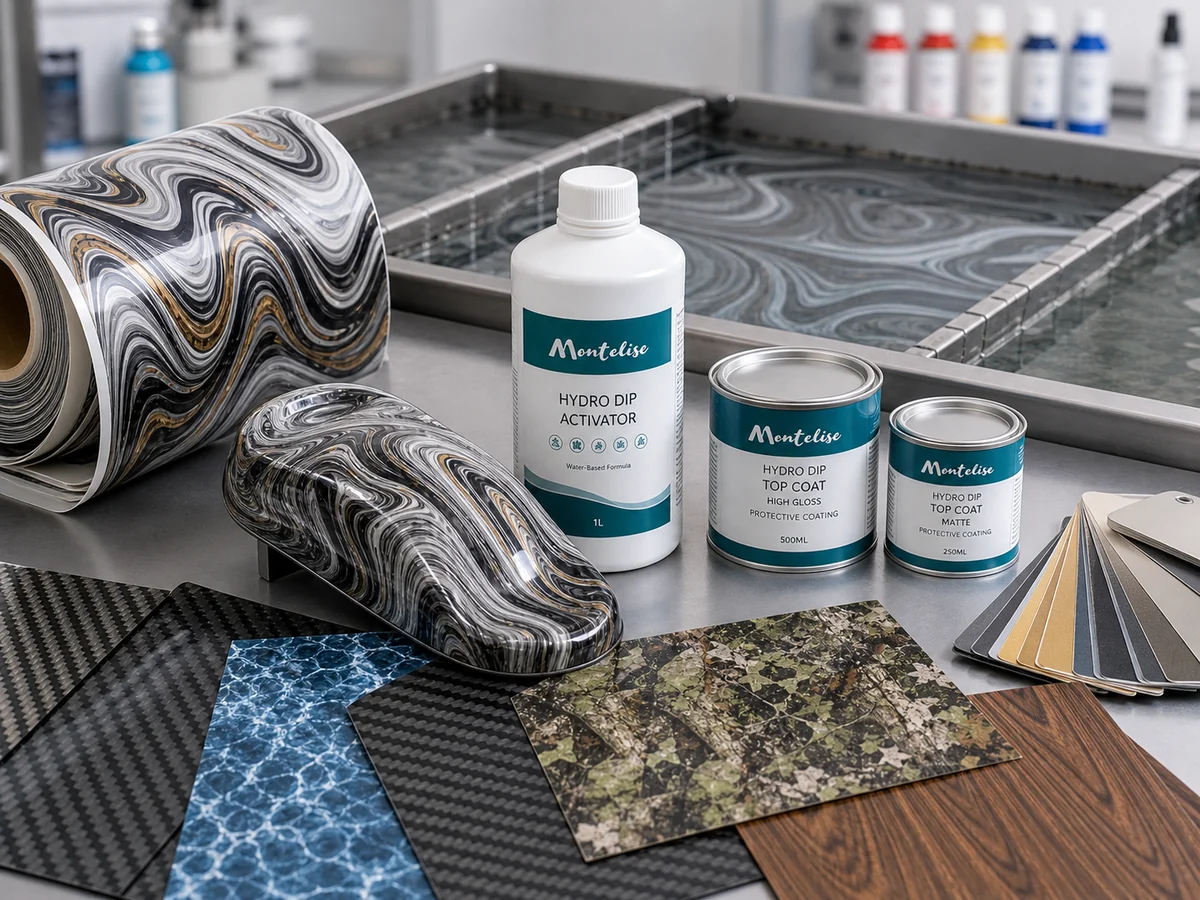
Buyers searching for a water transfer printing film supplier are usually not looking for the biggest pattern library. They are trying to identify a supplier that can turn a shortlist of commercially usable films into approved samples, workable packaging, and repeatable bulk supply. That is a different task from browsing decorative effects online.
The first RFQ gets more useful when the buyer states the part family, the likely film width, the sample cut length, the activator route, and whether the first shipment is for workshop use, distributor review, or private label kit assembly. Without those details, the supplier can only offer a broad pattern list, not a buying decision.
Buyer quick links
- View hydro dipping, coating, and transfer material lines: Product Center
- Compare custom packaging and OEM supply routes: OEM&ODM
- Send pattern, quantity, and destination details: Contact / Get Quote
- Start from the broader sourcing page: Hydro Dipping Materials Supplier
Lock the Film Family Before You Ask for a Price List
Many buyers lose time because the first request asks for marble, woodgrain, carbon, camouflage, and custom graphics in the same email. A stronger water transfer printing film supplier discussion starts with one film family and one end-product group.
| First decision | Better first-step choice | Why it helps |
|---|---|---|
| Pattern scope | 3 to 5 related patterns | Easier sampling and cleaner MOQ discussion |
| End product | One part family, such as helmet shells, trim pieces, tumblers, or auto parts | Keeps stretch, curve, and finish feedback comparable |
| Film width | One likely width, such as 50 cm, 100 cm, or 127 cm | Prevents mixed packaging and freight assumptions |
| Sample route | Small cuts first, then longer sample rolls | Reduces waste before the core pattern is approved |
If the buyer still needs to compare film supply against a wider materials brief, Hydro Dipping Materials Supplier is the right companion page because film choice and chemistry choice should stay connected.
Ask for Sample Cuts That Match the Real Part Size
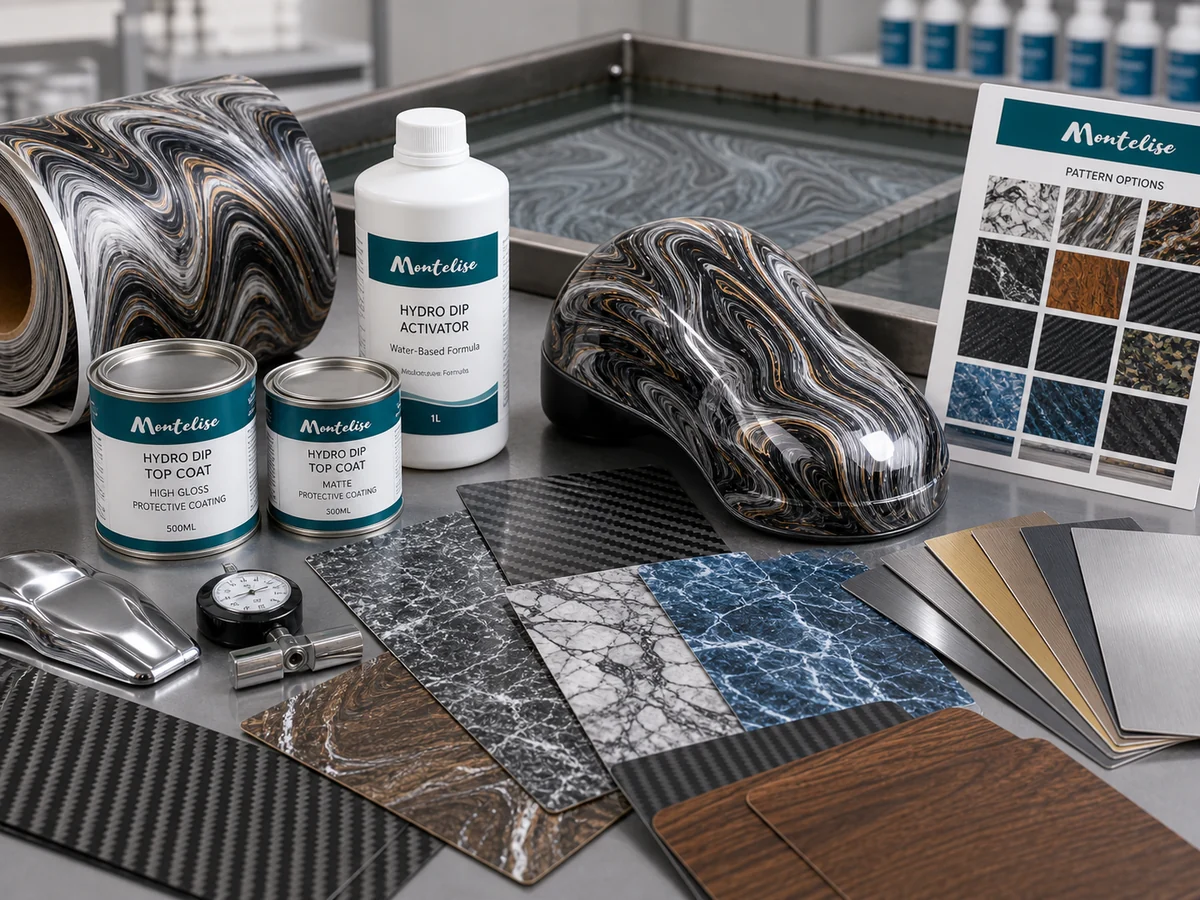
A useful water transfer printing film supplier should not only send attractive swatches. The sample pack should reflect how the film will actually be reviewed. Buyers often move faster when they ask for a compact first set such as A4 visual cards, 50 cm test cuts, or 1 m sample lengths tied to the part size they plan to dip.
Concrete points to confirm in the sample brief:
- whether the first review needs flat visual cards or dip-ready sample cuts
- whether the target part is a flat panel, curved trim, bottle, helmet shell, or mixed shape
- whether 50 cm, 100 cm, or 127 cm width is the practical width for the first order
- whether the first sample round should include 3 to 5 patterns or a larger distributor review set
- whether the sample pack should include pattern codes only or also the likely activator recommendation
That level of detail gives the buyer a sample they can approve, reject, or revise with specific comments instead of broad notes such as “send more carbon styles.”
Planning a water transfer film order?
Share your target parts, preferred pattern family, sample cut size, estimated quantity, and destination market with Montelise. The team can suggest a tighter sample route before you commit to a bulk order.
Keep Activator Pairing in the Same Approval File
Film sourcing becomes risky when the buyer approves the print pattern but leaves the process route undefined. A reliable water transfer printing film supplier should document which film group was tested, which activator route was used, and whether the top coat or finish requirement was part of the same review.
Buyers should ask the supplier to keep these items together:
- approved pattern code and finish family
- sample part photo or substrate note
- activator recommendation used in the test round
- any matte, gloss, or protective top-coat note
- retained sample result for the reorder file
If the chemistry route is still being narrowed, Hydro Dipping Activator Compatibility helps buyers structure that test before they add custom packaging variables.
Price MOQ by Pattern Group, Not by One Headline Number
For water transfer printing film, MOQ usually depends less on one universal minimum and more on how many pattern groups, widths, and packing versions the buyer combines in the first order. Buyers get clearer answers when they ask for MOQ in a format they can act on.
Useful MOQ checkpoints include:
- MOQ for stocked standard patterns versus custom-printed film
- MOQ by film width if the buyer may need 50 cm and 100 cm rolls in the same PO
- whether the first order stays in plain rolls or adds private label stickers and cartons
- whether the shipment is mixed with activator or top coat packs
- reorder MOQ for the two or three core patterns likely to stay in the line
That approach is more useful than asking only for “your MOQ,” because a stock woodgrain film in plain export packing is a different supply route from a custom camouflage print in branded carton packs.
Freeze Carton Marks, Label Files, and Roll ID Rules Early
Water transfer printing film orders often stall after pattern approval because packaging details are handled too late. Even when buyers do not need full retail boxes, they should still confirm how rolls are identified and how cartons are marked for export handling.
A practical approval file should include:
- roll width and approximate roll length per SKU
- inner roll identification, such as pattern code, width, and batch note
- whether the first order uses blank cartons, shipping marks, or buyer SKU labels
- whether private label stickers or inserts need AI or editable PDF artwork files
- whether English-only cartons are enough or the market needs bilingual handling text
- which approved pattern code will be used again for the second PO
Buyers developing a broader kit route should also read Hydro Dipping Kit Supplier and Hydro Dipping Film Sample Kit before mixing film-roll supply with retail assembly.
Build Reorders Around Pattern Codes, Not Memory
The best water transfer printing film supplier is the one that makes the second order easier than the first. That means the buyer and supplier should both keep a repeat-order file after the first approved sample.
A workable reorder-control file usually stores:
- the approved pattern code and its closest descriptive name
- the width used in testing and the width used in the first shipment
- the sample part or dipped reference photo
- the activator route used in approval
- the carton mark or SKU label version
- the destination-market version if carton text changes
Without that file, the buyer may reorder “the dark carbon film from the first box” and receive a preventable mismatch.
What to Send for a Faster Quote
What to send for a faster quote
- Product route: standard film roll supply, sample cuts, private label pack, or mixed film plus chemistry order
- Part type and substrate note
- Pattern family and number of shortlisted designs
- Preferred film width and sample cut length
- Packaging need: plain roll, export carton, custom sticker, or full private label pack
- Estimated quantity per pattern group
- Destination market and target sample deadline
FAQ
What should buyers confirm first with a water transfer printing film supplier?
They should confirm the pattern family and part type first. Those two points shape the right sample cuts, film width, and activator review path.
Is it better to request many patterns in the first sample round?
Usually no. Most buyers get clearer feedback when the first sample round stays with 3 to 5 related patterns that fit one commercial product group.
Why does film width matter so early?
Because width affects sample usability, roll packing, carton size, and whether the buyer is comparing the right supply format for the actual dipped part.
When should private label artwork be prepared?
After the buyer confirms the core pattern group and first pack structure. At that point, AI or editable PDF files for stickers, inserts, or cartons are easier to apply without redoing the whole pack plan.