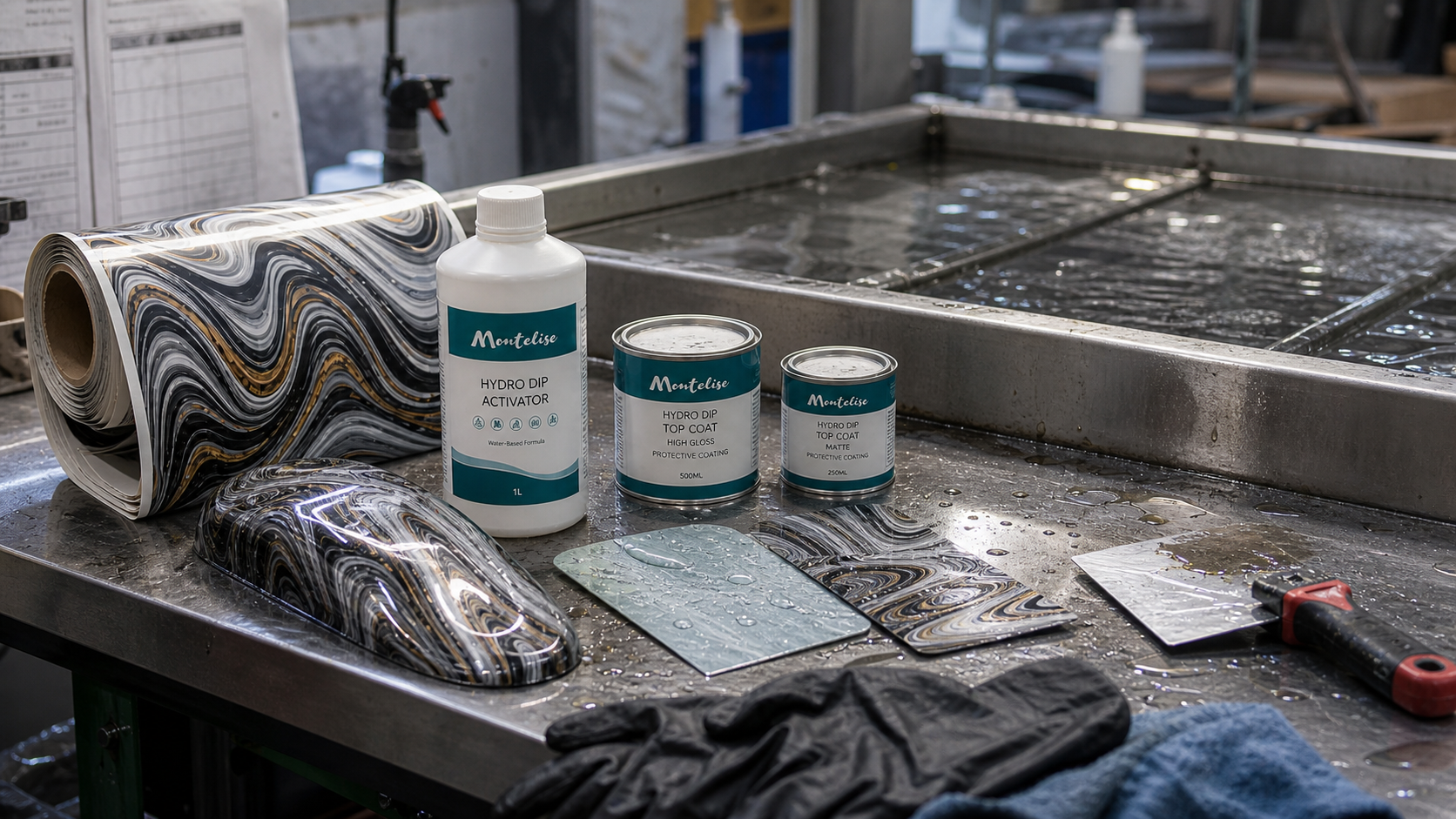
Buyers asking about hydro dipping activator compatibility are usually trying to avoid a simple but expensive problem: a film pattern looks right on paper, yet the actual transfer result becomes unstable once the activator, substrate, and top coat are tested together.
That is why compatibility should be treated as a buying decision, not just a technical note. When the supplier and buyer confirm the target film family, sample part type, and finishing route early, the first sample round is easier to judge and the later bulk order is less exposed to avoidable rework.
Buyer quick links
- View hydro dipping and water transfer product lines: Product Center
- Compare private label and custom options: OEM&ODM
- Send your film, substrate, and quantity details: Contact / Get Quote
Check Film and Substrate Together
Hydro dipping activator compatibility cannot be reviewed in isolation. The activator may behave differently depending on the film construction, the shape of the sample part, and the surface being finished. A buyer sourcing for auto trim, workshop samples, or private label kits should state that clearly before the first recommendation is made.
| Decision Area | What Buyers Should Clarify Early | Why It Matters |
|---|---|---|
| Film family | Marble, carbon, woodgrain, camouflage, or mixed patterns | Different films may need different handling consistency |
| Sample part | Flat panel, curved housing, bottle cap, or trim piece | Part geometry changes transfer behavior |
| Substrate | Plastic, metal, coated panel, or mixed materials | Surface route affects the full sample plan |
| Finish route | Matte, gloss, or protective top coat requirement | Final coating can expose compatibility issues later |
Buyers still comparing broad material sourcing should also review Hydro Dipping Materials Supplier Checklist for Surface Decoration Buyers before narrowing the first test set.
Ask for a Controlled First Sample Plan
The first compatibility discussion should not start with twenty patterns and several chemical routes. Buyers usually get a more useful answer when they ask the supplier to build a narrow test plan around one substrate family and a short list of patterns that match the commercial launch.
Useful questions for the first sample round:
- Which 3 to 5 films are the best fit for the target finish direction
- Whether one activator route can cover the opening pattern group
- Which sample part shape should be used for approval
- Whether the buyer should lock the top coat route in the same round
- How the approved sample references will be stored for repeat orders
Planning a hydro dipping test program?
Share your target patterns, sample part photos, finishing goal, packaging scope, and volume estimate with Montelise. The team can suggest a tighter compatibility test route before you commit to a bulk order.
Compare Compatibility and Packaging at the Same Time
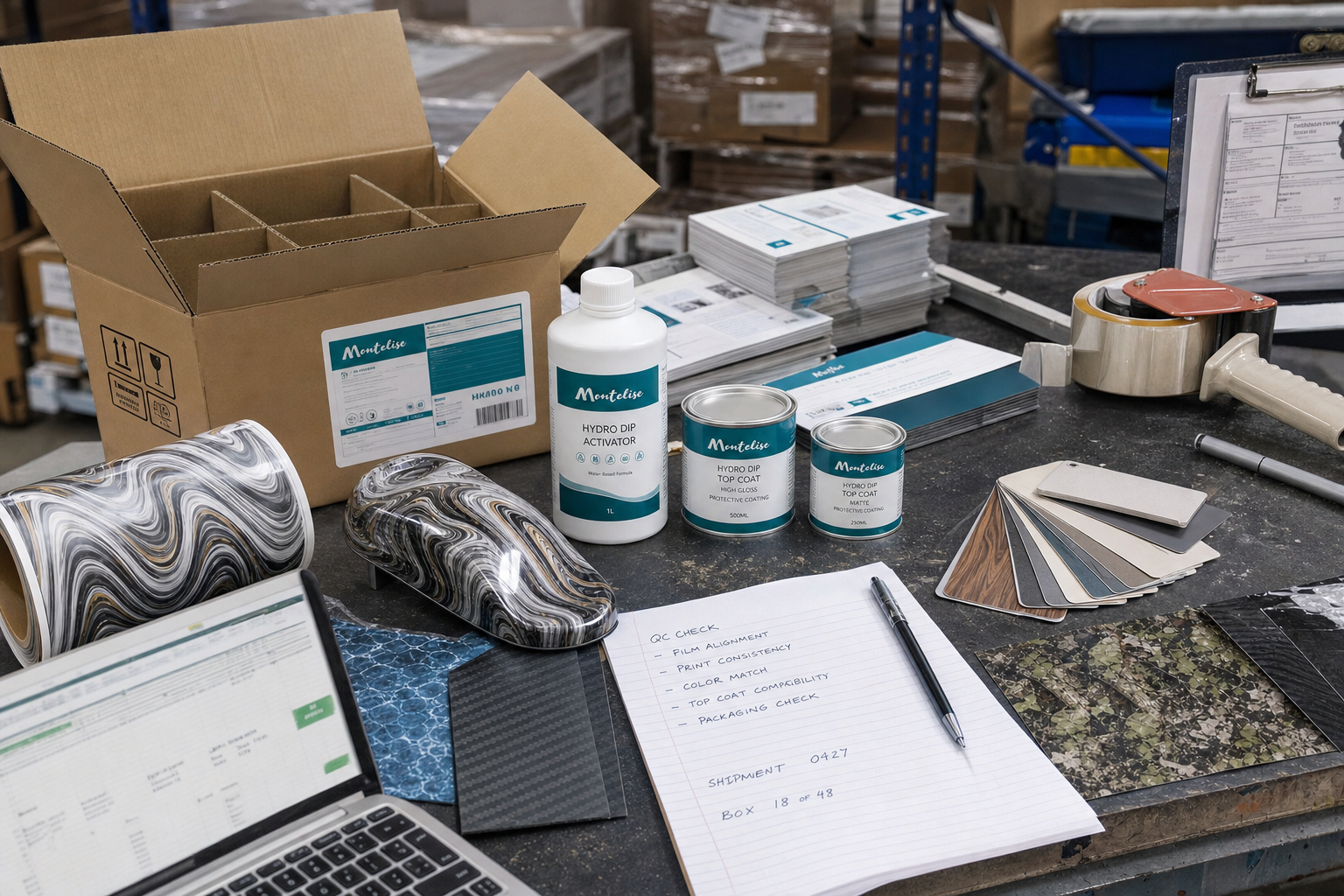
Many B2B buyers separate chemistry questions from packaging decisions, but the two often meet in the same project. If the first order is meant for private label cans, mixed export cartons, or a workshop starter kit, the supplier should know that while recommending the compatibility route.
Buyers should confirm:
- Whether the opening order uses standard activator packs or custom label packaging
- If one top coat format can stay standard during validation
- How film rolls and liquid packs will be grouped for export handling
- Which packaging changes should wait until the material route is approved
- Whether the first order should remain a sample-oriented shipment or a launch-ready commercial pack
If the project may lead into mixed kit supply later, Hydro Dipping Kit Supplier Guide for Retail and Workshop Buyers is useful because packaging complexity can change MOQ and lead time faster than buyers expect.
Review Compatibility Through Repeat-Order Risk
The best hydro dipping activator compatibility plan is the one the buyer can repeat, not just the one that works once in a demo. That means asking how the supplier records approved films, liquid references, and finish notes so the next order does not restart from zero.
Practical repeat-order questions include:
- How approved film groups are logged after testing
- Whether the retained sample includes both the dipped part and the written process notes
- Which activator and top coat references are held for later batches
- How the supplier handles pattern additions without changing the full route
- What information the buyer should save internally after signoff
For buyers that want a case-style example of how materials, chemistry, and packing are grouped, Water Transfer Printing Materials Case: Film, Activator, and Kit Supply provides a useful comparison.
RFQ Checklist for Faster Compatibility Review
What to send for a faster quote
- Product type: film supply, activator, top coat, or a combined hydro dipping set
- Pattern shortlist and finish direction
- Sample part photos and substrate details
- Packaging plan: standard pack, private label can, or mixed kit
- Estimated quantity and destination market
- Preferred sample timing and bulk-order window
Final Thought
Hydro dipping activator compatibility becomes easier to control when the buyer limits the first test to the right film family, a real sample part, and a packaging route that matches the project stage. That approach gives the supplier room to recommend a cleaner sample plan and gives the buyer a more reliable basis for bulk ordering.
Montelise supports hydro dipping and water transfer sourcing with film selection, activator and top coat coordination, sample planning, and export-ready packaging discussion. contact Montelise with your pattern targets, substrate details, packaging direction, and quantity plan to request samples or a bulk quote.
FAQ
What should buyers confirm first in a compatibility review?
They should confirm the target film family and the real sample part first, because activator performance is easier to judge when the commercial use case is defined.
Can one activator route cover every film pattern?
Not always. Buyers often need to group patterns into a narrower opening range so the first sample plan stays consistent and easier to evaluate.
Why should packaging be discussed before compatibility testing is finished?
Because the first order structure affects which liquid pack sizes, labels, and export carton formats are practical during validation and launch.
What should be retained after the first approved sample round?
The buyer and supplier should retain the approved dipped sample, the film reference, and the process notes so later orders can be matched more reliably.