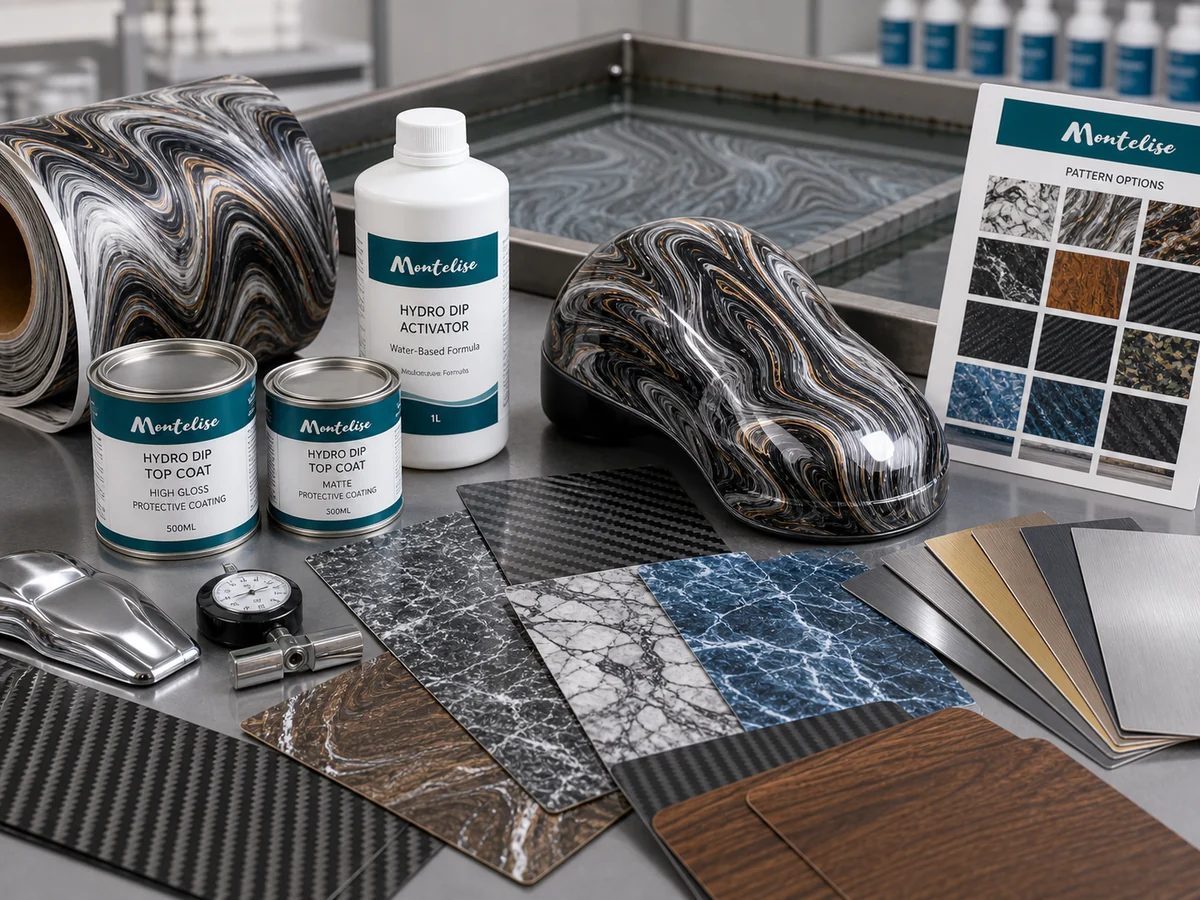
This representative water transfer printing materials case reflects a common B2B request: a buyer wants more than pattern film, but the initial brief arrives as a loose list of sample ideas. In practice, the supplier has to organize film style, activator choice, top coat direction, sample parts, and packaging into one workable plan.
That is why water transfer projects often benefit from a case-style approach. Instead of quoting every item separately, the supplier and buyer first define the end use, likely pattern families, sample process, and how the materials will be packed for workshop use or retail kit sale.
Buyer quick links
- View hydro dipping and coating product lines: Product Center
- Compare OEM and private label support options: OEM&ODM
- Send your requirement and sample direction: Contact / Get Quote
Buyer Situation
In this type of project, the buyer is often a distributor, a small workshop brand, or a sourcing team building a private label hydro dipping kit. They already know the category, but they have not yet decided:
- Which pattern families should be tested first
- Whether the order should focus on workshop supplies or retail-ready kits
- How to group activator and top coat choices
- What sample objects should be used for approval
Without those decisions, the first RFQ tends to expand in several directions at once and the supplier cannot recommend a clean first order.
Product Requirement
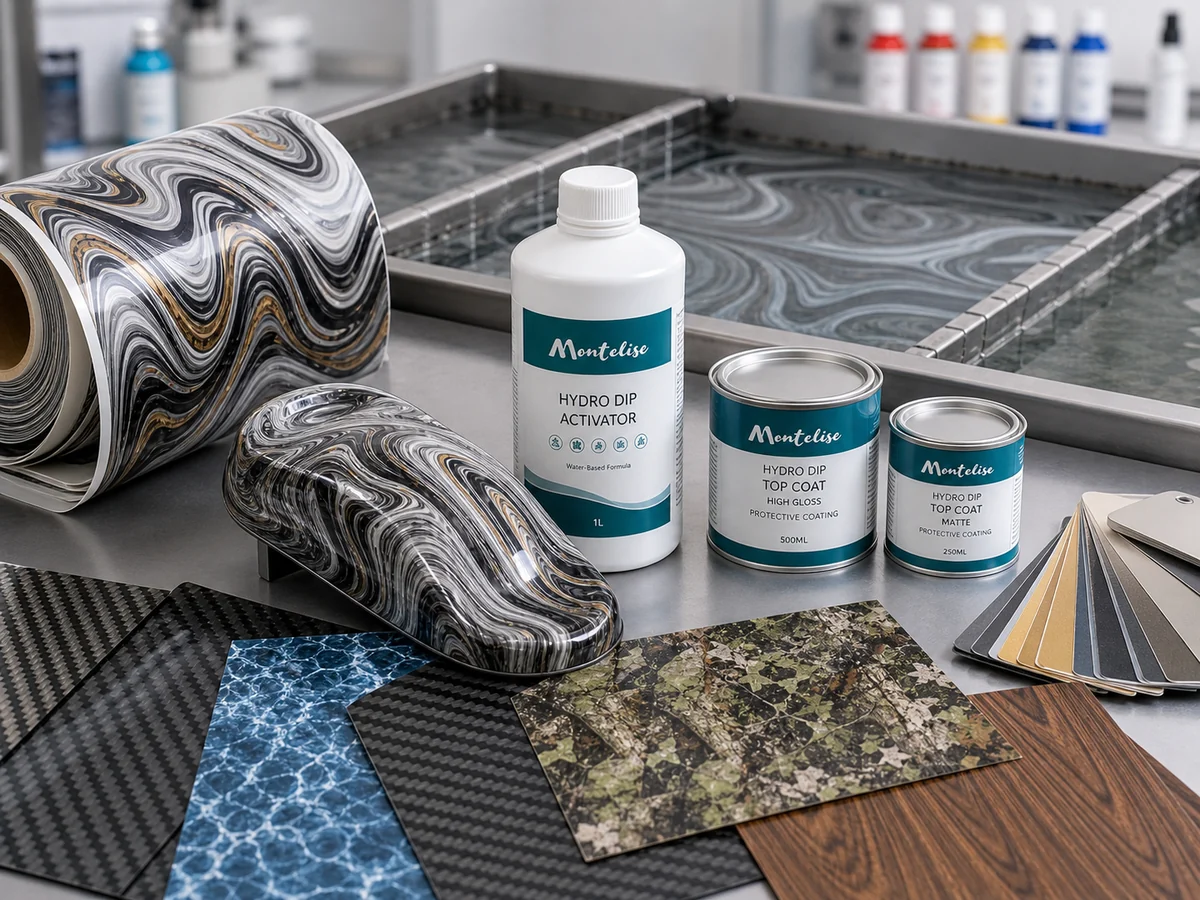
The practical requirement in a water transfer printing materials case is usually a matched set rather than a single item. A buyer may need:
- Film options for 3 to 5 target looks
- Activator suited to the intended application setup
- Top coat choices for gloss or matte finish
- A sample workflow using real product-like parts
- Packaging logic for either export cartons or private label kits
That is the point where a buyer guide such as Hydro Dipping Materials Supplier Checklist for Surface Decoration Buyers becomes useful. It helps the procurement team convert a visual idea board into an RFQ the supplier can actually price and sample against.
Development Direction
For a first sampling round, the most workable direction is usually narrow. Instead of testing every pattern type at once, the supplier can group the trial around a few realistic finish families:
- Neutral marble and stone looks
- Carbon or industrial texture effects
- Woodgrain or warm decorative finishes
- One or two standout patterns for retail kit appeal
This reduces confusion during feedback. It also makes it easier to identify which film styles need stable repeat supply after the first order.
| Project Stage | Better Direction | Riskier Direction |
|---|---|---|
| First sample round | Small pattern family with clear use case | Broad style board with no ranking |
| Chemical support | Matched recommendation from one supplier | Film and chemistry sourced separately |
| Packaging | Standard export pack first | Full custom kit packing before validation |
| Approval method | Real sample parts plus written notes | Visual approval from film sheet only |
Planning a water transfer kit or materials order?
Share your target finish, sample part photos, quantity, and packaging goal with Montelise. The team can suggest sample combinations and supply structure before you commit to a bulk run.
Sampling and Adjustment
In a typical cooperation case, the first sample round is used to answer practical questions rather than chase perfect presentation. Buyers should expect to review:
- Whether the selected patterns fit the product shape
- Whether the activator recommendation feels stable in use
- Which top coat finish fits the market and product positioning
- Which patterns deserve to move into repeat-order planning
When adjustments are needed, it helps to give feedback in grouped form: keep, replace, or revise. That is usually more productive than commenting on each item in isolation.
Packaging, MOQ, and Delivery Considerations
Once the sample direction is approved, the buying discussion usually shifts to order structure. In water transfer projects, this often means balancing standard supply efficiency with private label ambitions.
Buyers should clarify:
- MOQ by film pattern group
- MOQ for activator and top coat packaging formats
- Whether labels or cartons need custom branding
- Which items must be held for repeat orders
- Whether the first shipment should stay simple to shorten lead time
For private label programs across several categories, Private Label Art Supplies Manufacturer: Building a Multi-Category Range is relevant here too. The same rule applies: the first order usually moves faster when custom packaging changes are limited to what the buyer really needs.
What the Buyer Should Prepare
The fastest water transfer printing materials case reviews usually start with a cleaner brief. Buyers should prepare:
- Product or sample object photos
- Preferred finish styles and any patterns to avoid
- Expected quantity by material type or kit type
- Packaging target: workshop supply, export carton, or retail kit
- Destination market and sample deadline
These details help the supplier recommend the right sample path and reduce unnecessary back-and-forth before quoting.
What to Send for a Faster Quote
What to send for a faster quote
- Product type: pattern film, activator, top coat, or full water transfer kit
- Pattern count and finish references
- Sample object photos and substrate details
- Estimated quantity per SKU or kit version
- Destination market
- Preferred timeline for samples and bulk order
Final Thought
A strong water transfer printing materials case is less about a dramatic demo and more about a controlled first sample plan. When film groups, chemical support, packaging scope, and MOQ are aligned early, the buyer gets a simpler approval path and a more reliable repeat-order structure.
Montelise can support representative hydro dipping and water transfer projects with official product-based material references, sample coordination, and private label packaging discussion. If you want to send a similar requirement, contact Montelise with your target finish, object details, quantity plan, and destination market.
FAQ
What is the most common mistake in a water transfer printing materials RFQ?
Many buyers ask for film only at first, then add activator, top coat, and packaging changes later. That makes the sample plan harder to control.
Why should buyers sample on real parts instead of only reviewing film sheets?
Because the final result depends on shape, surface, and finish behavior, not only on how the pattern looks flat on a sheet.
Is it better to launch with a custom retail kit immediately?
Usually not. Many buyers get a cleaner start by validating the material set first and adding more packaging customization after the supply path is stable.
What should a buyer prepare before requesting a quote?
They should send finish references, sample object photos, quantity expectations, packaging direction, destination market, and timing requirements.