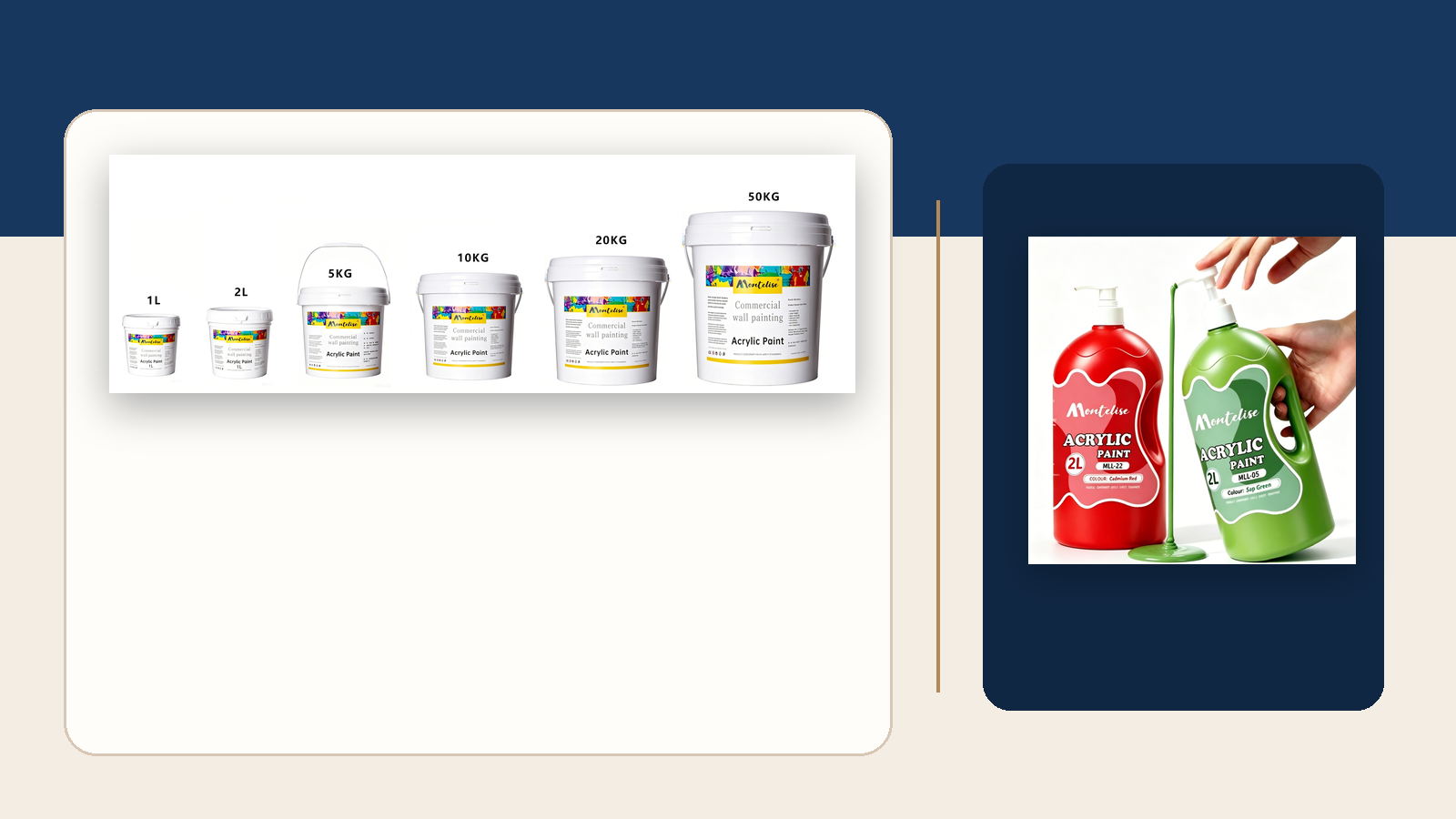
Bulk mural paint buying is usually less about finding the lowest unit price and more about building a workable supply plan. Contractors, distributors, public art program buyers, and private label brands all need to align color range, pack size, and repeat-order logic before they can compare suppliers properly.
That is why the best mural RFQs are specific. Instead of asking for “wall paint in bulk,” buyers should define surface use, pack format, color structure, and delivery rhythm. Those details shape both the first shipment and the repeat order path.
Buyer quick links
- View acrylic paint product lines: Product Center
- Compare private label and custom options: OEM&ODM
- Send quantity, packaging, and market details: Contact / Get Quote
Start With the Mural Project Type, Not Only the Volume
Two buyers may each want a container of mural paint, but their supply needs can be completely different. A city art project, an art-school distributor, and a retail wall-art brand do not buy in the same way.
Before comparing a bulk mural paint supplier, confirm:
- Main application surface
- Indoor or outdoor use context
- Whether the project needs a fixed color set or recurring custom shades
- Whether the order is for one project, ongoing distribution, or a private label line
That first sorting step helps the supplier recommend practical pack sizes instead of giving a generic bulk quote. Buyers refining custom shades should also review Custom Acrylic Paint Colors: From Lab Match to Production Batch before they lock the color brief.
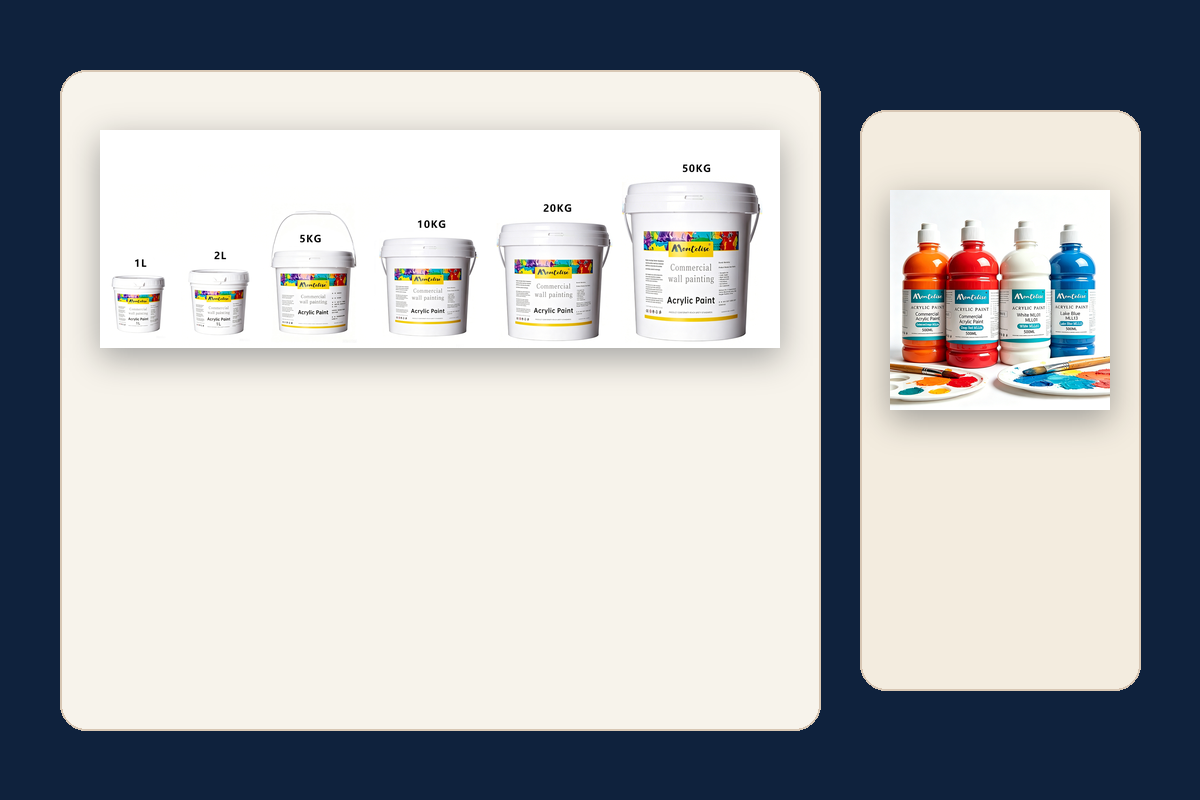
Choose Pack Sizes Around Labor and Refill Logic
For mural work, container choice affects more than freight. It changes how crews handle paint on site, how distributors plan inventory, and how often repeat orders are needed.
Common considerations include:
- Smaller packs for trial projects or color-heavy assortments
- Mid-size containers for mixed commercial work
- Large buckets for recurring wall coverage and higher-volume planning
Buyers should ask a supplier to separate standard pack sizes from custom packaging requests. A project may look simpler with one special container request, but standard formats usually support faster sampling and easier repeat buying.
| Decision Area | Lower-Risk Choice | Higher-Risk Choice |
|---|---|---|
| First order size | Standard pack formats | Custom containers on the first order |
| Color planning | Core shades plus selected custom colors | Large custom palette without repeat forecast |
| Inventory | Refill plan by top colors | One-off project mix with no reorder structure |
| Export handling | Standard cartons and pallets | Project-specific packing changes late in production |
Planning a private label acrylic paint order?
Share your color list, packaging idea, quantity, and target market with Montelise. The team can suggest suitable product bases, sample steps, and packaging options before you commit to a bulk order.
Build the Color Range for Coverage and Reorders
Many mural buyers focus on the visual palette first, then realize the real operational problem is which colors will need replenishment. That is why color planning should separate:
- Core high-usage colors
- Accent colors with lower demand
- Custom shades that need approval before production
- Backup color references for repeat orders
This is especially important for distributors and contractors who cannot afford a color break between project phases. The smarter supplier discussion is not “Can you do any color?” but “Which colors can we repeat reliably and how should we group the first order?”
For buyers building an export program, What Overseas Buyers Should Ask an Acrylic Paint Factory in China is a useful companion because packaging stability and reorder control matter just as much as the initial color match.
Keep MOQ Practical by Grouping the Right Variables
MOQ gets difficult when a mural order includes too many pack sizes, too many special colors, and too many packaging versions in the same shipment. Buyers should ask for minimums in a structure they can actually use:
- MOQ by pack size
- MOQ by custom color group
- MOQ for printed packaging if private label is involved
- Reorder MOQ for the most-used shades
That makes the first order easier to stage. It also tells the buyer whether the supplier can support ongoing mural supply instead of only a one-time quote.
If the order will move across regions or into dealer inventory, carton structure and replenishment planning should be discussed as early as possible, not after the sample is approved.
Sampling Should Test Supply Discipline, Not Only Finish
A mural paint sample does need to show color and application feel, but B2B buyers should also use sampling to test whether the supplier can manage the project clearly.
Look for:
- Clear pack-size recommendations
- A practical list of standard versus custom colors
- Sample feedback steps that are easy to repeat
- Reasonable advice on how to phase the first order
That is often the difference between a supplier that can support project growth and one that can only ship a first batch. For mural distribution or commercial project work, repeatability is the real buying criterion.
What to Send for a Faster Quote
What to send for a faster quote
- Product type: mural paint, wall acrylic paint, or mixed project assortment
- Color count and reference colors
- Packaging size and label requirements
- Estimated quantity per SKU
- Destination market
- Preferred timeline for samples and bulk order
Final Thought
A strong bulk mural paint supply plan starts with the right pack sizes, a realistic color structure, and a repeat-order path that fits the buyer’s project cycle. Buyers who define those points early can compare suppliers more clearly and avoid unnecessary complexity in the first shipment.
Montelise supports mural paint buyers with product selection, custom color planning, packaging options, and bulk supply coordination. If you need samples or a quote, contact Montelise with your surface use, color list, pack-size plan, quantity, and destination market.
FAQ
What should a bulk mural paint supplier confirm first?
The supplier should confirm the project type, application context, color structure, and preferred pack sizes before final pricing is compared.
Why are standard pack sizes often better for the first mural order?
They usually make sampling, carton planning, and repeat buying easier than a custom packaging request introduced too early.
How should buyers plan mural paint colors for repeat orders?
They should separate core refill colors from accent shades and keep clear references for any custom colors approved in sampling.
What makes a mural paint quote more useful?
A useful quote explains pack formats, MOQ logic, color grouping, and how the order can be repeated after the first shipment.