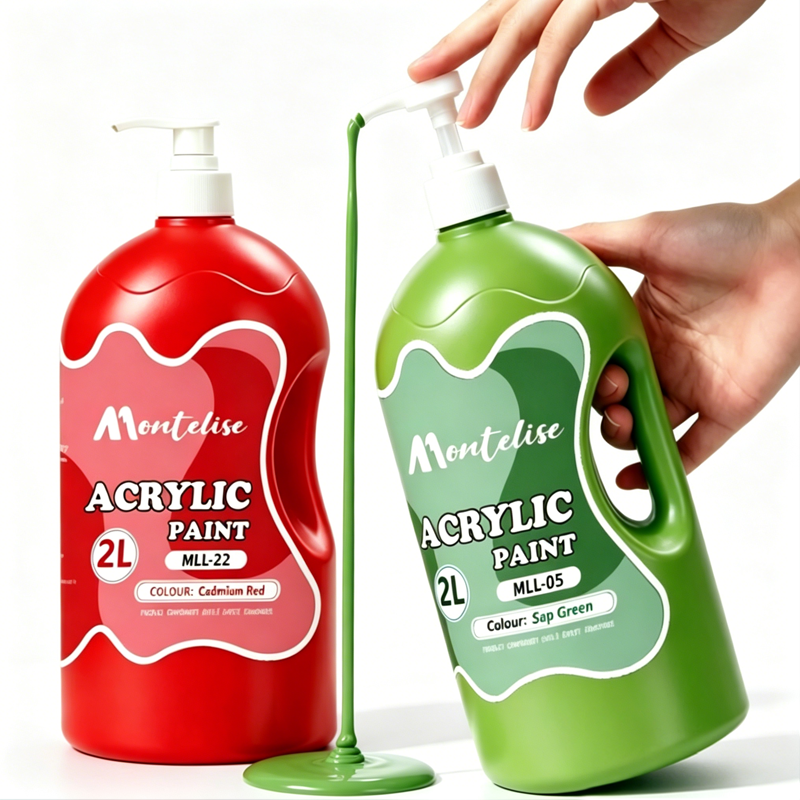
For many buyers, custom acrylic paint colors are the reason to use OEM or private label production in the first place. The problem is that a color that looks right on a screen or on one wet sample can still shift during drying, batching, filling, or repeat production.
That is why color development needs to be handled like a purchasing workflow, not only a creative choice. Importers, art brands, and distributors need a supplier that can match color references, explain sample limits, and keep approved shades stable when the order moves from a bench sample to a full production run.
Buyer quick links
- View acrylic paint product lines: Product Center
- Compare private label and custom options: OEM&ODM
- Send quantity, packaging, and market details: Contact / Get Quote
Start With a Clear Color Reference
The fastest custom color projects usually begin with a precise reference. Buyers who send only a general note such as “make it brighter” or “close to this blue” often add extra sample rounds that could have been avoided.
Useful color references include:
- Pantone or other standardized color numbers
- A retained physical paint sample
- Printed color cards used for line planning
- A list of core shades plus target finish notes
It also helps to explain where the paint will be used. A school paint line, a canvas art range, and a mural product may need different opacity, viscosity, and drying behavior even when the target shade looks similar at first glance.
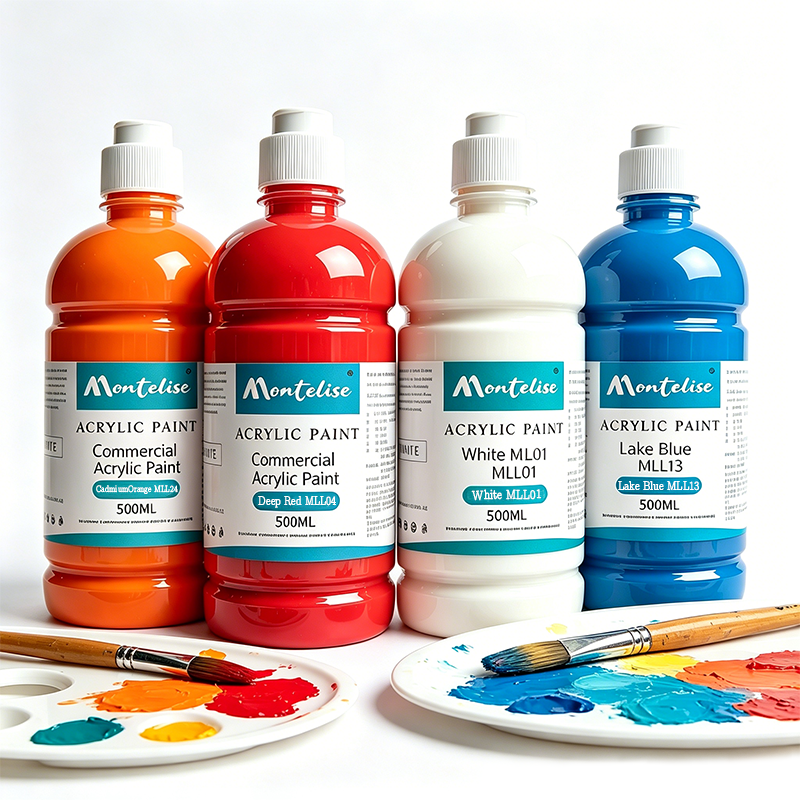
Review Color Wet and Dry
One of the most common buying mistakes is approving a color too early. Acrylic paint often changes slightly as it dries, and that difference matters when the product is sold as part of a retail set or a repeat-order commercial line.
During sampling, buyers should compare:
- Wet versus dry appearance
- Opacity on white and darker surfaces
- Finish consistency across nearby shades
- Brushout appearance on the actual substrate
- Whether the batch still fits the target price level
For private label projects, it is also worth checking whether the selected color range still works with the intended bottle, jar, or carton presentation. Strong color matching does not help much if the packaging route creates delays or cost pressure later.
Planning a private label acrylic paint order?
Share your color list, packaging idea, quantity, and target market with Montelise. The team can suggest suitable product bases, sample steps, and packaging options before you commit to a bulk order.
Ask How the Factory Locks the Approved Shade
A useful OEM acrylic paint manufacturer should explain what becomes the production reference once a sample is approved. Buyers should not assume that a passed sample automatically means future batches will be checked against the same standard.
Ask these practical questions:
- Will the approved drawdown or sample bottle be kept as the control reference?
- How is color difference checked during production?
- Who confirms the final standard when multiple similar shades are ordered together?
- How are repeat orders matched if the first order was approved months earlier?
This is especially important for brands building a permanent shade range. When reorders begin, color consistency matters more than the first lab success.
Connect Color Decisions to MOQ and SKU Planning
Custom acrylic paint colors are rarely a single-SKU decision. MOQ usually changes based on how many colors are being launched, whether the shades share the same product base, and how the packaging is grouped.
Here is the practical trade-off:
| Decision Point | Lower Complexity Route | Higher Complexity Route |
|---|---|---|
| First launch | Fewer core shades | Broad color assortment |
| Formula base | One stable product base | Multiple finishes or special effects |
| Packaging | Standard bottle or jar | Printed sets and mixed-SKU packs |
| Reorders | Easier batch control | More moving parts to maintain |
For many first orders, it is smarter to launch fewer high-priority shades and expand after the reorder pattern is clear. That usually protects cash flow and makes sample approval easier.
Keep Packaging and Color Approval in the Same Discussion
Color development should not run separately from packaging planning. A supplier may be able to match the shade, but the final project still depends on bottle choice, label timing, carton count, and how mixed colors will be packed.
This is where Acrylic Paint Packaging Options for Private Label Brands becomes relevant. If the packaging route adds too many label versions or set combinations in the first order, the color project becomes harder to quote and repeat.
For export buyers, it is also worth checking how labels, outer cartons, and market-language requirements are handled before bulk production begins.
Use the Sample Stage to Reduce Repeat-Order Risk
The sample stage should answer more than “Is this the right color?” It should also confirm whether the supplier can repeat the color under the packaging and production structure you actually plan to buy.
Before approving custom acrylic paint colors, check:
- Which sample version is the final reference
- Whether neighboring shades look balanced together
- Whether label and SKU naming are already aligned
- Whether MOQ by color is clear
- Whether the supplier has recorded the batch and formula references for repeat production
These small controls matter because buyers do not lose time on the first sample only. They lose time when the second and third orders behave differently from the first one.
What to Send for a Faster Quote
What to send for a faster quote
- Product type: bottle paint, jars, mural paint, kids paint, mediums, or special finishes
- Color count and reference colors
- Packaging size and label requirements
- Estimated quantity per SKU
- Destination market
- Preferred timeline for samples and bulk order
Final Thought
The best custom acrylic paint color project is not the one with the most shades. It is the one that can be matched, approved, packed, and repeated with fewer surprises. Buyers who treat color, MOQ, and packaging as one commercial decision usually move faster than buyers who review them in isolation.
Montelise supports private label acrylic paint projects with custom color development, packaging coordination, and bulk supply planning. If you are preparing a new color range, contact Montelise with your reference shades, product type, quantity plan, and target market to request samples or a bulk quote.
FAQ
What is the best reference for custom acrylic paint colors?
A physical sample or a standardized color reference is usually the clearest starting point. It reduces guesswork and makes sample rounds easier to compare.
Do custom colors always increase MOQ?
Not always, but more shades, more finishes, and more packaging variations often make MOQ less flexible. Ask for MOQ by color and by packaging component.
Should I approve acrylic paint colors on screen only?
No. Screen references can help early communication, but final approval should be based on physical samples reviewed wet and dry on the target surface.
How can I make repeat orders more stable?
Keep an approved physical reference, confirm how the supplier records the standard, and avoid changing too many variables at once between the first and second orders.