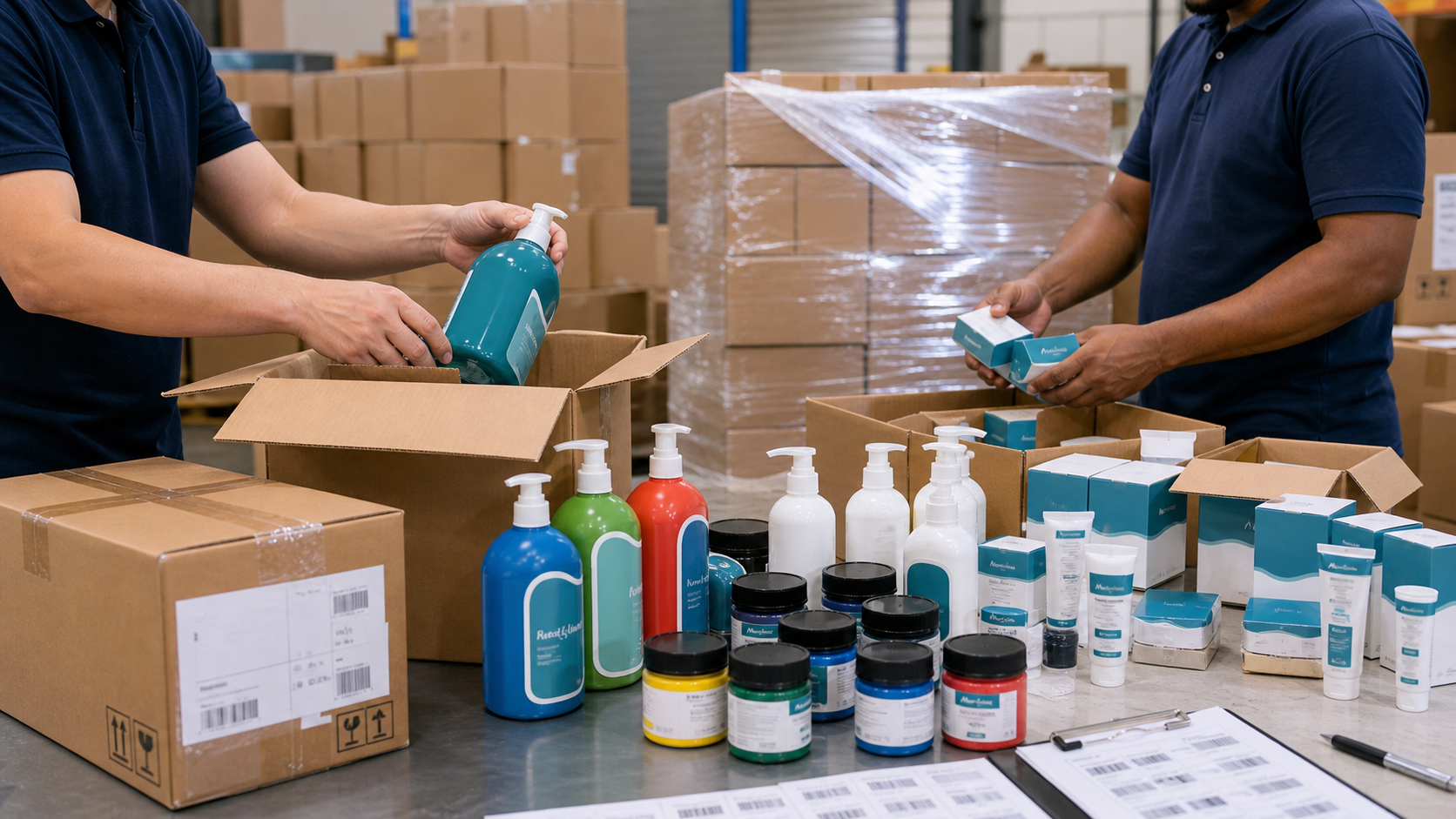
Acrylic paint pallet configuration usually becomes a problem too late. The buyer approves the paint, the labels, and the cartons, but the shipment still slows down when the 500 ml bottles do not stack cleanly, the 1 L packs push the pallet too high, or mixed cartons no longer match the warehouse receiving rule.
This page is for distributors, importers, private label brands, and art-material sourcing teams that need a workable acrylic paint pallet configuration before bulk goods are booked for export. It supports the main Acrylic Paint Manufacturer page and focuses on the load-planning details that actually change shipment execution: carton count by pack size, mixed-SKU grouping, pallet height and overhang limits, stretch-wrap sequence, shipping marks, and sample loading checks.
Buyer quick links
- View acrylic paint and color material product lines: Product Center
- Compare private label, packaging, and bulk support: OEM&ODM
- Review the main acrylic sourcing page: Acrylic Paint Manufacturer
- Send carton counts, pack sizes, and shipment timing: Contact / Get Quote
Define the Ship Unit Before You Build the Pallet
Many buyers talk about pallets first, but the real starting point is the ship unit. The warehouse needs to know what one repeatable carton looks like before it can decide how to stack it.
For acrylic paint, that usually means locking:
- the pack size per SKU, such as 24 x 120 ml bottles, 24 x 250 ml bottles, 12 x 500 ml bottles, or 8 x 1 L bottles
- whether the first order ships in single-SKU cartons, assorted-color cartons, or retail-set master cartons
- the target gross weight per carton for manual handling or warehouse receiving
- whether the pallet uses plain export cartons, printed cartons, or mixed carton versions by market
| Ship unit question | Typical buyer input | Why it affects pallet layout |
|---|---|---|
| Bottle family | 120 ml, 250 ml, 500 ml, or 1 L | Carton footprint and layer count change immediately |
| Carton count | Units per master carton | Affects layer stability and pallet height |
| Mixed or single SKU | Single shade, mixed shade, or set carton | Changes picking accuracy and carton-mark logic |
| Receiving limit | Warehouse max weight or max height | Controls whether the pallet needs fewer layers |
If the buyer is still fixing the commercial order structure, Bulk Acrylic Paint Quote is the better companion page because carton logic works only after the RFQ clearly states pack-size mix, quantity per SKU, and the final shipment route.
Need help planning pallet layout before the first acrylic paint shipment?
Share your pack sizes, units per carton, quantity per SKU, destination market, and receiving limits with Montelise. The team can suggest a more stable carton and pallet route before bulk packing starts.
Separate Mixed Pack Sizes From Mixed Colors
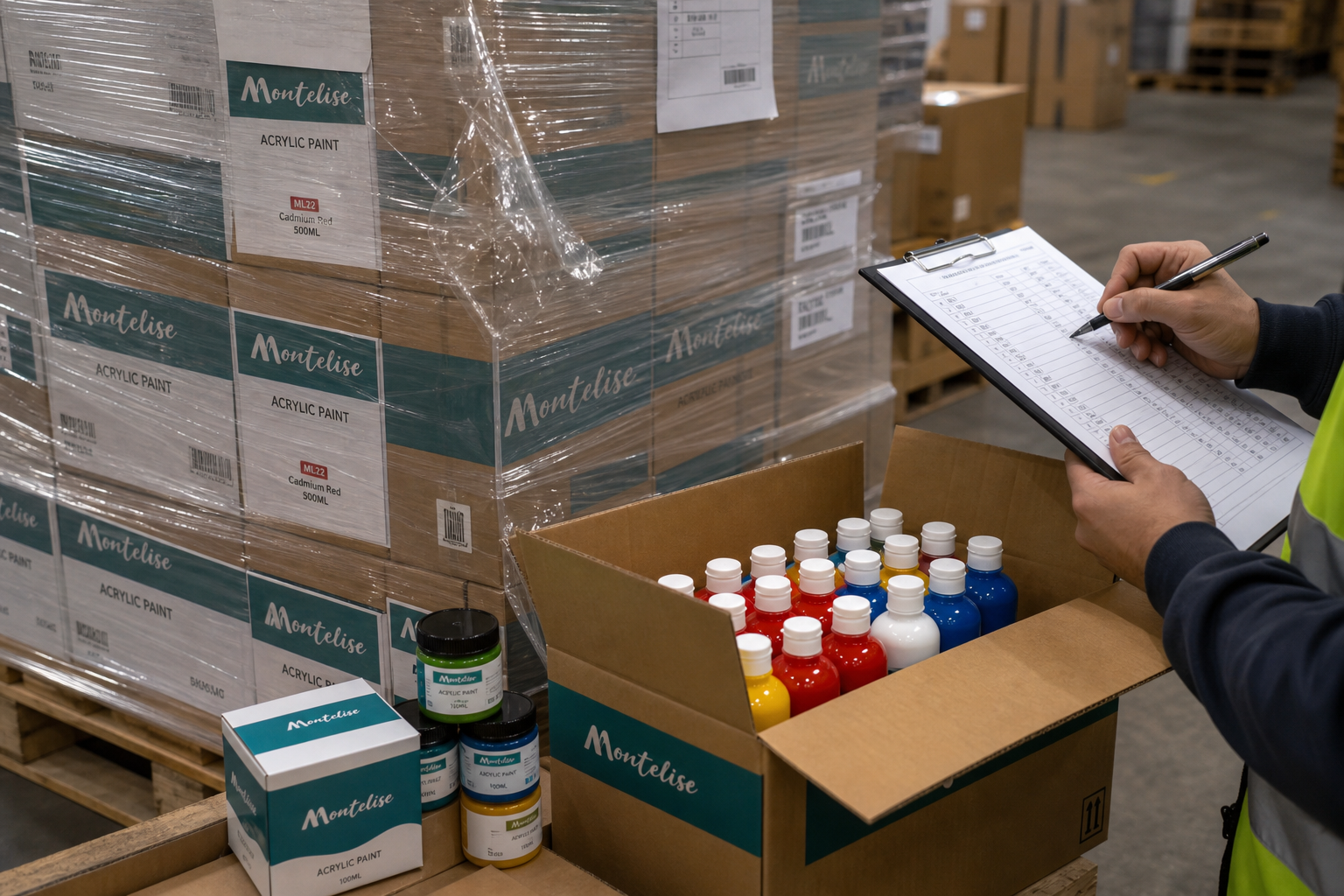
Buyers often say they have a “mixed order,” but that can mean two very different things. One order may mix colors inside the same 500 ml carton family. Another may mix 250 ml, 500 ml, and 1 L packs in the same shipment. Those should not be handled the same way.
Color mixing inside one stable carton family is usually manageable when:
- all bottles use the same carton footprint
- the label family follows one barcode format
- the packing list still shows carton count by SKU clearly
- the buyer does not require different carton marks by color group
Pack-size mixing is harder because it changes the pallet geometry itself. A shipment that combines 24 x 250 ml cartons, 12 x 500 ml cartons, and 8 x 1 L cartons may need:
- one pallet for the shorter 250 ml carton family
- one pallet for the heavier 1 L bottle family
- separate top-layer protection for cartons that cannot share the same compression pattern
- a split packing list that keeps each pallet traceable by carton range
That distinction matters for private label programs too. Buyers already deciding how many bottle families belong in the launch should compare Private Label Acrylic Paint Packaging Options before they ask the warehouse to solve a packaging mix that is still too wide.
Use Pallet Height, Overhang, and Wrap Tension as Approval Points
The pallet plan should be approved like any other shipment-control step. It is not enough to say “standard export pallet.” The buyer should know what standard means for this order.
Useful pallet-control points include:
- target pallet size, such as standard export wood pallet or customer-specified pallet footprint
- maximum loaded height, especially when the consignee limits pallet height for rack entry
- no carton overhang beyond the pallet edge
- layer pads or corner protection when 500 ml and 1 L cartons carry more compression load
- stretch-wrap route that locks the first layer to the pallet base before upper wrapping starts
For acrylic paint orders, small physical changes can create handling problems. A carton that is acceptable at four layers may lean at five layers once the warehouse adds slip sheets and stretch film. A 1 L bottle carton may pass carton drop review but still become unstable if the pallet includes too many top-heavy layers.
The safest route is to ask for a sample loading check or warehouse photo confirmation before the final shipment is released. That is especially useful when the first order uses printed cartons or a new bottle family. If the full project timeline still needs coordination, Private Label Acrylic Paint Lead Time explains where loading checks should sit relative to sample approval, artwork approval, and final packing.
Match Shipping Marks to the Packing List Before Wrapping
Pallet problems are not only physical. They are also administrative. If the pallet wrap is correct but the carton marks are vague, the consignee still loses time receiving the goods.
Before full wrapping starts, confirm:
- PO number or shipment reference on the carton mark
- SKU or item-code format that matches the packing list
- units per carton, such as 12 x 500 ml or 8 x 1 L
- carton sequence when one order uses several pallets
- destination code or warehouse note when the shipment serves more than one account
This matters even more for mixed acrylic paint launches. If one pallet holds plain export cartons and another holds printed private label cartons, the warehouse record needs to show that clearly. The linked Acrylic Paint Export Documents Checklist is the right follow-up page when the buyer needs invoice wording, packing-list naming, and carton marks to stay aligned.
Run One Sample Loading Check Before Bulk Release
The most useful pallet approval is often a simple sample loading check, not a long discussion. Buyers can save time by asking the supplier to confirm one practical loading trial before all cartons are sealed.
A workable sample loading check usually reviews:
- actual master-carton dimensions for each approved pack size
- whether the chosen carton count keeps the gross weight reasonable
- whether two carton families can share one pallet without leaning
- whether stretch wrap hides or leaves visible the required shipping marks
- whether pallet labels and carton sequence remain readable after wrapping
- whether the pallet still fits the buyer’s forklift, shelf, or floor-stacking rule
For example, a buyer may learn that 12 x 500 ml cartons stack safely in five layers, while the 8 x 1 L cartons should stay at four layers with a top cap sheet. That is exactly the kind of concrete detail that prevents a shipment-day argument.
What Montelise Needs to Confirm the Pallet Plan
The fastest pallet discussion is short, but it is specific. Send these points first:
- product type and pack size per SKU
- units per carton and estimated carton count
- whether the first order uses one pack family or several
- pallet footprint or receiving restriction, if the warehouse has one
- maximum pallet height or maximum pallet weight, if required
- carton-mark format, barcode rule, and destination code
- whether the shipment needs loose cartons, full pallets, or mixed handling
- target shipment month and whether a sample loading check is needed before release
Buyers also planning repeat orders should review Acrylic Paint Batch Consistency so the carton version, pallet note, and approved bottle family are recorded well enough for replenishment instead of rebuilt from memory.
What to Send for a Faster Quote
What to send for a faster quote
- Pack size per SKU
- Units per carton and total carton count
- Mixed-color or mixed-pack structure
- Pallet height or warehouse receiving limit
- Carton-mark and barcode requirements
- Destination market and shipment month
- Need for sample loading check or pallet photo confirmation
FAQ
Why is acrylic paint pallet configuration often changed at the last minute?
Because buyers lock formula and labels first, then discover the carton count, pallet height, or mixed pack-size route does not match the receiving warehouse or export booking plan.
Should 250 ml, 500 ml, and 1 L acrylic paint cartons go on one pallet?
Usually only if the carton footprints and compression behavior stay compatible. Many first orders are safer when 1 L cartons are separated from smaller bottle families.
What pallet detail do buyers forget most often?
They often forget to confirm maximum pallet height, carton overhang limits, and whether stretch wrap or top sheets will hide the shipping marks the warehouse needs to read.
Is a sample loading check necessary for repeat orders?
Not always, but it is useful whenever the buyer changes carton count, bottle family, printed carton version, or receiving rules from the previous shipment.
Final Thought
Acrylic paint pallet configuration works best when buyers define the ship unit first, separate mixed colors from mixed pack sizes, approve pallet height and wrap method as real control points, and verify carton marks before the goods are wrapped for export.
Ready to review acrylic paint carton planning, pallet loading, or private label shipment structure? contact Montelise with your SKU plan, carton counts, receiving limits, and shipment timing to request samples or a practical bulk quote.