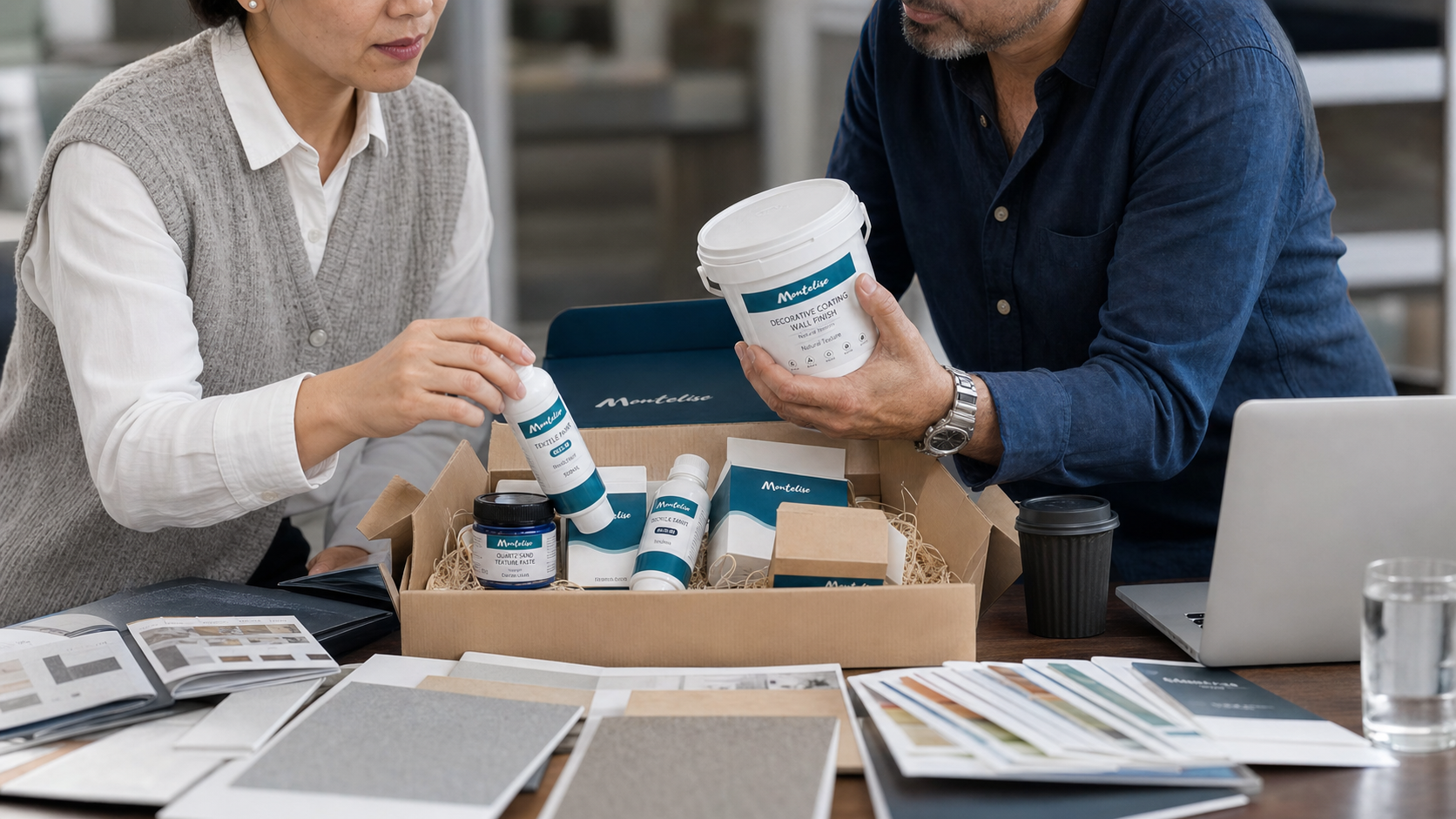
This representative OEM sample kit packaging case reflects a common Saturday-stage buyer problem: the distributor or private label team wants one sample box that can introduce several Montelise product families at the same time, but the first request includes too many categories, too many pack sizes, and no clear rule for what the sample kit is supposed to prove.
In practice, the best sample kit is not the biggest one. It is the one that helps the buyer compare the right materials, present them clearly to the commercial team, and move into the next RFQ step without turning the sample box into a small full-launch project.
Buyer quick links
- View color, coating, and water transfer product lines: Product Center
- Compare OEM, private label, and custom packaging options: OEM&ODM
- Send your sample kit target, quantity plan, and market details: Contact / Get Quote
Buyer Situation
This kind of OEM sample kit packaging case often begins with a distributor, importer, or sourcing office that wants to test several categories before selecting a focused launch range. The team may ask for acrylic paint, decorative coating, texture materials, or hydro dipping references in one sample shipment because they want one internal review meeting instead of several separate projects.
That approach can work, but only if the supplier and buyer narrow:
- Which product families must appear in the first sample kit
- Whether the kit is for internal approval, customer presentation, or distributor training
- Which samples need branded packaging and which can stay practical
- How the sample box connects to the first commercial RFQ
Buyers still deciding whether one supplier should cover several categories should also read OEM Color Material Supplier Guide for Private Label Buyers, because supplier scope affects how sample kits should be grouped.
Product Requirement
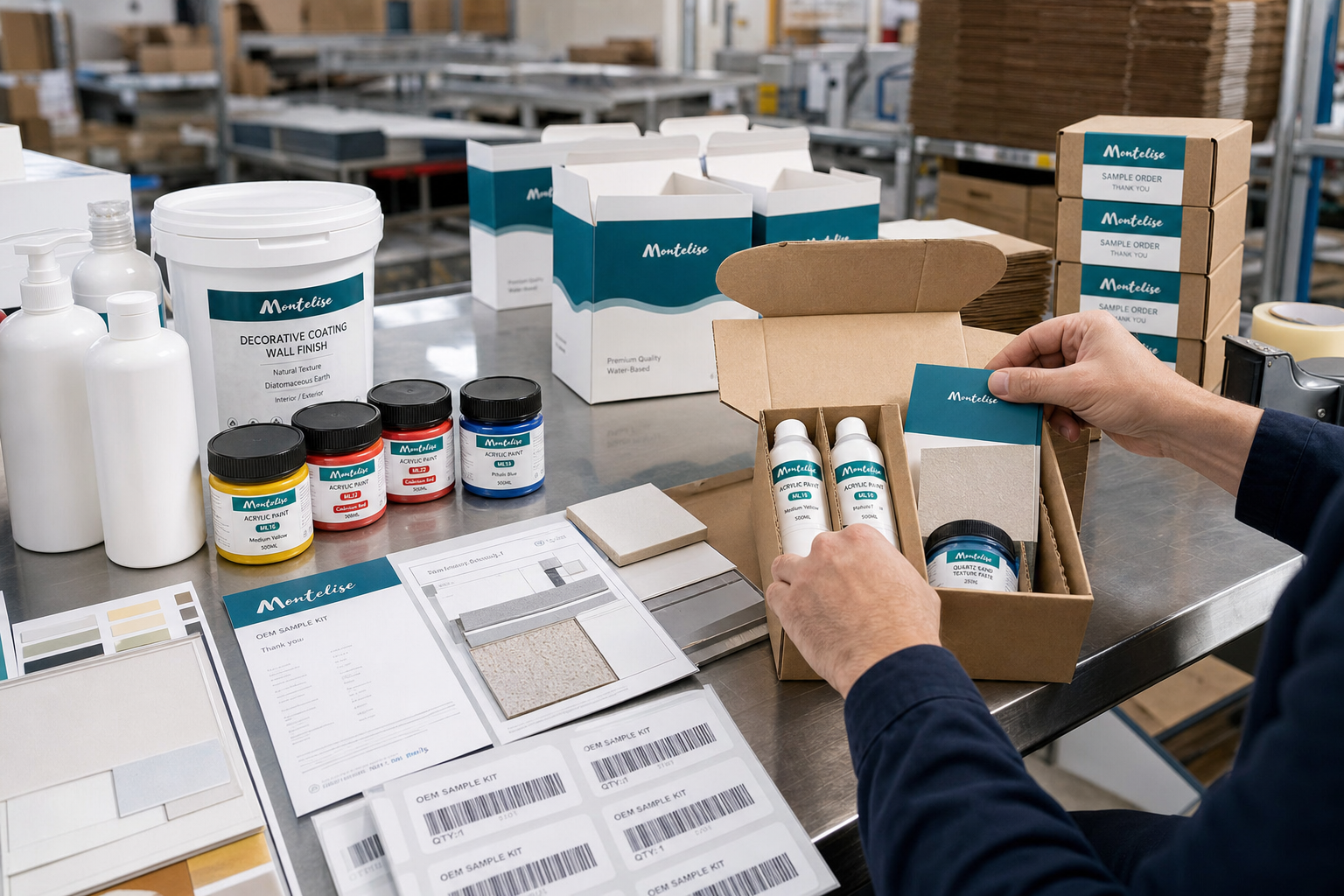
In this representative case, the buyer did not need a random assortment. They needed a structured sample kit that could present a few product directions cleanly and still remain practical to pack, ship, and discuss commercially.
| Sample Kit Goal | Better First-Step Direction | Higher-Risk Direction |
|---|---|---|
| Category review | 2 to 4 related product families | Every possible category in one box |
| Packaging route | One defined sample box structure | Several sample box types at once |
| Commercial use | Internal or customer-facing, not both | No clear review purpose |
| Follow-up step | Connect the kit to one RFQ path | Treat the sample box as the whole launch |
That kind of discipline matters because a sample kit is supposed to narrow the next buying decision, not replace it.
Development Direction
The supplier and buyer usually save time by splitting the sample kit into layers. One layer introduces the core products. Another layer handles reference cards, simple specification notes, or pack-size examples. A third layer, when needed, shows how private label packaging might look later without forcing every sample bottle into a final branded format.
A practical development route often includes:
- One lead sample box size and insert style
- A limited list of categories with one clear reason for inclusion
- A note on which pack examples are only visual references
- A follow-up plan for which category should move into bulk quotation first
Planning an OEM sample kit for distributor review?
Share your target categories, review purpose, preferred sample box format, and quantity outlook with Montelise. The team can suggest a cleaner sample-kit structure before the box becomes too broad to use well.
Sampling and Adjustment
In a strong OEM sample kit packaging case, adjustment comments should focus on usefulness rather than decoration. Buyers often get more value when they review whether the kit communicates the right product range, whether the samples are grouped logically, and whether the box helps the next commercial discussion happen faster.
Useful review points include:
- Which categories deserve a deeper quote after the first review
- Whether the sample sizes are practical for evaluation
- Whether the insert, tray, or carton layout keeps the kit understandable
- Which visual packaging elements should stay simple until the first order is clearer
If the buyer still needs help structuring the broader quote request after the sample review, How to Request a Useful Bulk Quote for Color Materials is the closest related guide because it explains how to turn a wide product interest into a usable RFQ.
Packaging, MOQ, and Delivery Considerations
Sample kit packaging should support testing, not add unnecessary MOQ pressure. The risk is highest when the buyer asks for a heavily customized box while still changing category scope and sample count.
A lower-risk route often includes:
- One standard or lightly customized sample box
- Clear tray or divider planning so products arrive safely
- A reduced number of pack examples inside the first kit
- Standard export protection for the outer carton
- A separate decision later on whether the sample kit itself needs to become a branded sales tool
Buyers who are already comparing packaging routes across several categories should also review Custom Packaging Case for Paint, Coating, and Color Material Buyers, because packaging cost and kit usability need to be balanced together.
What the Buyer Should Prepare
Before requesting a final quote, the buyer should prepare:
- The review purpose of the sample kit
- The product families that must be included
- Whether the kit is for internal sourcing, distributor review, or customer presentation
- Preferred sample box style, insert idea, or carton reference
- Estimated quantity of kits needed
- Destination market and target sample timing
What to Send for a Faster Quote
What to send for a faster quote
- Product type: acrylic paint sample set, coating sample box, texture materials kit, hydro dipping references, or mixed OEM sample kit
- Categories to include and the purpose of the kit
- Sample box style, tray or divider idea, and label scope
- Estimated quantity of kits
- Destination market
- Preferred sample and shipping timeline
Final Thought
The strongest OEM sample kit packaging case is usually the one that keeps the first box focused enough to support the next buying step. When the buyer and supplier agree on the review purpose, the category mix, and the level of packaging customization, the kit becomes easier to approve and much easier to connect to a real order.
Montelise supports OEM sample kit planning, mixed-category presentation, packaging discussion, and export-ready sample supply for B2B buyers. contact Montelise with your category plan, sample-box idea, quantity target, and market details to request samples or a bulk quote.
FAQ
How many categories should an OEM sample kit include at first?
Usually fewer categories work better. A focused sample kit is easier to review and easier to connect to the next RFQ than a broad mixed box with no clear priority.
Should the first sample kit use full retail packaging?
Usually no. Many buyers move faster when the first kit uses a practical box structure and reserves deeper branding decisions for later.
Why does the review purpose matter so much?
Because an internal sourcing kit, a distributor presentation box, and a customer-facing sample pack often need different sample counts, grouping logic, and packaging detail.
When should a sample kit become a formal branded sales tool?
Usually after the buyer confirms which product families matter commercially and whether the kit will be used repeatedly in sales or distributor meetings.