Start coating formula development with a decision your sample round must answer. Define the intended substrate and use, rank the properties that matter, and agree how each candidate will be prepared and reviewed. Keep a reference sample and a revision record so that “better” means a documented change against the same requirement, rather than a different panel judged under different conditions.
For a decorative coating buyer, the first decision might be whether an existing system is suitable, whether a specific adjustment deserves another trial, or whether the requirement needs to change. The worksheet below helps separate those decisions from packaging and bulk-order approval. It is a proposed purchasing workflow, not a claim about Montelise laboratory capabilities, test results or development times.
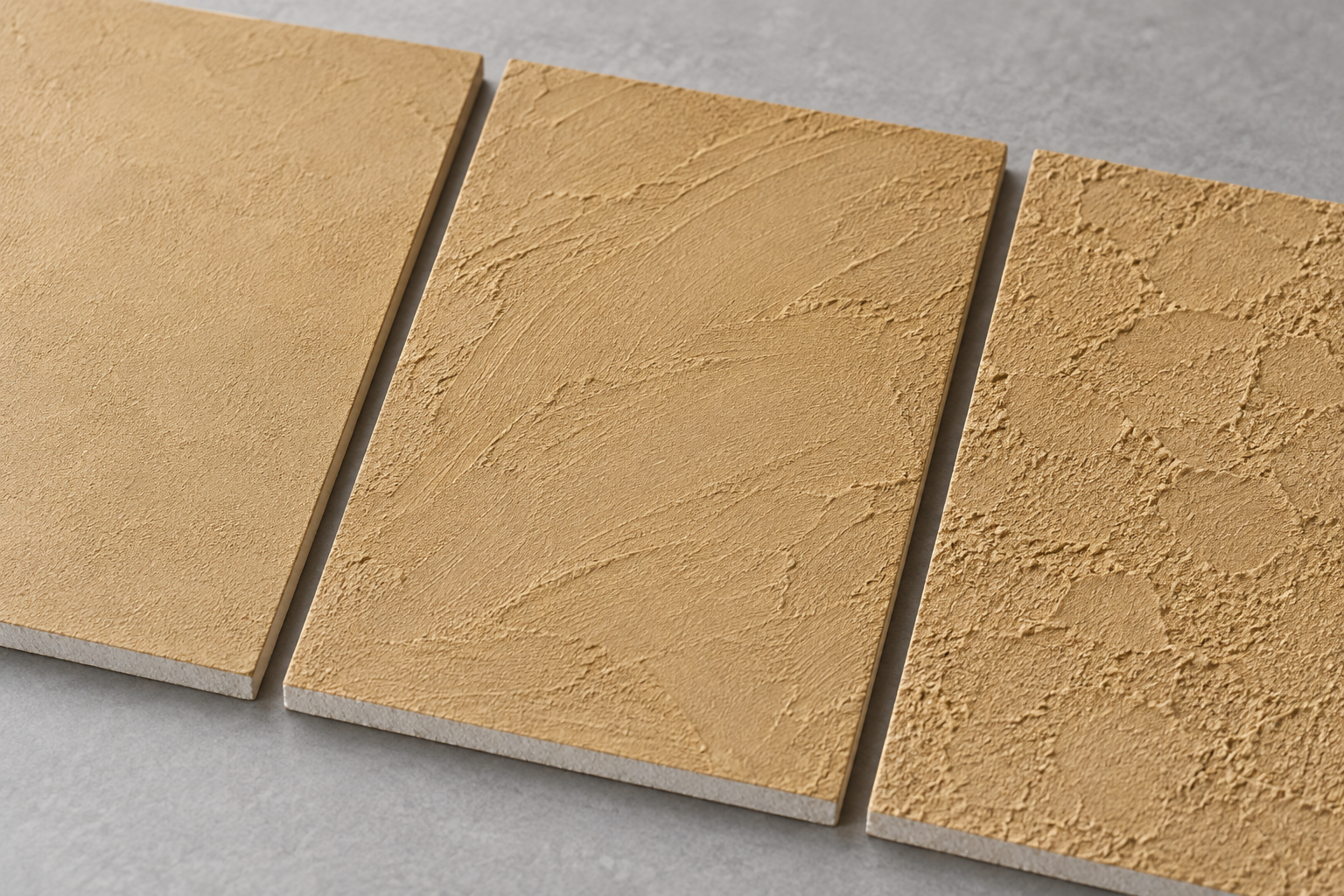
Define the use before requesting a new formula
Describe the actual surface: substrate type and condition, existing layers, intended preparation, indoor or outdoor location, application method and exposure. Include the complete proposed coating system, not just the visible top layer. A request for a particular texture does not establish that the same formulation suits every wall, floor or wet area.
For example, the manufacturer’s Wall2Floor Top Coat technical sheet restricts that product to its named system and requires a specified protective finish. This illustrates why the system matters; it is not a Montelise specification or permission to substitute products.
Use the Product Center to identify the relevant category, then ask whether an existing system can address the brief before commissioning custom development. Record any unresolved use limitation as a hold point.
Turn preferences into a trial worksheet
Separate a required condition from a preference and from an item still needing evidence. “Premium,” “durable” and “easy to apply” are not sufficient acceptance instructions. Agree who will assess each item and what evidence that person needs.
| Decision area | Record before the trial | What blocks comparison |
|---|---|---|
| Substrate and preparation | Surface identity, condition, preparation and primer reference | Candidate panels use different or undocumented surfaces |
| Appearance | Physical reference, texture direction and agreed viewing conditions | A phone image is the only reference or lighting changes |
| Application | Tool or equipment, sequence and product-specific instructions | Undocumented dilution or a different application method |
| Performance | Relevant property, method, units, conditions and agreed criterion | A result has no method or no requirement to compare against |
| Sample identity | Candidate code, revision, preparation date and linked records | A new version reuses an old identifier |
| Decision scope | Named approver and what the decision permits | Appearance acceptance is treated as production release |
Where gloss is relevant, BYK’s micro-gloss guidance distinguishes measurement geometries for different gloss ranges. Record the method with the reading; a bare number is not a complete target. Use the coating report review guide for the wider evidence checklist. Do not invent a universal gloss or adhesion threshold for all decorative finishes.
Make revision comparisons traceable
Agree which conditions remain comparable and document every intentional change. Retain the earlier reference and its record rather than relabelling the newest sample as the original. If preparation, application or assessment conditions differ, record that difference before attributing the outcome to the formulation.
This does not mean a chemist must change only one ingredient at a time. NIST’s experimental-design guidance starts with objectives, variables and design selection. The appropriate trial design belongs with the competent technical team; the buyer’s task is to communicate the required decision and preserve sample identity.
Ask for a short revision note: what changed, why it changed, which requirements are being reassessed and which earlier conclusions still apply. A sample code is a reference to that record, not evidence that a test was passed.
Use a hold decision when results are not comparable
Consider a hypothetical buyer choosing a lower-sheen decorative finish. Candidate A was reviewed on the agreed primed board. Candidate B appears less glossy, but its preparation record does not identify the primer. Candidate C has the documented system and acceptable appearance, while the agreed performance report is still pending. These are fictional decision states, not Montelise samples or measured results.
| Candidate | What is known in this example | Proposed next decision |
|---|---|---|
| A: retained reference | Recorded system and previous appearance decision | Keep as the comparison reference; do not assume all performance is approved |
| B: revised appearance | Lower sheen observed; primer identity missing | Hold the formula comparison until preparation is clarified or the trial is repeated |
| C: documented preparation | Appearance acceptable; performance evidence pending | Record appearance-only acceptance and hold the wider release |
This record prevents an attractive panel from silently becoming a complete technical approval. It also gives a useful answer when a sample is not ready: name the missing evidence, responsible person and next decision, rather than starting an unexplained new round.
Separate sample, pilot and commercial commitments
Write down exactly what each approval covers. Acceptance of a small appearance sample should not automatically authorise a production quantity, a change of substrate or a performance claim. If a pilot or production trial is needed, agree its purpose, scale, acceptance evidence and responsibilities with the supplier before committing.
Confirm sample charges, proposed revisions, ownership or permitted use of supplied references, and which documentation will be provided. For OEM and private-label supply, distinguish formula work from artwork, packaging and first-order quantities. None of these commercial terms is assumed here.
Build the schedule around evidence and decisions using the sample turnaround guide. A requested date is a planning input, not a promised development lead time.
Send one controlled brief for a quotation
Send the intended use and substrate; complete system references; physical appearance reference; ranked requirements; proposed assessment methods; candidate and revision records; decision owner; requested documentation; quantity range; packaging scope; and destination. Mark unresolved items clearly instead of filling them with guessed values.
Ask Montelise to review the scope and confirm which development route, evidence and commercial proposal can be offered. The useful outcome is a defined next trial or a clear limitation, not an unsupported assurance that every target can be met.