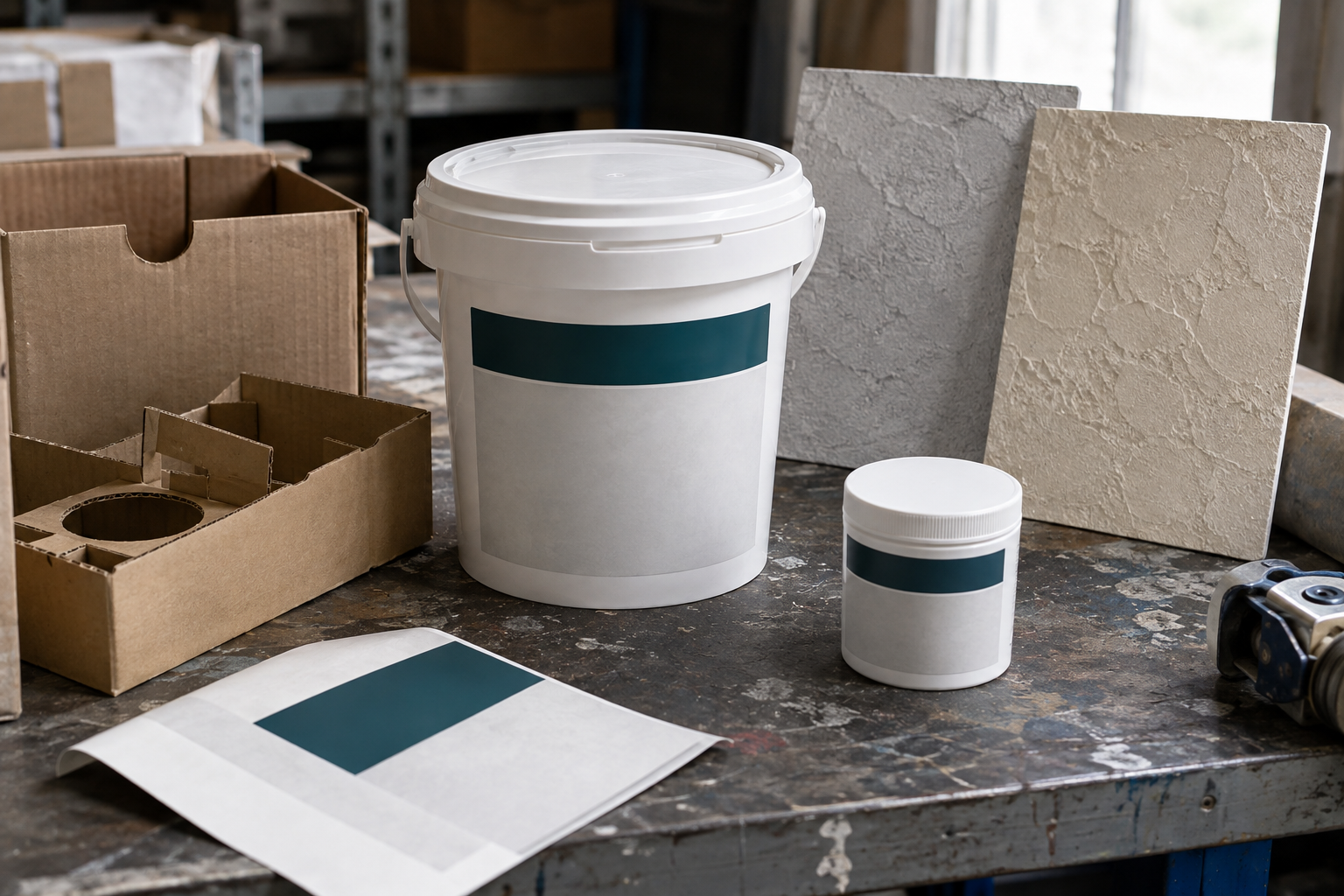
A wall finish can look right on a sample board and still arrive in a pack that is awkward to use, difficult to relabel or poorly protected in transit. For distributors, private label paint packaging needs its own approval record: the container, actual net fill, closure, printed label and shipping configuration must all describe the same SKU.
Start with a filled packaging sample before ordering branded pails in volume. The questions below help wall coating buyers turn an approved finish into a packaging specification a supplier can quote and repeat.
Buyer quick links
- Explore coating and texture product families: Product Center
- Discuss custom packs and label development: OEM&ODM
- Send your pack list and destination: Contact / Get Quote
Private Label Paint Packaging Starts With Net Fill
Write the intended net contents and unit beside every SKU. A request for a 5 kg pack is different from a request for a 5 L container. The coating’s density affects the volume needed, and the supplier must allow appropriate working space below the closure.
For illustration only, a coating with a density of 1.5 kg/L would occupy about 3.33 L at a 5 kg net fill, before any allowance for headspace. That calculation does not select the bucket: confirm the actual formula density, usable fill level, container dimensions and closure with the filling team.
Use a pack matrix to make the discussion specific. These are possible RFQ examples, not a statement of Montelise’s available sizes or minimum orders.
| Requested format | Buyer use | Detail to confirm on the sample |
|---|---|---|
| 1 kg tub | Paid trial or small repair | Access for the intended tool and resealing after use |
| 5 kg pail | Distributor starter range | Filled handling weight, lid fit and label area |
| 20 kg bucket | Project supply | Handle suitability, pallet arrangement and unloading method |
Record empty-pack tare weight, net coating mass and total gross weight separately. Carton and freight calculations need the gross weight; the label and purchase order need the agreed net contents. If the finish family is still undecided, start with the decorative coating product platform.
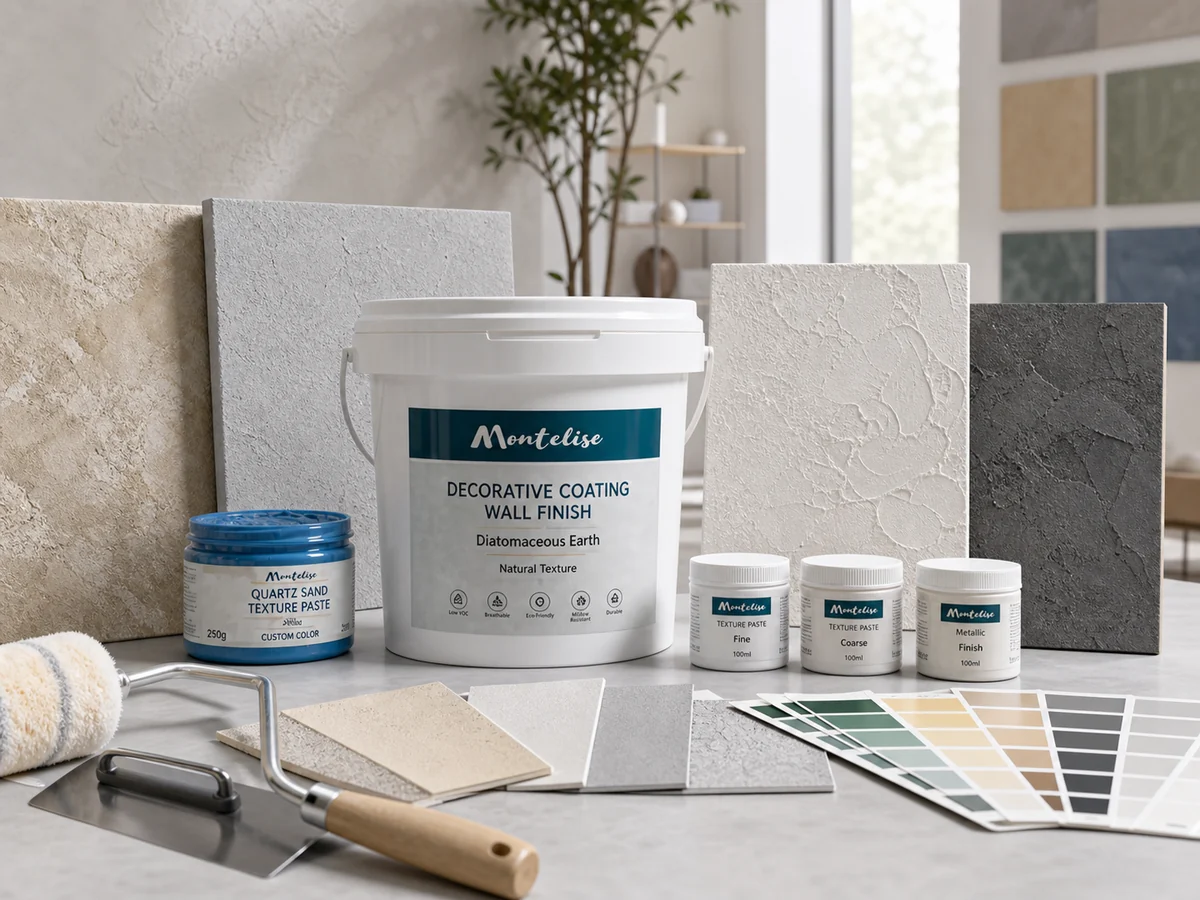
Approve the Pail With the Coating Inside
An empty bucket shows its shape. It cannot establish how the final formula behaves in storage or how the lid performs after filling. Ask for the proposed container material, container code, matching lid code and any liner or seal specification, then request a trial using the actual approved coating.
A fine decorative layer and a coarse textured finish may need different tool access. Try the intended spatula, trowel or mixing tool at the opening. Check that the rim can be cleaned and the lid refitted without forcing it. Record the substrate and approved finish-panel code too, so the filled trial is traceable to the correct coating.
Agree an inspection plan with the supplier: observation period and storage conditions, leakage checks, visible container distortion, closure condition, and any change in the coating after storage. Define the sample count and acceptance criteria in writing. Neither a photograph nor a brief handling trial establishes shelf life or transport suitability.
Need to compare two pack options?
Send the finish reference, intended net fill, application tool and order quantity. Ask Montelise which container options can be sampled with the coating and which packaging costs should be quoted separately.
Proof the Label on the Exact Container
A flat PDF can hide problems that appear when a label wraps around a tapered pail. Obtain the printer’s dieline for the selected container: printable area, seam position, bleed and safe margins. Keep the barcode and small instructions clear of ribs, handle fittings and sharply curved areas.
Send editable artwork or a print-ready PDF in the format the printer requests. Specify the brand-color reference, language version and owner of the final text approval. Packaging print color and coating finish color require separate references: a printed swatch should not replace the approved wall sample panel.
Before approving the print run, check a physical proof on the actual pack:
- Inspect label alignment, edge lift and the seam after application.
- Scan the barcode from the curved surface with the intended receiving or retail equipment.
- Reserve a clear field for batch identification and variable production information.
- Compare the SKU name and net contents against the purchase order and carton mark.
- Confirm application and storage wording against the agreed product information, with market-specific text reviewed before printing.
Ask whether an adhesive label, direct print or another decoration method is available for the selected pail. Request a cost and minimum quantity for each feasible route; do not assume that every branding method works on every container.
Split the Minimum Order Into Three Parts
The coating batch, empty container and printed label can each have a different minimum. A single headline MOQ makes it hard to understand which part of the order creates leftover inventory.
For example, three finishes in two sizes produce six filled SKUs. Some may share an empty pail, but each finish-size combination still needs correct identification. Ask the supplier to quote quantity per filled SKU, minimum per container format and minimum per printed artwork version separately.
Also agree who owns unused branded containers or labels, how long they can be stored, and what happens if the artwork changes. A lower unit print price can be unattractive if the launch leaves several versions of obsolete labels in storage.
For the broader supplier-selection questions, see private label decorative coating manufacturing. This packaging review should use the formula and finish references established during that process.
Test the Shipment Configuration You Will Order
One loose pail sent by courier is not the same configuration as a pallet of filled pails. Tell the supplier whether the commercial shipment will use individual cartons, divided cartons or a proposed pallet arrangement, and whether the goods will be handled manually at destination.
Request carton external dimensions, units per carton, gross weight, divider details where used, and the proposed pallet dimensions and layer pattern. Check that handles and lids do not carry unintended loads from neighboring packs. Have the supplier or packaging specialist define appropriate drop, stacking and transport checks for the actual pack and route, then keep the method and results with the approval record.
Ask for photographs of the complete packed unit as well as the open carton. The image should show the protection around the pail, not just a closed box. Product classification and shipping documentation remain a separate review; use the coating export document checklist to organize those questions.
Use Four Sign-Offs Before Booking Production
Avoid one email saying that everything is approved. A short staged record makes later changes easier to identify.
- Approve the container and closure codes, intended net fill, and filled sample observations.
- Approve the physical label proof, text version, barcode and batch-code location.
- Approve the carton or pallet specification and the agreed packaging evaluation results.
- Confirm the final SKU list, quantity split, packaging availability and production schedule.
Keep a retained filled sample and the approved artwork version where practical, with dated photos and a signed specification sheet. A replacement lid or a revised carton is a change to that record, even if the coating formula stays the same.
Lead time depends on the slowest unresolved approval or purchased component. Ask for separate dates for the filled sample, print proof, packaging delivery and bulk filling. A planned launch date becomes more credible once those dependencies are visible.
RFQ Checklist: Send One Row Per Filled SKU
Include the following in your request so packaging quotes can be compared on the same basis:
- Finish name, approved panel code, intended substrate and application tool.
- Net contents in kg or L, preferred container format and quantity per SKU.
- Proposed lid, seal and label requirements, including any sample findings.
- Artwork status, destination language, barcode source and variable-data fields.
- Carton count, receiving weight limits and proposed shipping route.
- Destination market, filled-sample deadline and target shipment window.
- Requested evaluation records and the person responsible for each sign-off.
FAQ
Can the same bucket be used for a 5 kg and a 5 L wall coating?
Do not assume so. Net mass, formula density, usable container capacity and headspace must be checked together. Ask the supplier to confirm the filled-pack specification for each SKU.
Should final labels be printed before the filled sample is approved?
Prepare artwork early, but hold the bulk print decision until the container and label area are fixed. Use a physical proof to check fit, text and barcode readability before committing to volume.
Can different finishes share one packaging MOQ?
They may share a container format, subject to the supplier’s purchasing and production rules. Printed versions and filled SKUs can still have separate minimums. Request the breakdown rather than treating total order weight as the only quantity.
What should be checked again on a repeat order?
Confirm container and lid codes, label revision, net fill, carton specification and the approved finish reference. Ask the supplier to identify any proposed component substitution before production.
Private label paint packaging is ready for a purchase order when the filled sample, artwork and shipping pack all match one controlled specification. Send Montelise your wall finish reference, pack matrix and destination to discuss suitable samples and an itemized packaging quote.